Startups have always talked about listening to customers. The next wave of breakout companies is turning that listening into a system. They run continuous VoC engines that analyze feedback and feed it into decisions every day.
The Stakes Are Huge
Crunchbase data showed the value of private unicorns approaching $7 trillion by the end of 2025, with 147 new unicorns minted during the year. Competition for customers in every category is intense. Customers have more choices than ever, and switching keeps getting easier.
Customer obsession pays
Forrester's 2024 US CX Index found that customer-obsessed companies reported 41% faster revenue growth than other firms. They also reported 51% better customer retention. Yet only 3% of companies qualified.
- Approaching $7 trillionvalue of private unicorns by the end of 2025Source: Crunchbase
- 147new unicorns minted during the yearSource: Crunchbase
- 41%faster revenue growth at customer-obsessed firmsSource: Forrester 2024 US CX Index
- 51%better retention at customer-obsessed firmsSource: Forrester 2024 US CX Index
Figures as cited in this article
What a Continuous VoC Engine Is
A continuous VoC engine collects feedback from every channel and analyzes it as it arrives. It routes insights to the people who can act. It doesn't wait for a quarterly survey or an annual report.
The core parts
- Feedback collection from every channel.
- Automated theme and sentiment analysis.
- Routing that sends insights to the right teams.
- Tracking that shows whether fixes worked.
The core parts of the engine
Continuous VoC
- Collect from every channel
- Analyze themes and sentiment
- Route insights to teams
- Track whether fixes worked
Back to Collect from every channel, and round again
Why Startups Have an Edge
Young companies can build this from day one. They don't have years of disconnected tools to untangle. Older companies often need years to connect their tools. Feedback can flow into the product roadmap from the first customer.
Speed compounds
Each fix based on feedback improves the product a little. Over hundreds of releases, those improvements add up. Jeff Bezos wrote in his 1997 letter to shareholders, “We will continue to focus relentlessly on our customers.” That kind of focus is easier to keep when the system does the listening for you.
We will continue to focus relentlessly on our customers.
Jeff Bezos, 1997 letter to shareholders
Free review snapshot
See what your customers are saying, before you talk to us.
No commitment. We use your details only to send your snapshot and follow up. Privacy policy
How AI Changes the Game
AI makes continuous analysis affordable. A small team can now read every comment and ticket. That's work that once needed a whole research department. Gartner predicts that by 2029, agentic AI will autonomously resolve 80% of common customer service issues. Startups that feed those systems with good feedback data will move fastest.
Data quality matters early
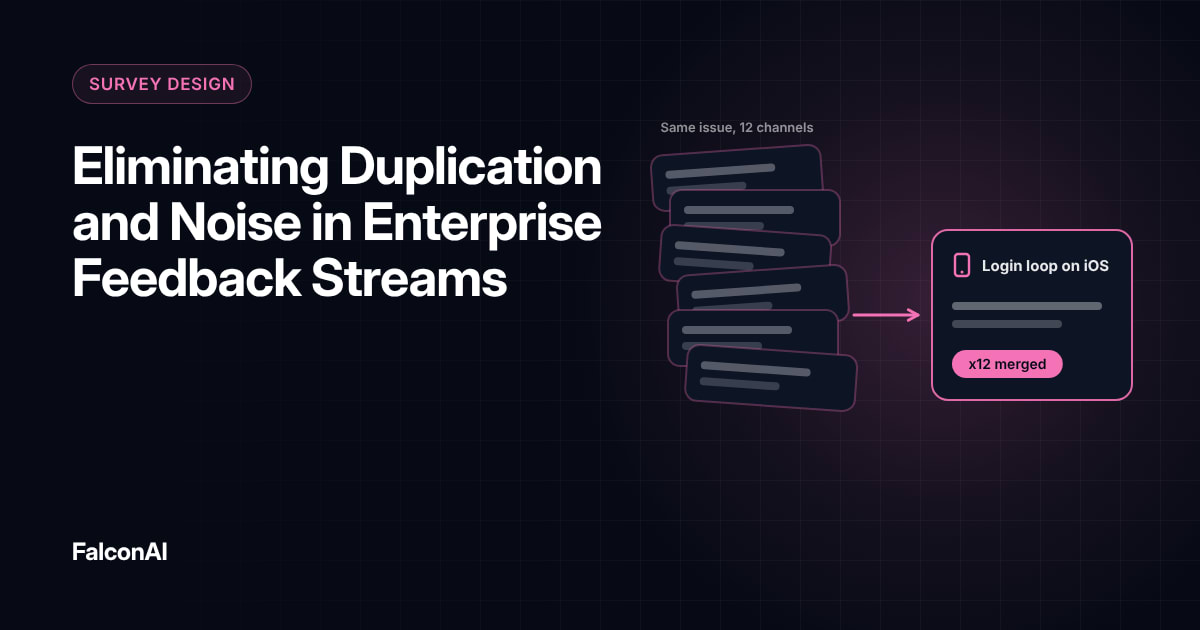
Engines are only as good as the data they learn from. Set up clean themes and customer IDs from the start. Agree on a short list of themes before volume grows. Our guide to feedback deduplication explains how to keep data clean.
Building Your Own Engine
You don't need a big budget to start. Connect your main feedback sources and share a weekly summary of top themes. Add automation as volume grows. Pick one owner who keeps the engine running.
Make it part of the culture
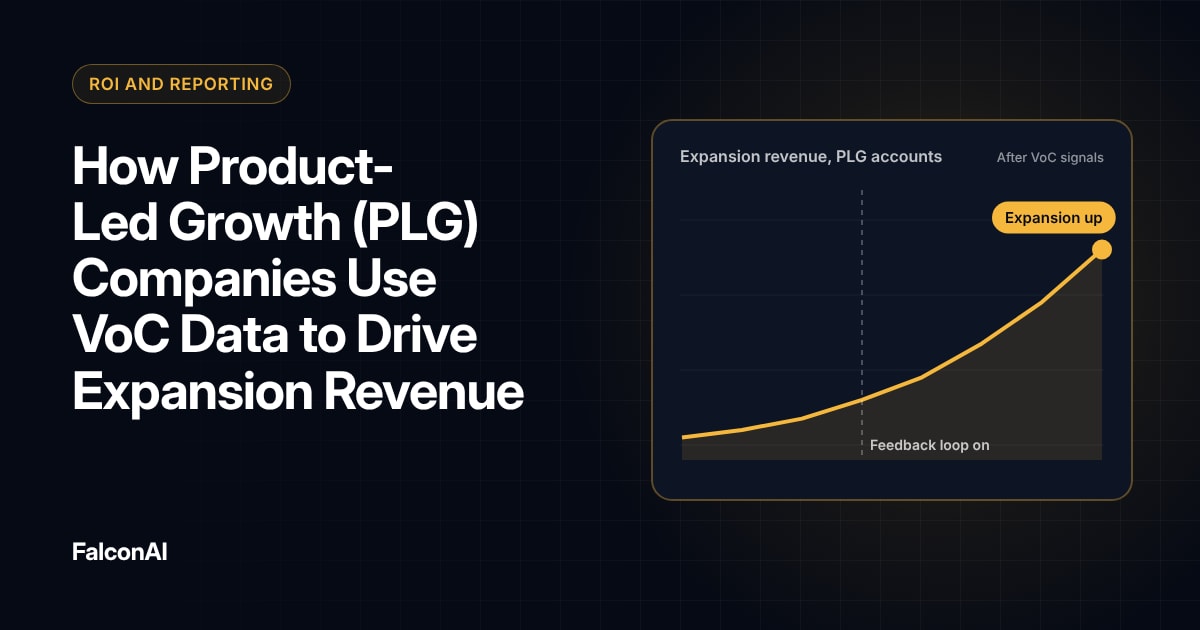
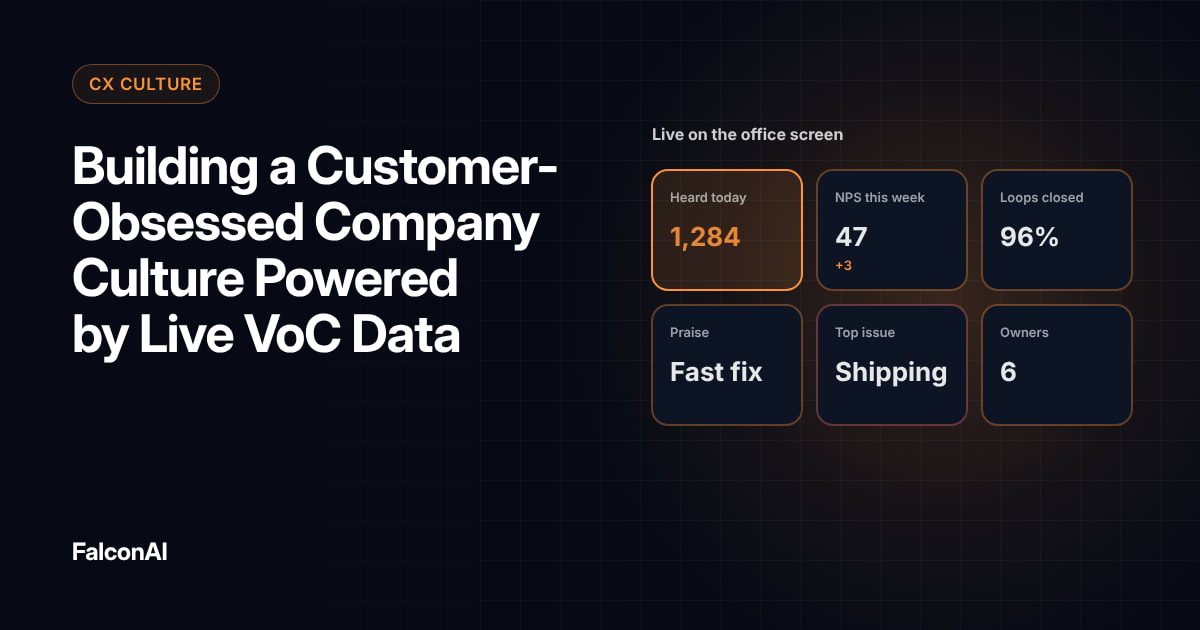
The engine only matters if people use what it finds. Review top themes in every planning meeting. Celebrate fixes that came from customer feedback. Share wins with customers too, so they keep giving feedback. Our post on building a customer-obsessed culture covers the habits that help, and our guide to product-led VoC expansion shows how feedback drives growth. You can run continuous analysis across every channel with NPS analysis, or book a demo.
Frequently asked questions
What is a continuous VoC engine?
It's a system that collects and analyzes feedback all the time and routes insights to the teams that can act.
Why does continuous VoC matter for startups?
It helps young companies improve faster and keep customers in crowded markets.
How is it different from traditional VoC?
Traditional programs rely on periodic surveys, while a continuous engine works in real time across every channel.
Do startups need expensive tools?
No. Many start by connecting a few sources and adding automation as they grow.
How does AI help?
AI makes it affordable for small teams to analyze every comment and ticket.
What's the first step?
Connect your main feedback sources and share a weekly summary of top themes.