Some of the most useful customer feedback happens far from a screen. It happens in a store or on a factory floor. Connected devices and augmented reality are starting to capture those moments.
Connected Devices Are Everywhere
IoT Analytics estimated that the number of connected IoT devices grew 13% in 2024 to 18.8 billion. It expects that number to reach 40 billion by 2030. Each of those devices can report how products are used and when something goes wrong.
Devices see what surveys miss
A smart appliance knows when it fails. A kiosk knows when customers abandon a transaction. A connected vehicle knows when a feature confuses drivers. A connected printer knows when it jams. These signals arrive without asking anyone to fill out a form.
- 18.8 billionconnected IoT devices in 2024Source: IoT Analytics
- 13%growth in connected devices in 2024Source: IoT Analytics
- 40 billiondevices expected by 2030Source: IoT Analytics
Figures as cited in this article
IoT as a Feedback Channel
Device data shows behavior. Pair it with direct feedback and you get the full story. When a device reports an error, you can trigger a short question to the customer about what happened.
Examples in practice
- A smart thermostat asks a quick question after a user overrides a schedule several times.
- A retail kiosk offers a one-tap rating after checkout.
- A connected car prompts feedback after a software update.
- A hotel room tablet asks about comfort during a stay.
Where Augmented Reality Fits
AR lets customers point a phone at a product and get help. Each session shows what customers struggled with. If many users scan the same part of a product for help, that part probably needs better design or instructions.
Capture feedback inside the experience
Ask a quick question at the end of an AR help session. Customers can rate whether it solved their problem while the experience is still fresh. Our guide to micro-surveys explains how to keep these prompts short.
Feedback captured in the moment
- Smart thermostat
- Retail kiosk
- Connected car
- Hotel room tablet
- AR help session
Free review snapshot
See what your customers are saying, before you talk to us.
No commitment. We use your details only to send your snapshot and follow up. Privacy policy
Handle the Data Carefully
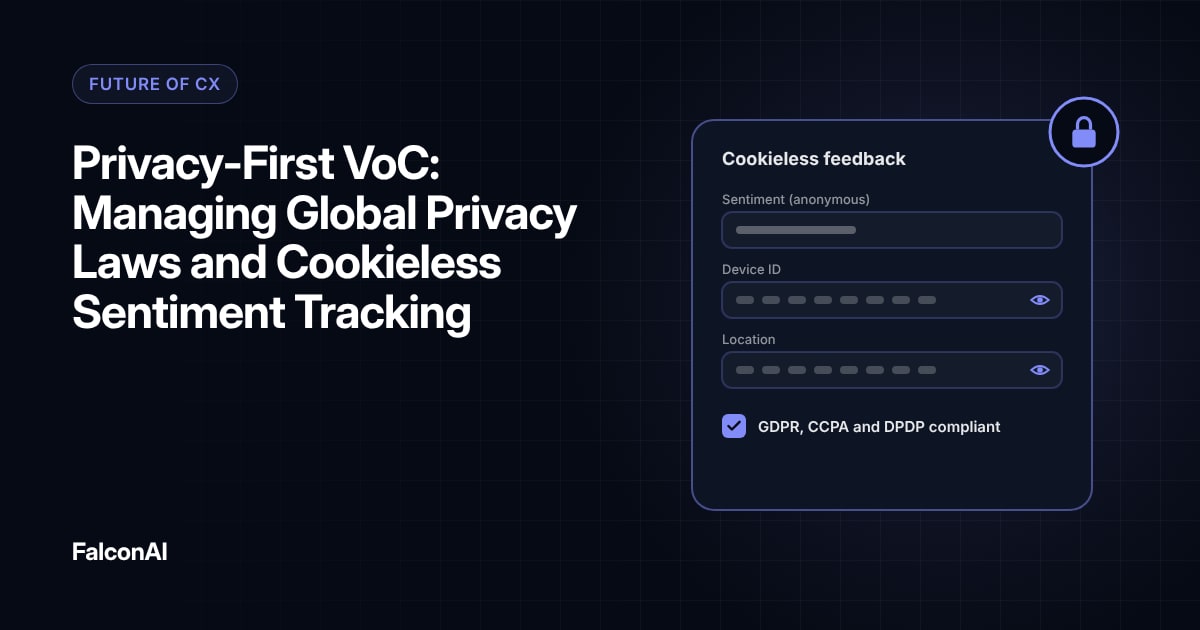
Device data can reveal a lot about people's homes and habits. Tell customers clearly what you collect and why. Cisco's 2024 Consumer Privacy Survey found that 75% of consumers won't buy from companies they don't trust with their data. Collect only what you need for service and product improvement. Our post on privacy-first VoC covers the rules.
Edge processing helps
Processing data on the device can reduce how much personal information leaves it. AMD's Salil Raje has said that “edge AI will reshape our world in a profound way.” For VoC, it means devices can summarize signals locally and send only what matters.
Bringing It All Together
Device signals are most useful when they sit alongside other feedback. Link device events to customer records so you can see the full picture.
Start with one product line
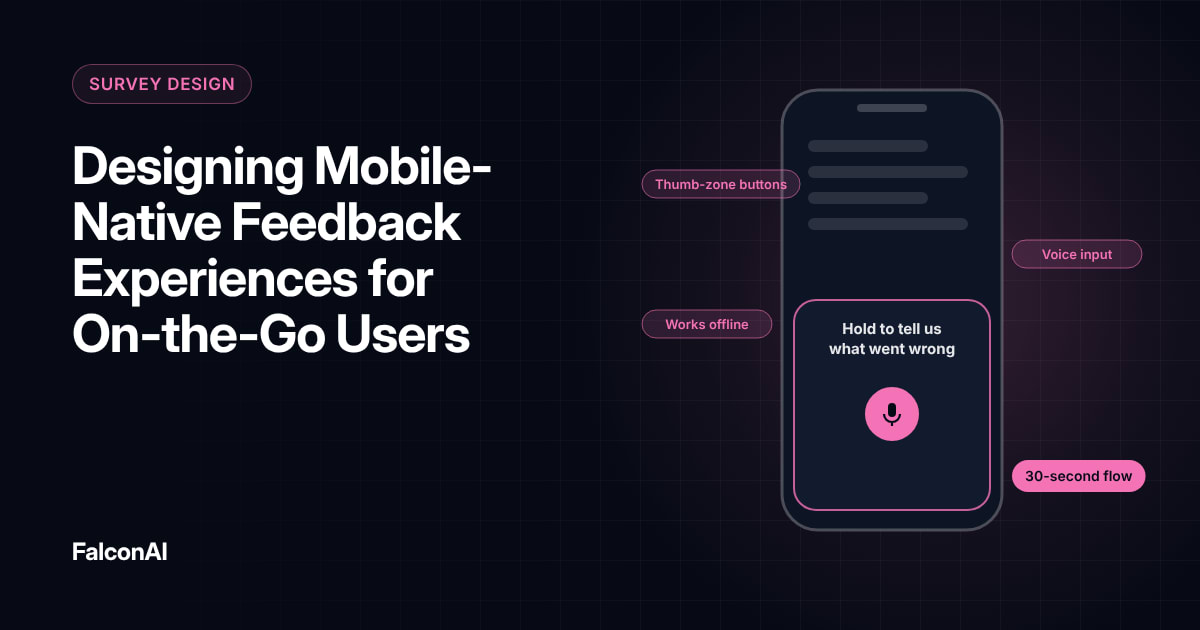
Pick a connected product with a known pain point. Combine its device data with support tickets and surveys. Look for patterns, then expand to other products. Our guide to federated VoC data shows how to join these sources, and our post on mobile-native feedback covers prompts on phones. You can analyze device-triggered feedback alongside every other channel in NPS analysis, or book a demo.
Start with one product line
- Pick a connected productWith a known pain point
- Combine the dataDevice data, tickets and surveys
- Look for patterns
- ExpandTo other products
Frequently asked questions
How does IoT capture customer feedback?
Connected devices report usage and errors, and they can trigger short feedback questions at key moments.
What role does augmented reality play in VoC?
AR help sessions show where customers struggle, and they can end with a quick feedback prompt.
Is device data a replacement for surveys?
No. It shows behavior, and direct feedback explains the reasons behind it.
What are the privacy risks?
Device data can reveal personal habits, so collect only what you need and be clear about it.
How does edge processing help?
It lets devices summarize data locally and send less personal information.
Where should you start?
With one connected product that has a known problem.