You run a CX team of three to eight people. You send CSAT surveys after support tickets and NPS surveys every quarter. You need to know what's driving the scores. For that job, a Qualtrics contract is hard to defend in a budget review.
The Budget Math Doesn't Work at Midsize
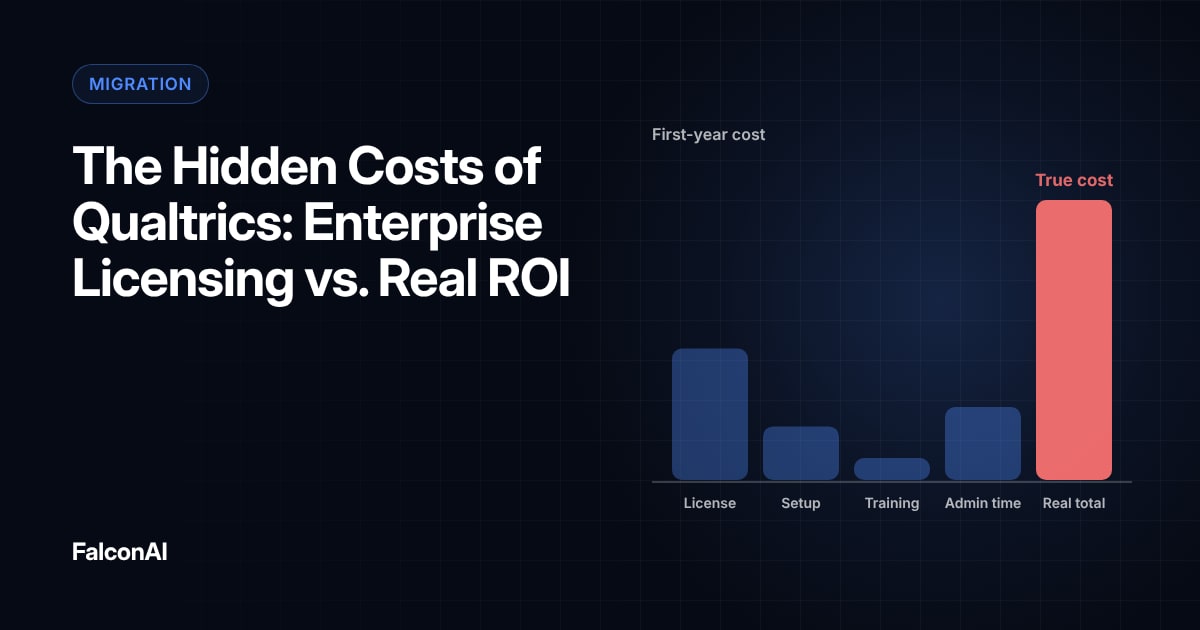
Independent buyer data shows the average Qualtrics SMB contract at about $53,500 a year. SMB pricing in that data rose roughly 9% year over year. For a small CX team, that's close to the cost of another full time hire.
Price grows faster than your team
Your budget might grow a few percent a year. If your platform grows at 9%, it eats a bigger share every renewal. At some point, you're choosing between the tool and a person.
- $53,500Average Qualtrics SMB contract a yearSource: Independent buyer data
- 9%SMB pricing rise, year over yearSource: Independent buyer data
Figures as cited in this article
You Pay for Research Tools You Don't Use
Qualtrics bundles deep research features like advanced statistics and panel tools. Midsize CX teams rarely touch them. One industry pricing analysis argues that the buyers who regret Qualtrics are usually midsize teams that needed feedback analysis and bought a research suite to get it.
What midsize teams actually run
Most midsize programs come down to two jobs. You collect CSAT and NPS scores at key moments. Then you work out what's behind them. A platform built for NPS analysis covers both without the research overhead.
What you buy vs. what you run
Research suite
- Advanced statistics
- Panel tools
- Rarely touched by midsize teams
What midsize teams run (the approach the article favours)
- Collect CSAT and NPS at key moments
- Work out what's behind them
No Dedicated Admin Means Slow Answers
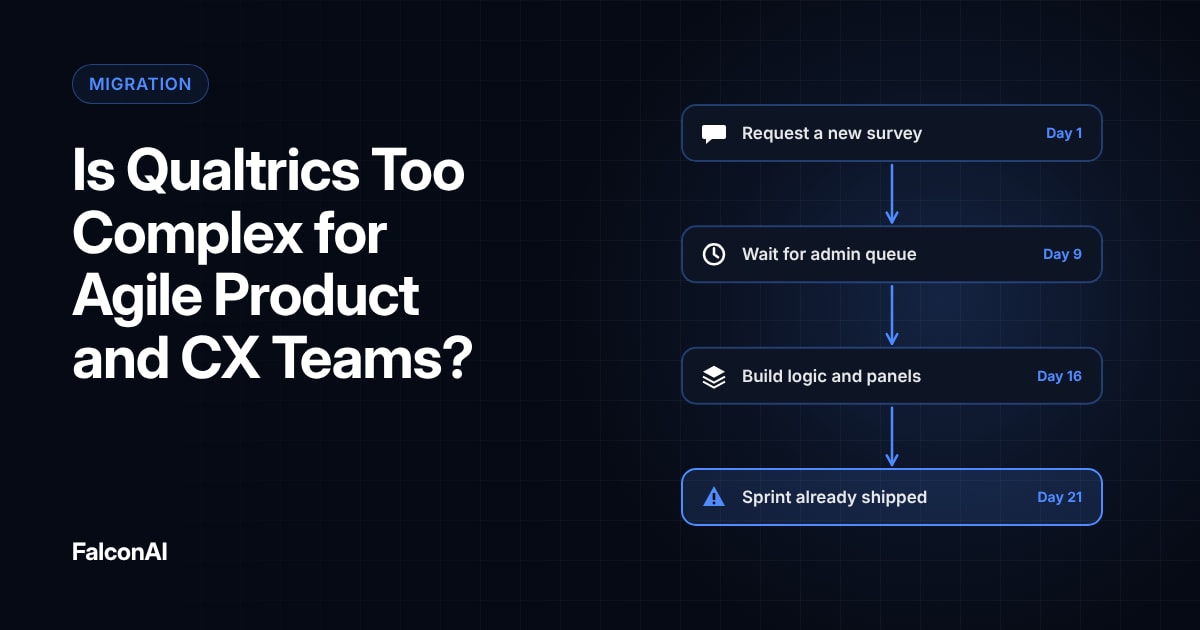
Large companies hire Qualtrics admins. Midsize teams don't. G2 reviewers of Qualtrics Customer Experience mention a steep learning curve and complex customization. So the CX manager ends up learning the platform on nights and weekends.
The person who leaves
When the one person who knows the dashboards quits, your reporting stalls. A tool your whole team can use on day one removes that risk. Our post on whether Qualtrics is too complex covers this in more depth.
Free review snapshot
See what your customers are saying, before you talk to us.
No commitment. We use your details only to send your snapshot and follow up. Privacy policy
What to Look for Instead
CX quality is slipping, so small teams can't afford slow tools. Forrester reported that 25% of US brands it tracked saw CX quality drop in 2025, while only 7% improved.
Pick a platform priced for your team size, with AI theme detection built in. “VoC is an essential component of a successful CX program,” said Gartner's Deb Alvord. The right tool makes that program something a small team can run.
Build the case for your CFO
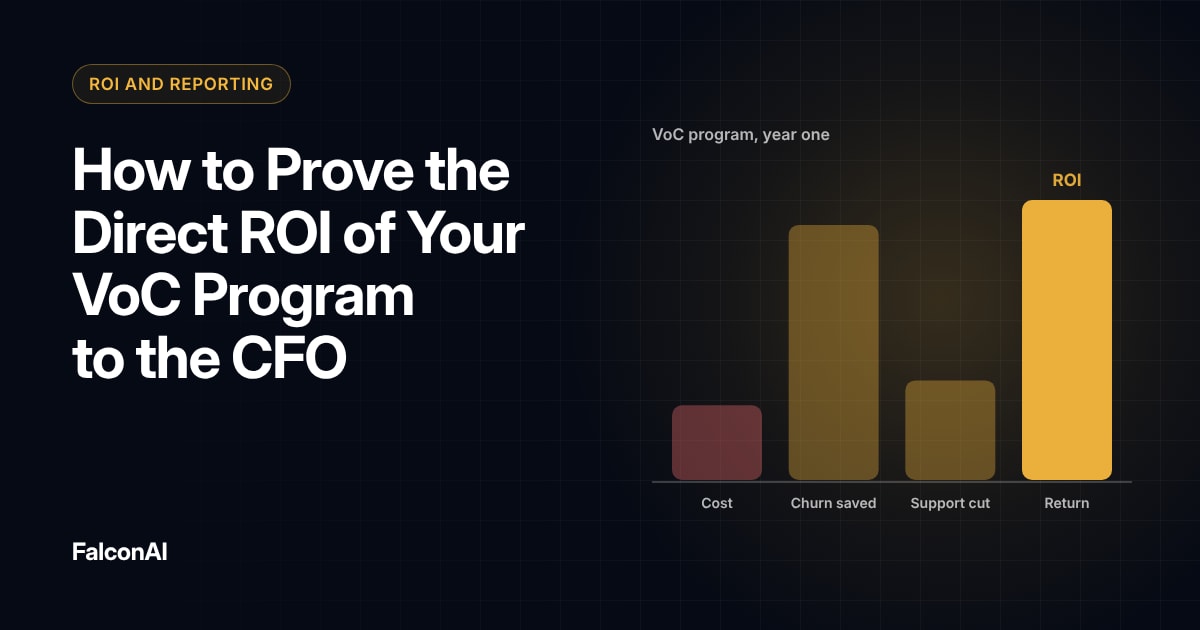
Put your current Qualtrics cost next to a focused tool's published pricing. Add the hours your team spends on admin work. Our guides to the hidden costs of Qualtrics and proving VoC ROI give you the numbers. Then book a demo to test it with your data.
US brands Forrester tracked in 2025
Source: Forrester. Figures as cited in this article
Frequently asked questions
Is Qualtrics good for small businesses?
Qualtrics offers smaller plans, but its strength is enterprise research. Many small and midsize CX teams find focused tools cheaper and easier to run.
How much does Qualtrics cost for a midsize company?
Independent buyer data shows an average SMB contract near $53,500 a year. Your price depends on modules and response volume.
What is the best VoC tool for a midsize company?
Look for published pricing and AI theme detection. Your team should run it without a dedicated admin.
Do midsize companies need a VoC platform?
If you collect CSAT or NPS at scale, yes. Reading thousands of comments by hand doesn't work for a small team.
How do I justify CX software spend to my CFO?
Show the revenue at risk from unhappy customers and the cost of the tool. Track fixes made from feedback and the retention change that follows.
Can a small team manage Qualtrics?
It's possible, but the learning curve is steep. Small teams often lack the admin time that large deployments assume.