Feature creep happens slowly. It starts with a single quick addition. A year later your product is cluttered and your team is maintaining features few people use. Quantified VoC prioritization gives you a clear reason to say no.
What Feature Creep Costs
Every feature adds code to maintain and edge cases to test. It also makes the product harder for new users to learn.
Most of it goes unused
Product analytics research cited at a 2024 industry panel found that about 20% of features drive roughly 80% of usage. The rest are rarely or never used. That unused 80% still needs updates and support.
- 20%of features drive roughly 80% of usageSource: Product analytics research, 2024 industry panel
- 80%unused share that still needs updates and support
Figures as cited in this article
Why Teams Keep Adding Features
A survey of more than 1,500 product managers found that about 52% say strategy is mostly driven by senior executive requests or direct customer asks. When every request feels urgent, the roadmap fills up with one-off additions.
Saying no without data is hard
It's difficult to turn down a big customer or a senior leader with only a gut feeling. Numbers make the conversation easier, and they help you explain the decision to the customer later. A clear score also stops the same debate from coming back every quarter. When a request gets turned down, everyone can see the reasoning behind the decision.
Score Every Request the Same Way
Build a simple scoring model using VoC data. Give each request points for:
- The number of customers who mention the underlying problem.
- The revenue those customers represent.
- How often the problem appears in churned or at-risk accounts.
- How strongly customers feel about it, based on sentiment.
Subtract the cost
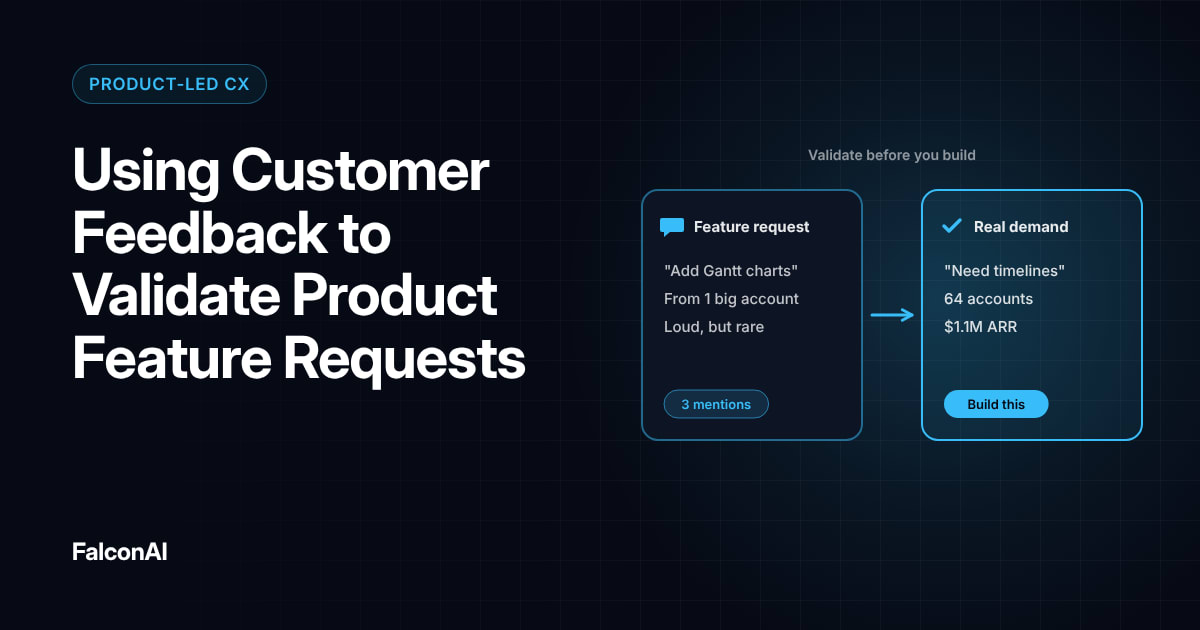
Divide the score by the effort to build and maintain the feature. A high-value request that takes a week beats a medium-value one that takes a quarter. Our guide to validating feature requests explains how to check demand before scoring. Be honest about maintenance. A feature that takes a week to build may take hours every month to support for years.
Score every request the same way
- Customers with the problem
- Revenue they represent
- Churned or at-risk accounts
- Strength of sentiment
- Divided by effort to build and maintain
Free review snapshot
See what your customers are saying, before you talk to us.
No commitment. We use your details only to send your snapshot and follow up. Privacy policy
Make the Scores Visible
Share the scoring model with sales and leadership. When everyone can see why one request ranks above another, debates get shorter. Requests that score low can still be revisited later if more customers raise them. Publish the top ten each quarter so every team knows what's coming.
Retire features that don't earn their place
Prioritization works in both directions. Review usage and feedback for existing features each year. If a feature has low usage and no positive feedback, consider removing it. Tell affected users early and offer an alternative where you can. Most people accept a removal when they understand the reason.
Hold the line
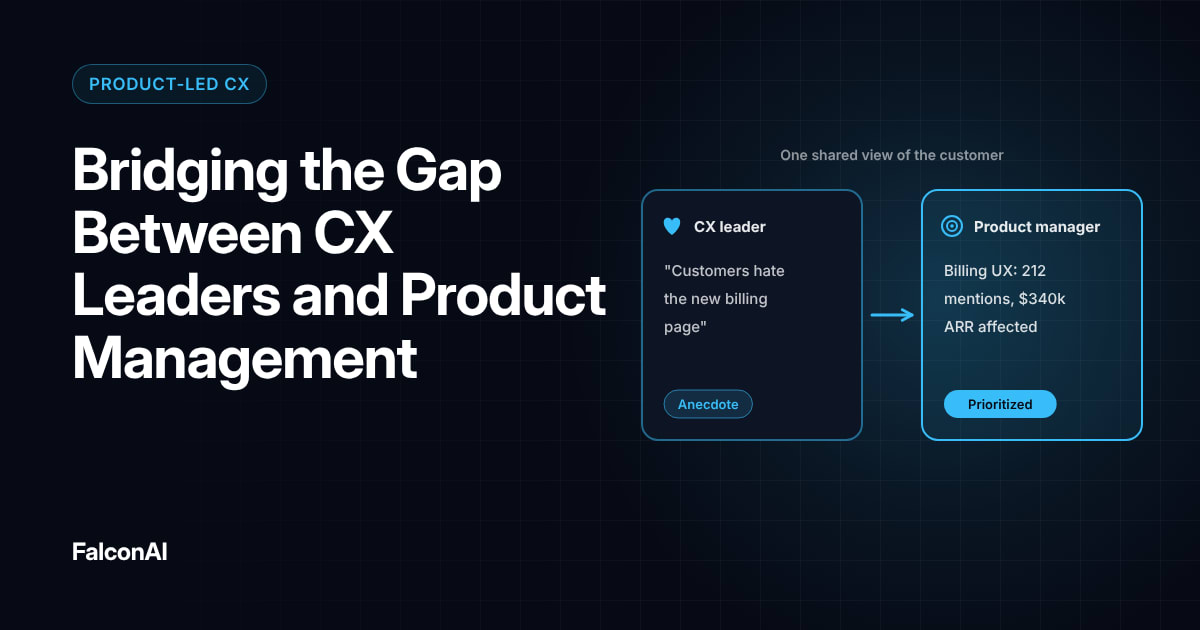
A scoring model only works if you follow it. When an exception comes up, write down why. A few documented exceptions are fine. A pattern of them means the model needs updating. Our post on bridging CX and product teams covers how to keep both sides aligned. You can see request volume and sentiment in NPS analysis, or book a demo.
Frequently asked questions
What is feature creep?
It's the steady addition of features that make a product more complex without adding much value for most users.
How does VoC help prevent feature creep?
It gives you numbers on how many customers need each feature, so you can rank requests and turn down low-value ones.
What should a prioritization score include?
Customer count, revenue, churn risk and sentiment, divided by the effort to build and maintain the feature.
How do you say no to a big customer?
Show them the scoring model and explain how their request compares. Offer a timeline to revisit it.
Should you remove unused features?
Consider it when a feature has low usage and little positive feedback. Removing it can make the product easier to use.
How often should you review the scoring model?
Once or twice a year, or whenever your strategy changes.