Someone on your team probably spends a day each month reading survey comments and tagging them in a spreadsheet. By the time the report is ready, the comments are weeks old. AI theme extraction does that work in minutes.
Why Manual Tagging Breaks
Manual tagging works when you get 200 comments a month. It falls apart at 20,000. Two people tag the same comment differently, and the tag list grows until nobody remembers what half the tags mean.
The hidden cost of slow tagging
Slack's 2024 research found that desk workers spend 41% of their time on low-value tasks. Copying comments into a spreadsheet is a good example. Every hour spent tagging is an hour nobody spends fixing the problems customers raised.
- 41%of desk workers' time spent on low-value tasksSource: Slack, 2024
Figures as cited in this article
How AI Theme Extraction Works
A theme model reads every comment and groups similar statements together, even when customers use different words. “Can't log in,” “password reset broken,” “locked out again” and “the 2FA code never arrives” all land in one account access theme.
Themes you didn't plan for
A fixed tag list only finds what you already expected. A theme model can surface new clusters, such as a spike in complaints the week after a release. You spot the issue in days and skip the wait for a quarterly report.
This matters most after launches and policy changes. A new pricing page or a changed returns rule can trigger a wave of comments within hours. A theme model shows that wave as it builds, so the owner can respond while the change is still easy to adjust.
Different words, one theme
- “Can't log in”
- “Password reset broken”
- “Locked out again”
- “The 2FA code never arrives”
Keeping Themes Useful
AI output still needs review. Bain's 2024 executive survey on AI found that poor performance and low-quality output were the main reasons AI use cases fell short. Theme models face the same risk. Here's a simple review routine:
- Merge themes that mean the same thing.
- Rename themes in words your teams already use.
- Assign an owner to each major theme.
- Check a sample of comments in each theme every month.
Keep the theme list short
Twenty clear themes are easier to act on than two hundred vague ones. If a theme gets only a handful of comments a month, fold it into a broader one.
A simple review routine
- Merge duplicate themes
- Rename in your teams' words
- Assign an ownerOne for each major theme
- Check a sample monthlyComments in each theme
Free review snapshot
See what your customers are saying, before you talk to us.
No commitment. We use your details only to send your snapshot and follow up. Privacy policy
Putting Themes to Work
Themes matter when they reach someone who can act. Gartner predicted that by 2025, 60% of organizations with VoC programs would add voice and text analysis to their surveys. That means more text to read, and more reason to automate.
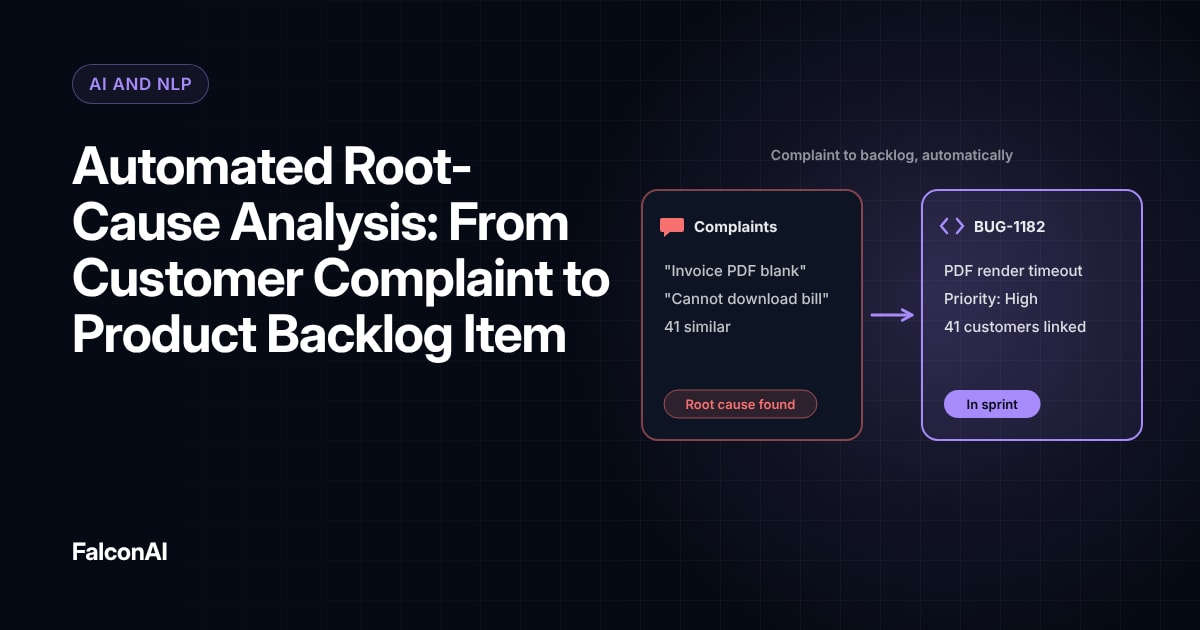
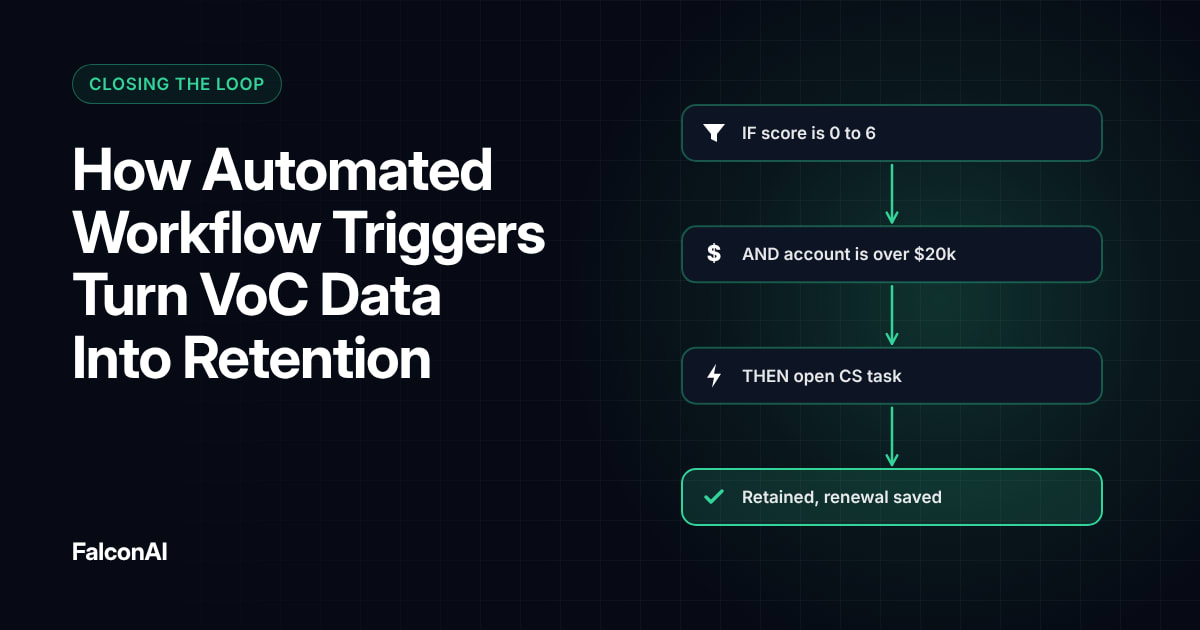
Send each theme's weekly volume and sentiment to its owner. Keep the format the same each week so owners can scan it in a minute. A short table with each theme's volume and two sample quotes is enough. Link rising themes to automated workflow triggers so urgent issues get a fast response. For product issues, our guide to automated root-cause analysis shows how to turn a theme into a backlog item.
Track themes over time
A theme that keeps growing after a fix tells you the fix didn't work. A theme that drops shows your change landed. You can track theme trends alongside scores in NPS analysis, or book a demo to see it on your own comments.
Frequently asked questions
What is AI theme extraction?
It's the use of AI to group open-text feedback into themes automatically, so you don't have to tag comments by hand.
How accurate is automated theme tagging?
It's accurate enough for most VoC programs once you review and rename the themes. Check a sample each month.
Can AI find themes I didn't expect?
Yes. Theme models group comments by meaning, so new issues show up as new clusters.
How many themes should you track?
Keep it to a number your teams can review, often 15 to 30 for a whole program.
Does theme extraction work in other languages?
Most modern models handle several languages. Test them on a sample of your own comments first.
Who should own each theme?
The team that can fix the issue behind it, such as product for bugs or finance for billing.