Your NPS survey goes out once a quarter. Your customers decide to leave whenever they like. If you wait for a low score before you act, you'll miss many of the customers who were already on their way out.
Why Surveys Come Too Late
Fewer customers answer surveys now. Qualtrics' 2025 study of how consumers share feedback found that only 32% of people with a bad experience told the company directly. Most of the others simply leave.
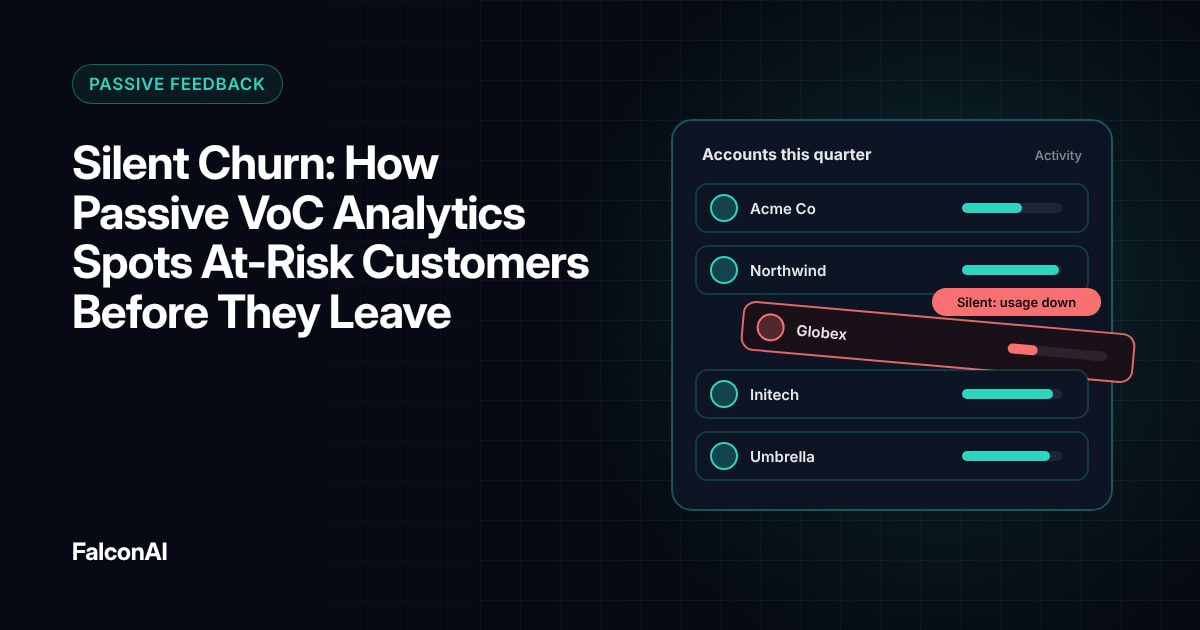
Silent churn
Metrigy research found that 44.4% of customers leave after an average of 2.4 bad experiences. That's two or three moments where you could have stepped in, and none of them showed up in a survey. Our post on silent churn covers this in more detail.
- 32%of people with a bad experience told the companySource: Qualtrics, 2025
- 44.4%of customers leave after repeated bad experiencesSource: Metrigy
- 2.4bad experiences, on average, before they leaveSource: Metrigy
Figures as cited in this article
What Predictive VoC Looks At
Predictive VoC combines feedback with behavior. It looks for the patterns that came before past cancellations. Common signals include:
- Repeat support tickets on the same issue.
- Negative comments that mention a competitor or a contract date.
- Falling product usage or fewer active users.
- Complaints that have gone unanswered for more than a week.
Text signals tell you why
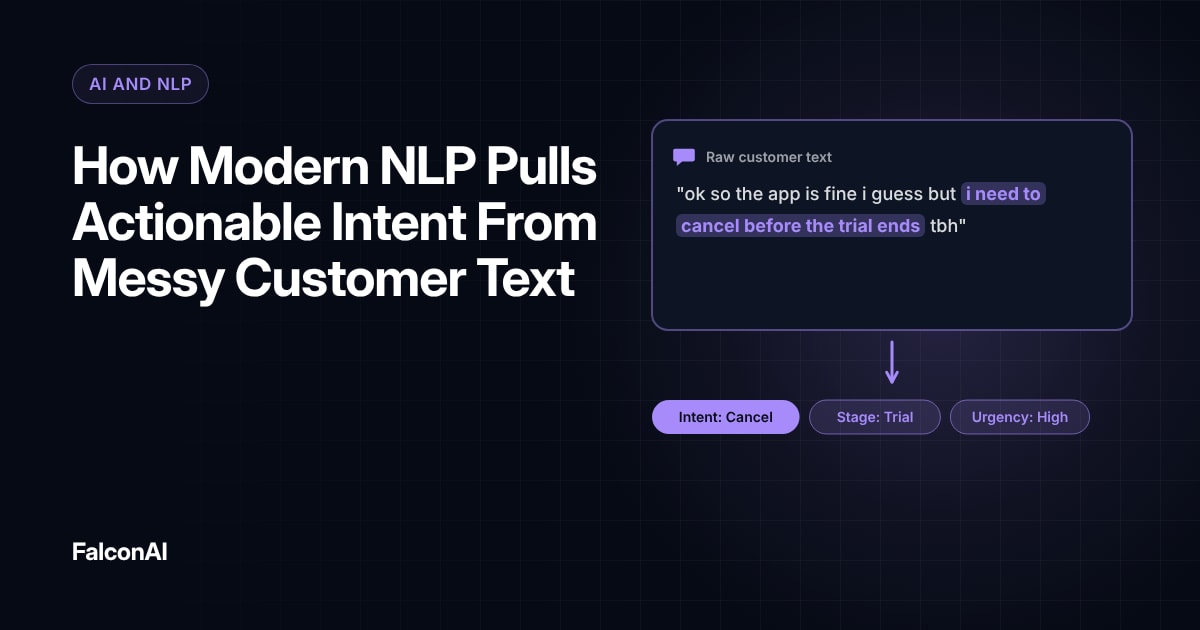
Usage data tells you something changed. Text tells you why it changed. A customer who writes “we're reviewing other options” in a ticket is giving you a clear warning. Our guide to pulling intent from customer text shows how NLP spots these phrases. Watch for silence too. An account that used to send feedback every month and suddenly stops is worth a call.
Signals that came before past cancellations
- Repeat tickets on the same issue
- Negative comments naming a competitor or contract date
- Falling usage or fewer active users
- Complaints unanswered for more than a week
- Accounts that suddenly stop sending feedback
Building a Simple Churn Model
You don't need a data science team to start. Pull a list of customers who left last year and a list who stayed. Compare what their feedback and usage looked like in the three months before renewal. The signals that show up far more often in the churned group are your starting rules.
Keep the first version simple. A few rules your team understands will get used. A complex model nobody can explain will get ignored, even if it scores well in testing.
Score risk, then act on it
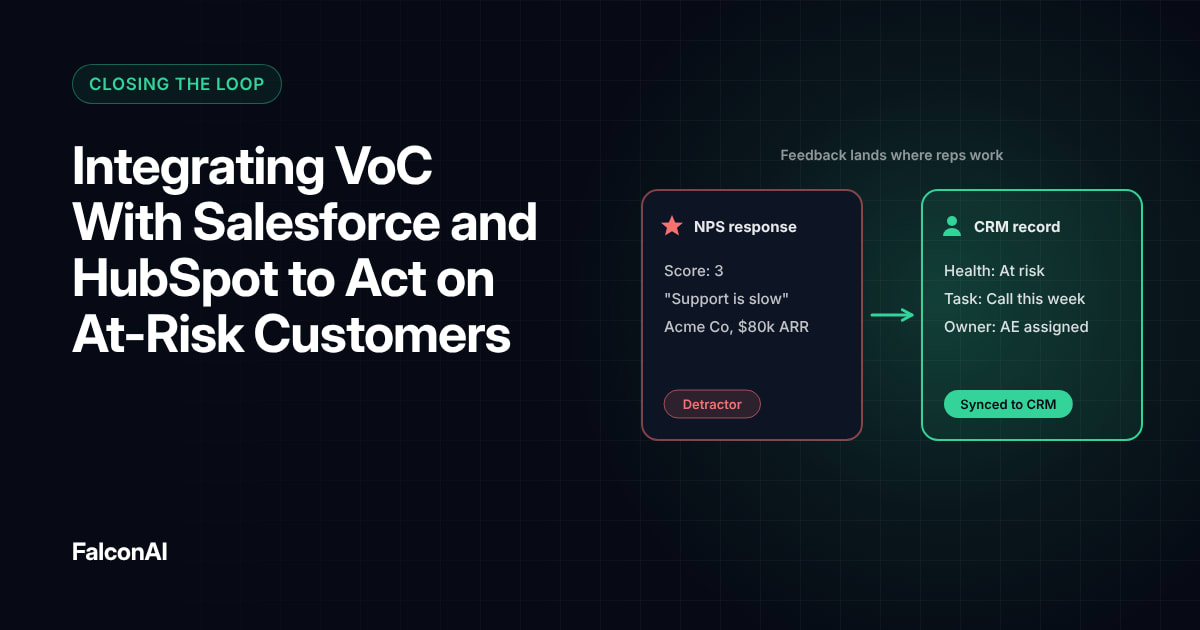
Give each account a risk score and send high scores to the account owner. Our post on integrating VoC with your CRM explains how to show that score where account managers already work.
A simple churn model
- List who left and stayedCustomers from last year
- Compare feedback and usageThe three months before renewal
- Turn frequent signals into rulesSignals far more common among churned
- Score risk, then actHigh scores go to the account owner
Free review snapshot
See what your customers are saying, before you talk to us.
No commitment. We use your details only to send your snapshot and follow up. Privacy policy
Proving It Works
McKinsey's State of AI research for 2025 found that 37% of respondents attribute at least some EBIT impact to their AI use. If you want your churn model to count, measure it from day one. Track how many flagged accounts renew compared with similar accounts you didn't flag. Run the test for at least two renewal cycles before you judge it, since one quarter rarely gives you enough renewals to see a clear difference.
TTEC Digital's Tom Lewis argues that when brands connect interaction data with AI, “they can prevent the ghosting altogether.” Each save you make teaches the model something about the next one.
Keep a person in the loop
A risk score tells your team who to call first. Let account managers mark false alarms so the model improves over time. You can track at-risk accounts in NPS analysis, or book a demo to see how it works.
Frequently asked questions
What is predictive VoC?
It uses feedback and behavior data to forecast which customers are likely to leave before they say so.
What data do you need for churn prediction?
Start with support tickets and product usage. Add survey comments and billing data once those work.
How accurate are churn predictions?
Accuracy depends on your data. Compare flagged accounts with renewals each quarter and adjust the rules.
Do you need machine learning to predict churn?
No. Simple rules based on past cancellations work well to start. You can move to a trained model later.
How early can you spot churn risk?
Often weeks or months ahead, especially when customers mention competitors or contract dates in their feedback.
Who should act on a churn alert?
The account owner or customer success manager, ideally within one business day.