Most VoC dashboards show a sentiment score. Green means happy and red means unhappy. It looks clear, yet it often tells you very little about what to fix.
How Traditional Sentiment Analysis Works
Older sentiment tools score text against a word list. “Great” adds points. “Terrible” takes them away. The total becomes one label for the whole comment.
That worked for short product reviews. Enterprise feedback is longer and more mixed, and a single label can't carry it.
The mixed comment problem
Take this comment: “Setup was painful, but your support team was brilliant.” A word-list tool may score it as neutral, since the positive and negative words cancel out. Your onboarding team never hears about the painful setup. Your support team never hears the praise either.
Where It Breaks Down at Scale
Enterprise programs collect thousands of comments a week from many channels. Small errors in each label add up fast at that volume.
Context changes meaning
“Sick” is praise from one customer and a complaint from another. “The price is unreal” could go either way. Word lists can't see context. A 2024 study in the Journal of Student Research found that even large language models varied widely on sarcasm, and one was clearly weaker on sarcastic sentences than plain ones.
Scores without causes
A sentiment trend line tells you mood shifted. It doesn't tell you why. Forrester's 2025 research on feedback management found that CX teams have yet to get the full value from generative AI. Many programs still stop at the score.
Averages also hide small groups. If 5% of your enterprise accounts are furious about a new permission model, their comments barely move the overall score. Those accounts may carry a large share of your revenue. A sentiment number for the whole program will look stable right up to the renewal meeting where they leave.
Why This Costs You Customers
Customers have little patience. Zendesk's 2025 CX Trends Report found that 63% of consumers would switch to a competitor after one bad experience, up 9% from the year before. If your sentiment tool hides that bad experience inside a neutral score, you won't know until the customer leaves.
Gartner's Augie Ray warned that “clients will still demand more than just great natural language processing (NLP).” Accurate labels are the starting point. You also need to connect them to topics and owners.
- 63%of consumers would switch after one bad experienceSource: Zendesk 2025 CX Trends Report
Figures as cited in this article
Free review snapshot
See what your customers are saying, before you talk to us.
No commitment. We use your details only to send your snapshot and follow up. Privacy policy
What to Use Instead
Aspect-based sentiment
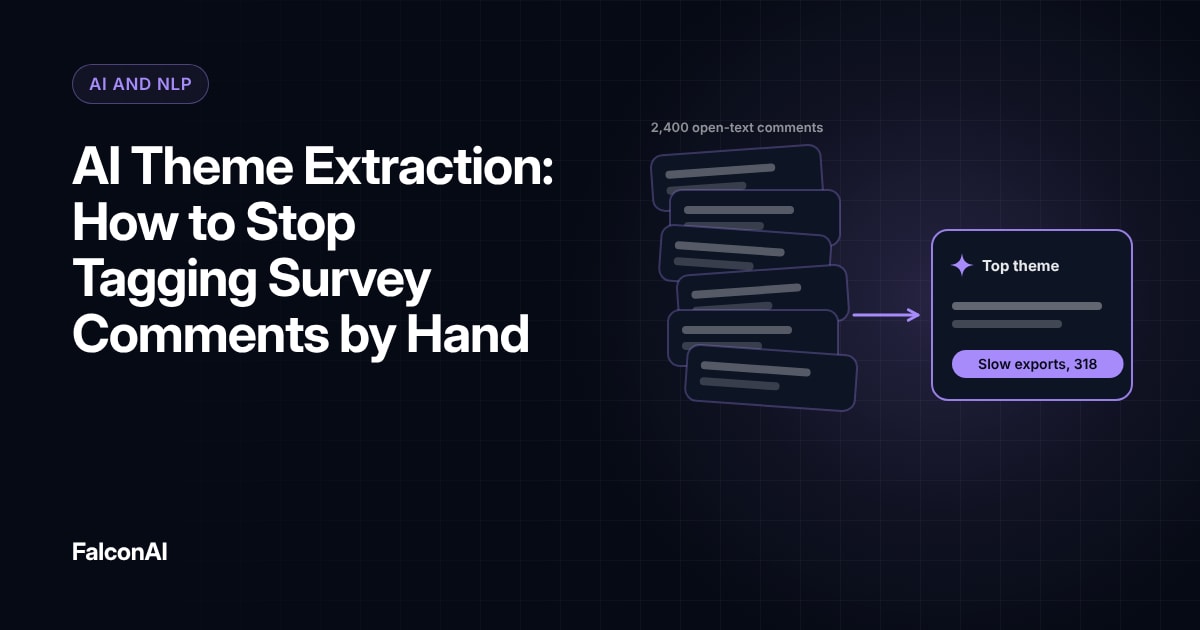
Aspect-based sentiment scores each topic in a comment on its own. The setup example becomes two findings, negative on onboarding and positive on support. Each one goes to the right team. Our post on AI theme extraction explains how topics get tagged. Start with the topics your teams already own, such as billing or onboarding, and add more as volume grows.
Add intent and emotion
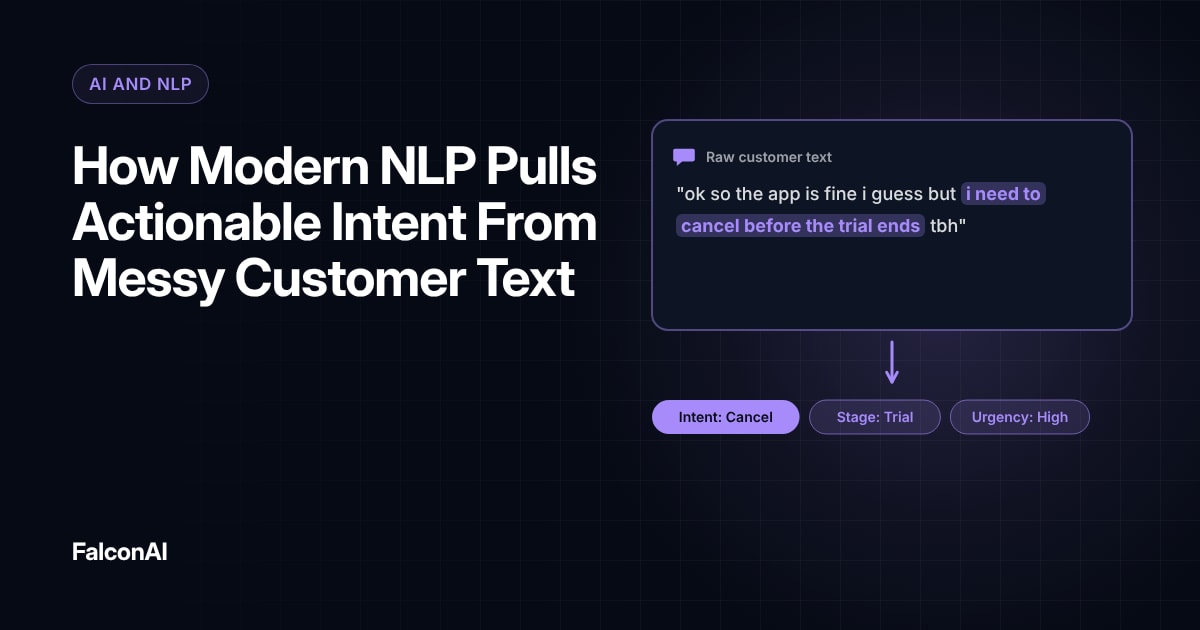
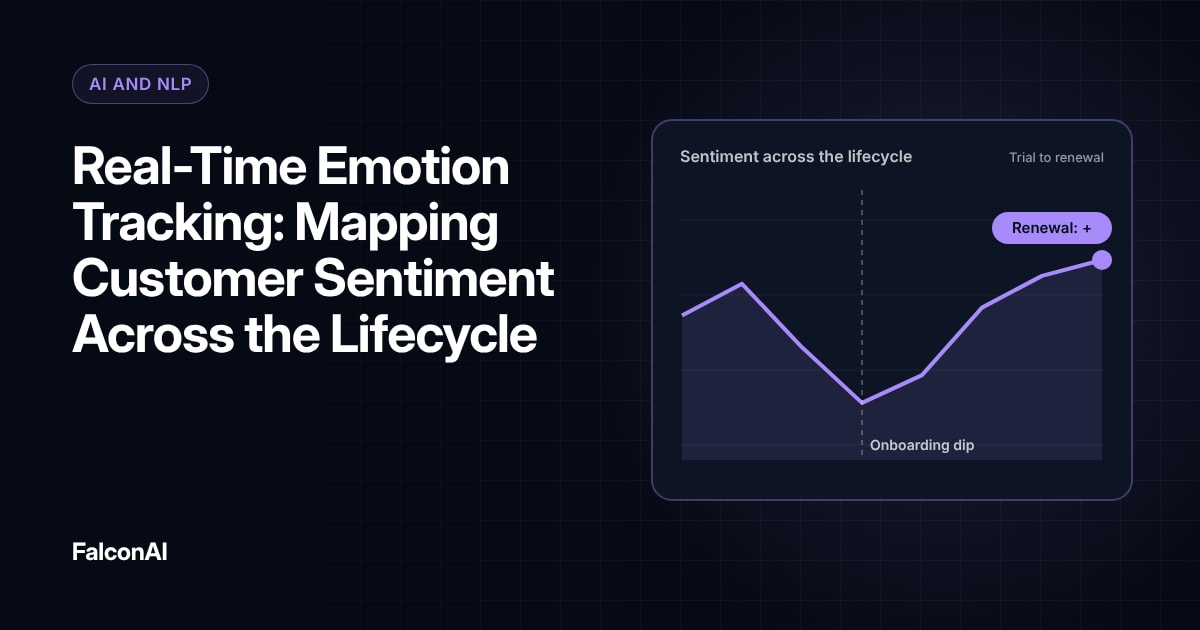
Sentiment says how someone feels. Intent says what they plan to do. A calm comment that mentions a competitor is a bigger risk than an angry one about a typo. Read more in our guides to pulling intent from customer text and emotion tracking. You can see topic-level sentiment in CSAT analysis.
One label per comment vs one per topic
Word-list sentiment
- Scores text against a word list
- One label for the whole comment
- Mixed comments can score neutral
Aspect-based sentiment (the approach the article favours)
- Scores each topic on its own
- Negative on onboarding, positive on support
- Each finding goes to the right team
Frequently asked questions
What is traditional sentiment analysis?
It gives each comment a single positive or negative score, usually by matching words against a list.
Why is sentiment analysis inaccurate for enterprise feedback?
Enterprise comments often cover several topics with different feelings. A single score blends them together.
What is aspect-based sentiment analysis?
It scores sentiment for each topic in a comment, such as pricing or support, so you can see what customers like and dislike.
Can AI detect sarcasm?
Newer models do better than word lists, but they still make mistakes. Check a sample of flagged comments by hand.
Should you stop tracking sentiment?
No. Keep it as one signal and pair it with topics and intent so you know what to fix.
How often should you review sentiment accuracy?
Once a month works for most teams. Review a random sample and correct the labels the tool gets wrong.