As VoC programs grow, they often split into pieces. Support runs one survey. Product runs another. Marketing tracks reviews on its own, and sales keeps notes in the CRM. Somebody needs to bring it all together. In many companies, that's the chief customer officer.
Why the CCO Role Matters Now
Customer experience is getting harder to deliver. Forrester's 2024 US CX Index found that 39% of brands declined in CX quality over the past year. Forrester's Rick Parrish noted that “organizations struggle with the scale of change that this requires.” A CCO gives that change a single owner. Without one, every team optimizes its own piece and the overall experience suffers.
Investment is growing
A 2025 survey of 250 US enterprise leaders by TELUS Digital and Statista found that 78% plan to increase CX spending in 2025. More budget makes clear ownership even more important.
- 39%of brands declined in CX quality over the past yearSource: Forrester 2024 US CX Index
- 78%of US enterprise leaders plan to increase CX spendingSource: TELUS Digital and Statista, 2025
Figures as cited in this article
What a CCO Owns in VoC
A CCO's VoC responsibilities usually include:
- One feedback strategy across every team and channel.
- Shared metrics and governance rules.
- The technology stack for collecting and analyzing feedback.
- Accountability for acting on what customers say.
These responsibilities often grow as the company expands into new markets.
Build the infrastructure first
Before a CCO can drive action, feedback needs to flow into one place. That means connecting surveys and support tickets, then tagging them with shared themes. Start with the channels that carry the most customer volume. Our guide to automated VoC workflows explains how to connect the pieces.
Bringing the pieces together
- Support's survey
- Product's survey
- Marketing's reviews
- Sales notes in the CRM
- One feedback strategy
- Shared metrics and governance
- The technology stack
- Accountability for acting
Scale Without Losing Focus
Growth brings more data and more requests. A CCO keeps the program focused on the issues that matter most to customers and the business.
Set clear priorities
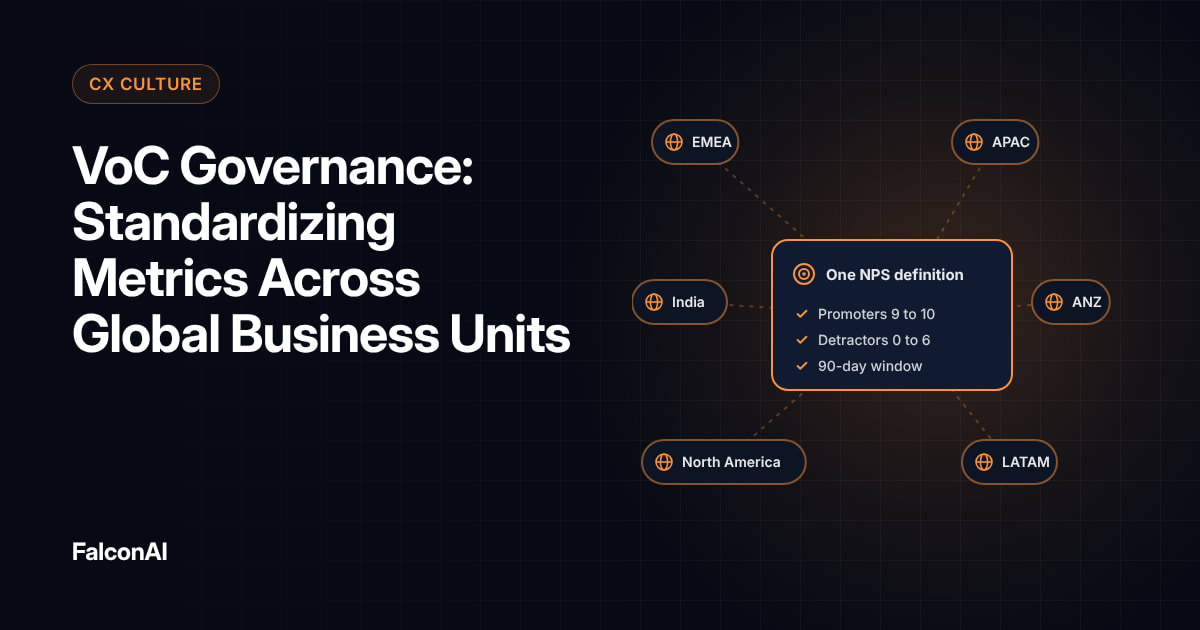
Rank themes by how many customers they affect and the revenue at stake. Share that ranking widely so every team works from the same list. Revisit the ranking each quarter as new themes appear. Our post on VoC governance covers how to keep metrics consistent as you grow.
Free review snapshot
See what your customers are saying, before you talk to us.
No commitment. We use your details only to send your snapshot and follow up. Privacy policy
Connect VoC to the Executive Team
A CCO's seat at the leadership table is what makes VoC matter. They bring customer themes into strategy discussions and budget decisions. Gartner's J.J. Moncus has said that “customers' and executive leaders' expectations for service interactions will only continue to rise.” The CCO is the person who keeps both groups aligned. Many CCOs also bring a short customer story to every board meeting.
Report in business terms
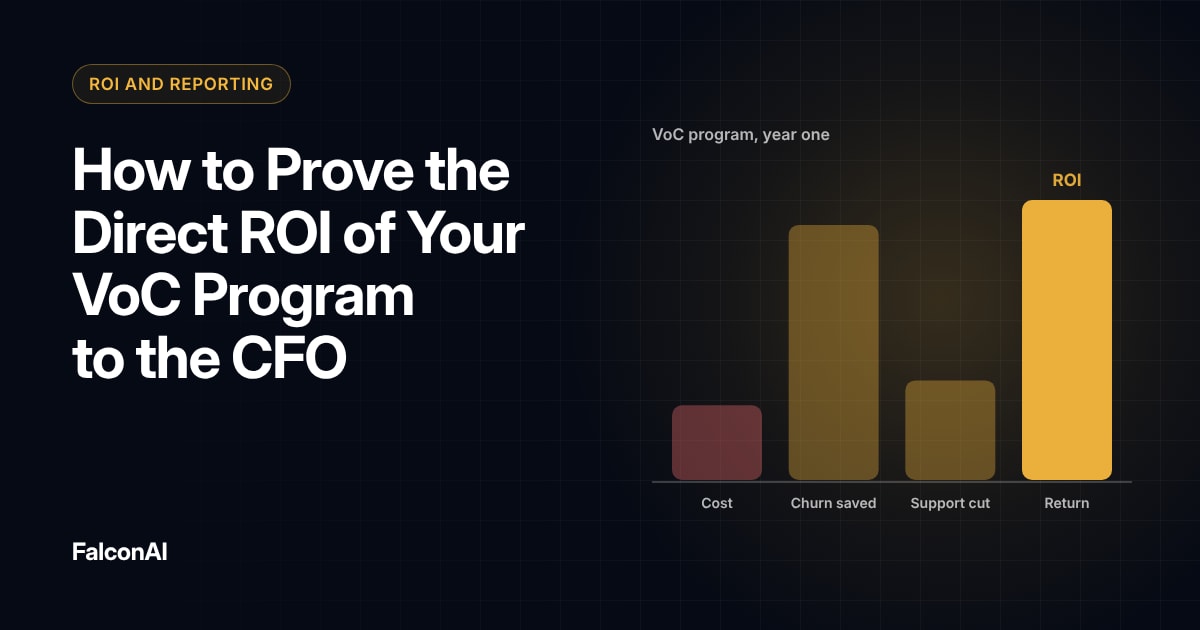
Tie customer themes to revenue and churn. Our guide to proving VoC ROI to the CFO shows how to build that case.
What If You Don't Have a CCO?
Many companies don't have a formal CCO. Someone still needs to own the VoC program end to end. A senior CX leader with executive backing can fill the role. This person should report to a senior executive and work closely with product and support.
Give the owner real authority
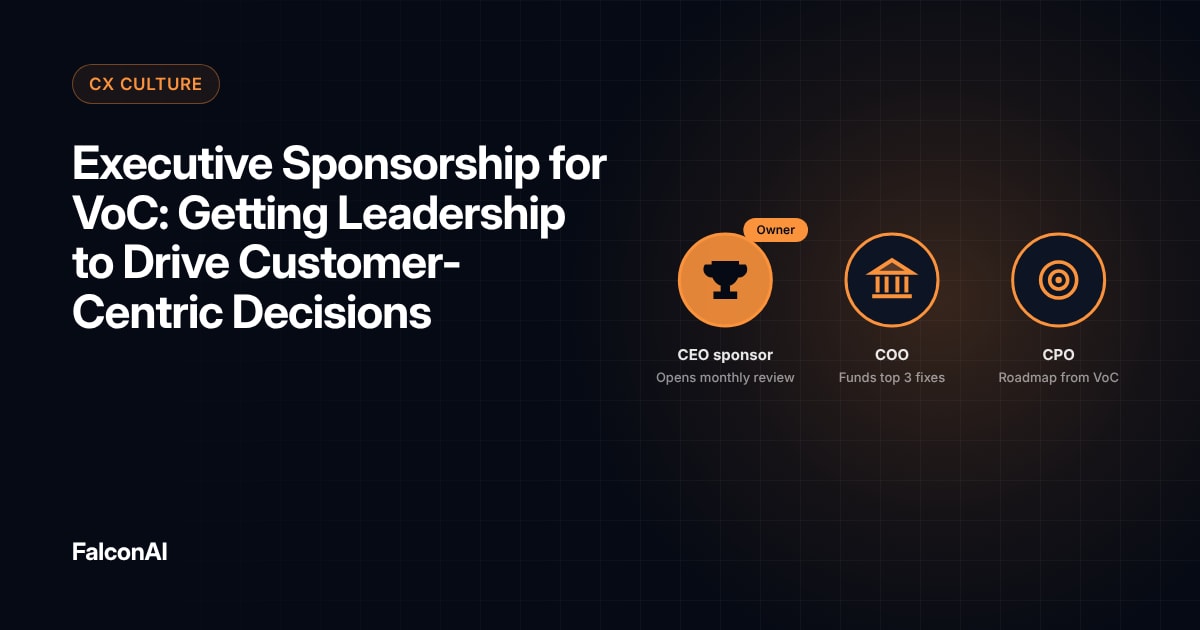
Without authority over budget and priorities, a VoC owner can only report on problems. Our post on executive VoC sponsorship explains how to build that backing. You can give your CCO one view of every feedback channel with NPS analysis, or book a demo.
Frequently asked questions
What does a chief customer officer do?
A CCO owns the overall customer strategy, including how feedback is collected and acted on.
Why does VoC need a CCO?
As programs grow, someone needs to bring scattered feedback efforts into one system.
What VoC infrastructure should a CCO build first?
A single place where all feedback flows and gets tagged with shared themes.
How does a CCO prioritize customer issues?
By ranking themes on the number of customers affected and the revenue at stake.
What if a company has no CCO?
A senior CX leader with executive backing can own the VoC program.
How should a CCO report results?
In business terms, linking customer themes to revenue and churn.