For years, customer experience meant reacting well. A customer hit a problem and waited for you to fix it. The next stage looks different. Companies will spot problems before customers do and solve many of them before anyone has to ask.
Where CX Is Heading
Gartner predicts that by 2029, agentic AI will autonomously resolve 80% of common customer service issues without human help. Gartner expects that shift to cut operational costs by 30%. Daniel O'Sullivan, senior director analyst at Gartner, said that “agentic AI will proactively resolve service requests on behalf of customers.”
Leaders already expect it
Zendesk's 2025 CX Trends Report found that 75% of CX leaders expect 80% of customer interactions to be resolved without human intervention within a few years. The question for most teams is how to get there safely.
- 80%of common service issues resolved autonomously by 2029Source: Gartner prediction
- 30%cut in operational costs expected from that shiftSource: Gartner prediction
- 75%of CX leaders expect 80% of interactions resolved without humansSource: Zendesk 2025 CX Trends Report
Figures as cited in this article
Why VoC Data Is the Foundation
Predictive service depends on knowing what usually goes wrong. Years of feedback show which problems repeat and what fixed them last time. That history is what lets a system act before a complaint arrives.
Patterns become predictions
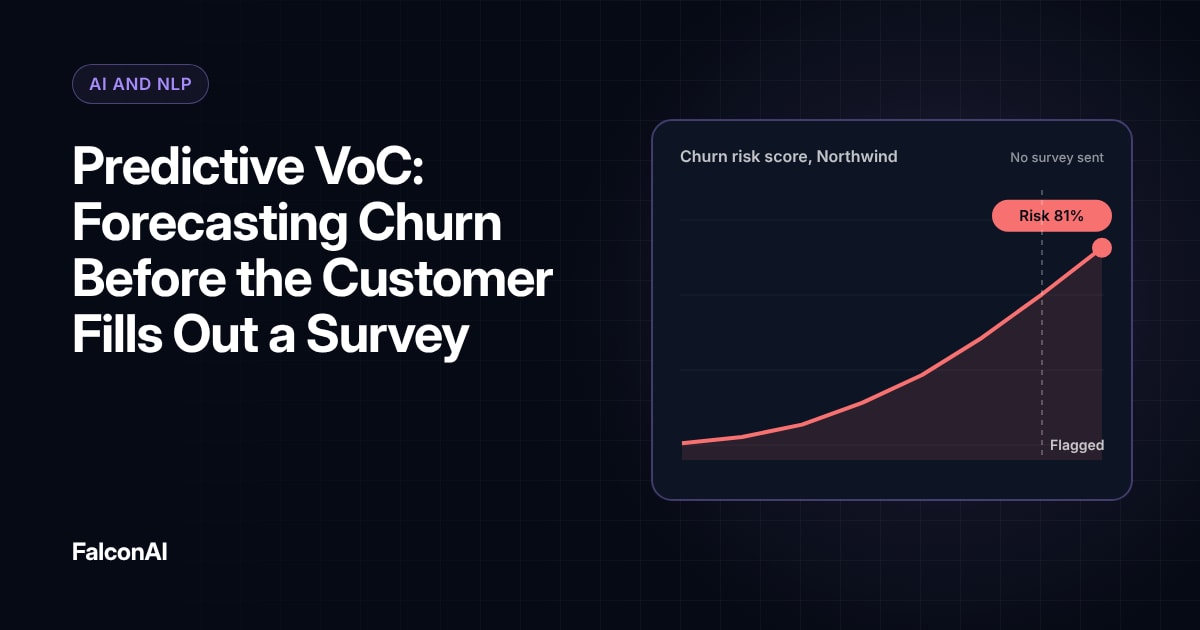
If customers often complain about a confusing invoice after their first renewal, you can send a clear explanation before the invoice goes out. If a bug tends to hit after a certain update, you can warn affected users early. Our guide to predictive VoC and churn explains how to build these early warnings.
What Invisible Service Looks Like
The best experiences often feel like nothing happened at all. A refund arrives before the customer asks. A delivery gets rerouted around a known delay. A subscription pauses itself when usage drops, with a friendly note explaining why. A password reset link appears when a login keeps failing.
Feedback still matters
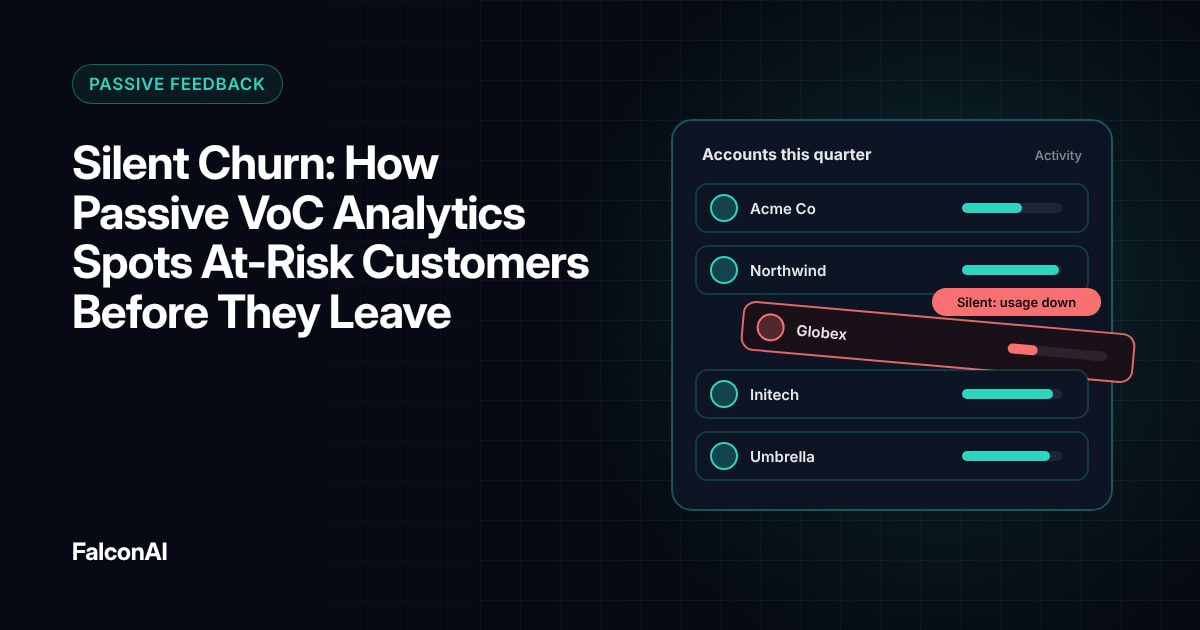
You still need to listen, with a different focus. You'll focus less on individual complaints and more on whether automated fixes are landing well. Our post on silent churn and passive VoC covers the signals that customers send without saying a word.
From reacting to predicting
Reacting well
- A customer hits a problem
- They wait for you to fix it
- Listening to individual complaints
Predictive service (the approach the article favours)
- Spot problems before customers do
- Solve many before anyone asks
- Check whether automated fixes land well
Free review snapshot
See what your customers are saying, before you talk to us.
No commitment. We use your details only to send your snapshot and follow up. Privacy policy
Keep Humans in the Loop
Customers want speed, and they also want to know who they're dealing with. Twilio's 2025 State of Customer Engagement Report found that 54% of consumers want to know when they're talking to AI. Be open about automation and make it easy to reach a person.
Watch the edge cases
Automation handles routine issues well. Unusual cases still need people. Route anything sensitive or high value to your team, and review a sample of automated fixes each week to catch mistakes early.
How to Prepare Now
Start by cleaning and organizing the feedback you already have. Predictive systems are only as good as the history they learn from. Tag themes consistently and link feedback to customer records.
Pick one use case first
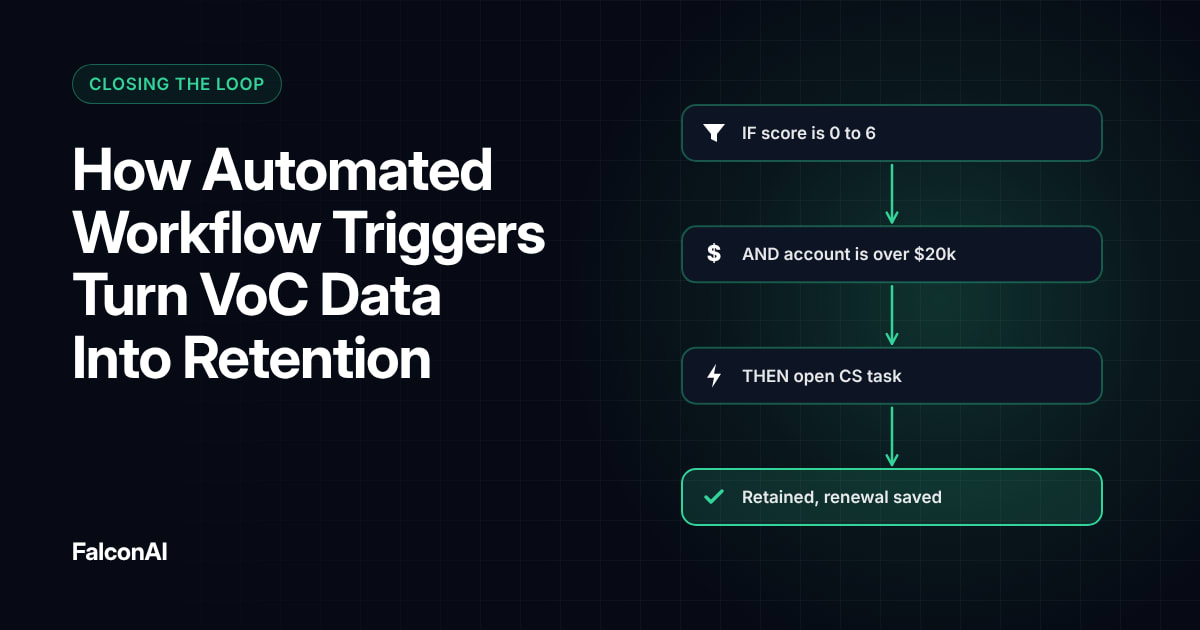
Choose a common, low-risk problem and automate the fix. Measure whether complaints drop and customer satisfaction holds. Expand once you've proven it works. Our guide to automated VoC workflows shows how to connect the pieces. You can spot the patterns that power predictive service with NPS analysis, or book a demo.
How to prepare now
- Clean existing feedbackPredictions are only as good as the history
- Tag themes consistentlyAnd link feedback to customer records
- Automate one fixA common, low-risk problem
- MeasureComplaints drop, satisfaction holds
- ExpandOnce it's proven
Frequently asked questions
What is predictive customer experience?
It means spotting likely problems early and fixing them before customers have to ask for help.
Will AI replace customer service teams?
AI will handle more routine issues, but people will still handle complex and sensitive cases.
How does VoC data support predictive service?
Past feedback shows which problems repeat and what fixed them, which lets systems act early.
Do customers want automated service?
Many do for simple issues, but most want to know when they're talking to AI and how to reach a person.
What should companies do first?
Clean up existing feedback data and automate one common, low-risk fix.
How do you know if invisible service is working?
Track whether related complaints drop while satisfaction holds steady.