Your VoC team sends a 30-slide deck every quarter. Executives open it, scroll to the NPS chart and close it. The work behind the deck deserves better, and a one-page scorecard usually gets it.
Why Executive VoC Reports Get Ignored
Leaders are short on time and long on reports. A VoC deck full of charts asks them to do the analysis themselves. Most won't, and the insights never turn into decisions.
Metrics without money
Many reports lead with scores. Executives think in revenue and cost. A 2026 survey of 600 US CX leaders found that CSAT was the most common CX metric, used by 65% of teams, while only 19% were measured on CX's impact on customer lifetime value. That gap explains why so many scorecards get skimmed. Executives also see dozens of dashboards from other teams. If yours looks like the rest, it gets the same treatment. A scorecard that opens with dollars stands out because so few CX reports do.
The deck vs the scorecard
30-slide deck
- Leads with scores
- Leaders do the analysis themselves
- Gets skimmed
One-page scorecard (the approach the article favours)
- Opens with dollars
- Only what a leader can act on
- An owner for every problem
What Belongs on the Scorecard
Keep it to one page. Include only what a leader can act on:
- Revenue at risk from detractors and unhappy accounts.
- Revenue kept through saves and follow-ups.
- The top themes behind negative feedback, with an owner for each.
- Progress on fixes from last quarter.
Show trends over time
A single score tells leaders little. A line that shows the last four quarters tells them whether things are getting better. Put a small trend next to each number.
Add one quote per theme
A real customer quote makes a theme feel urgent. Pick short ones that name the problem clearly. One sharp sentence from a customer often does more than a page of charts.
What belongs on the page
- Revenue at risk from detractors
- Revenue kept through saves and follow-ups
- Top negative themes, each with an owner
- Progress on last quarter's fixes
- A small trend next to each number
- One short customer quote per theme
How to Make It Stick
Tie it to revenue metrics leaders already watch
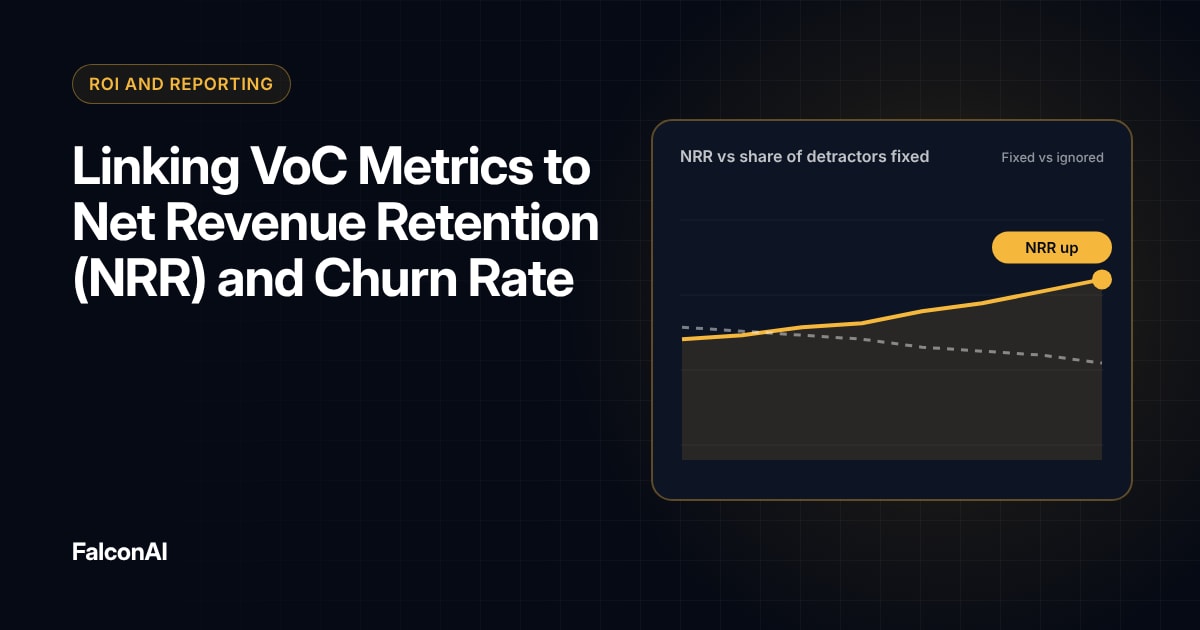
Show your numbers next to churn and net revenue retention. Our guide to linking VoC metrics to NRR explains how. When leaders see feedback and revenue move together, they start paying attention.
Name an owner for every problem
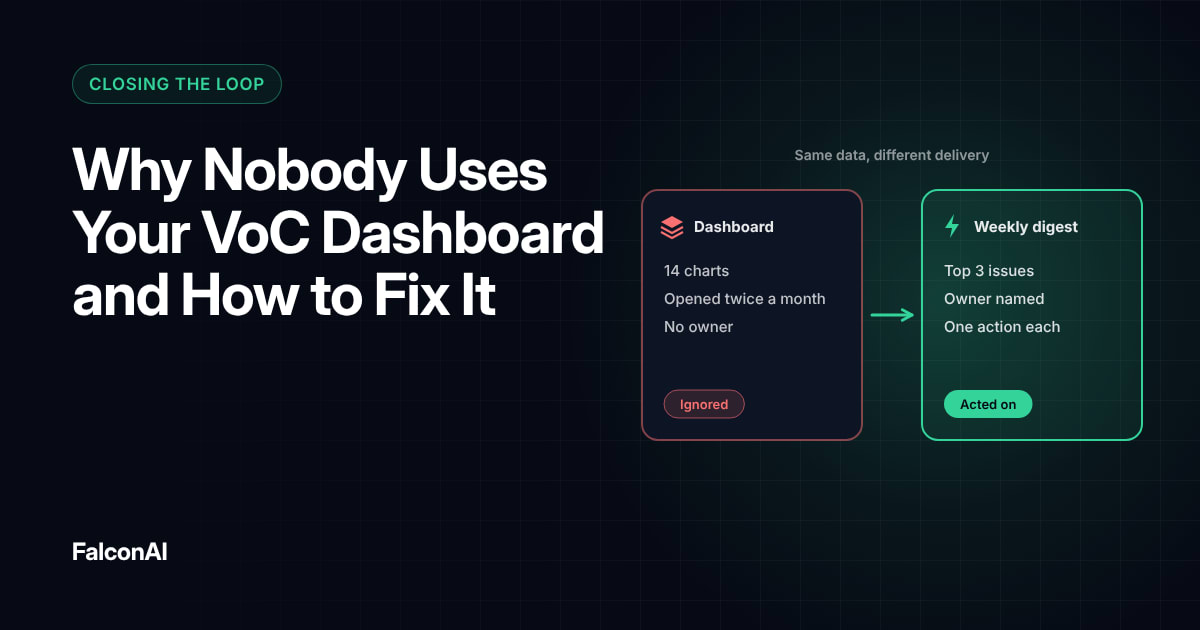
A theme with no owner stays on the scorecard forever. Assign each one to a leader and show their progress next quarter. Our post on why nobody uses your VoC dashboard covers the same idea for day-to-day reporting. Invite one owner each quarter to share what they changed and what happened next. A short update from a peer carries more weight than any chart.
Free review snapshot
See what your customers are saying, before you talk to us.
No commitment. We use your details only to send your snapshot and follow up. Privacy policy
Keep It Honest
Forrester's 2025 Customer Experience Index found that 21% of brands saw their CX quality decline, while only 6% improved. Forrester principal analyst Pete Jacques noted that “customer experience continues to erode worldwide.” If your numbers are slipping, say so on the scorecard. Leaders trust a report that shows bad news as clearly as good news.
Write the summary first
Open with two or three sentences on what changed and what you need from leadership. A short written summary gets read even when the charts don't. Send it a day before the meeting so leaders arrive with questions. Our post on generative AI feedback summaries shows how to draft it faster. You can build the scorecard from NPS analysis, or book a demo.
Brands whose CX quality changed
Source: Forrester 2025 Customer Experience Index. Figures as cited in this article
Frequently asked questions
What is an executive VoC scorecard?
It's a one-page summary of customer feedback that links scores and themes to revenue and names the owner of each fix.
How often should you send it?
Quarterly works for most leadership teams, with a short monthly update if something changes fast.
How many metrics should it include?
Keep it to a handful. Every number should lead to a decision or an action.
Should you include NPS?
Yes, as a trend next to revenue metrics. NPS alone rarely holds an executive's attention.
Who should own the scorecard?
The VoC or CX lead, with input from finance so the revenue numbers match what leadership already sees.
What if leaders still don't read it?
Ask them which decision it should help them make, then cut everything that doesn't support that decision.