Your executives won't read 5,000 survey comments. They'll read a paragraph. Generative AI can write that paragraph in seconds, and that changes who sees customer feedback and how often they see it.
What Changed With Generative AI
Older text tools gave you charts of keywords and topics. You still needed an analyst to explain what they meant. Large language models can read the comments themselves and write a plain summary of what customers are saying.
That shifts the analyst's job. Less time goes into reading and counting. More time goes into checking what the summary says and deciding what to recommend.
Adoption is moving fast
Bain's 2024 executive survey found that 87% of companies had generative AI in development or in use, with customer service among the top early uses. Gartner found that 85% of customer service leaders planned to explore or pilot customer-facing conversational generative AI in 2025.
- 87%of companies had generative AI in development or useSource: Bain, 2024
- 85%of service leaders planned to explore or pilot it in 2025Source: Gartner
Figures as cited in this article
Where Summaries Help Most
Weekly leadership updates
A short summary of top themes, with a few real quotes, gets read. A 40-page deck usually doesn't. Send a summary to the person who owns each area, every week. Put the most important change at the top, such as a theme that doubled. Leaders read the first two lines and decide whether to keep going.
Account reviews
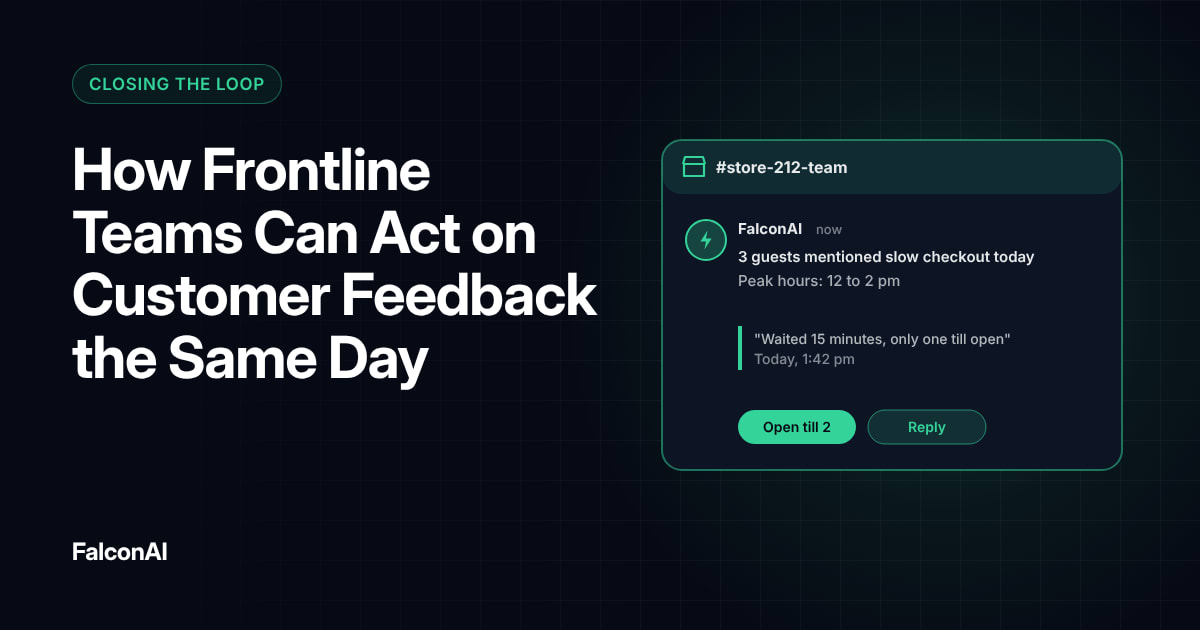
Before a renewal call, an account manager can get a one-paragraph summary of every ticket and comment from that customer in the past year. That takes seconds, where it used to take an afternoon. Team leads can use the same approach for coaching, as our post on frontline teams acting on feedback describes.
Keeping Summaries Accurate
Generative AI can sound confident and still be wrong. Bain found that low-quality output was a main reason AI use cases fell short of expectations. Here's how to keep summaries honest:
- Link every claim in a summary to the comments behind it.
- Show how many comments support each point.
- Include real customer quotes, unedited.
- Have an analyst review summaries before they go to leadership.
Watch for averages that hide problems
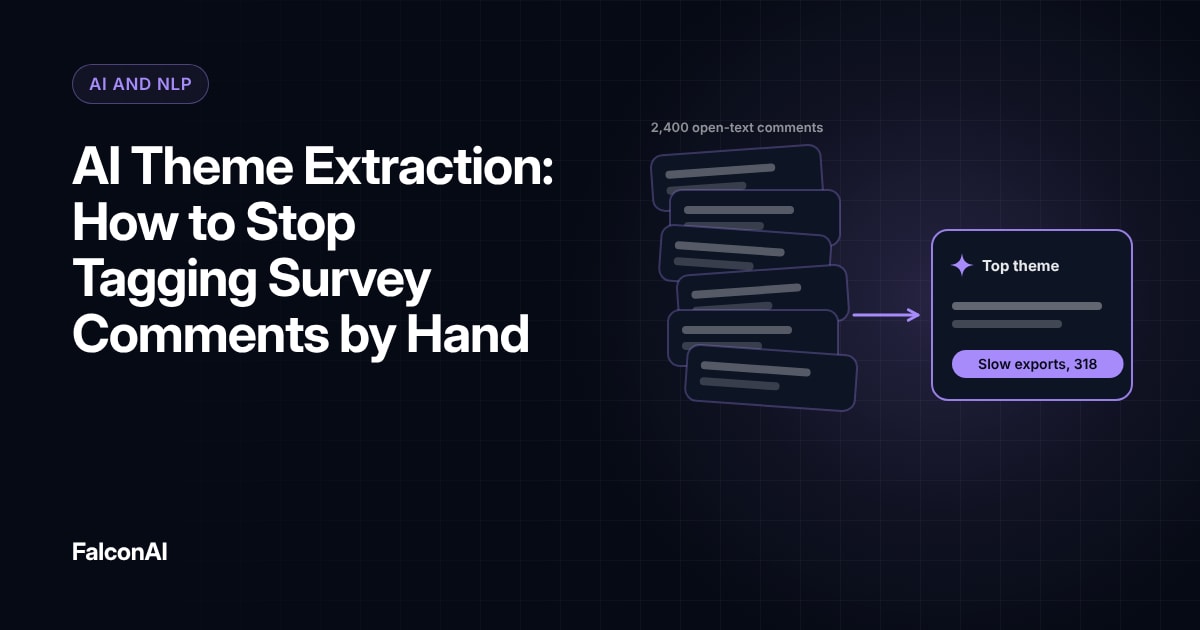
A summary that says “customers are mostly happy” can bury a serious issue affecting 5% of accounts. Ask the model to list smaller themes too. A good prompt asks for the top themes and any theme that grew quickly, even if it's still small. Our guide to AI theme extraction explains how themes feed the summary.
Keeping summaries honest
- Link every claim to the comments behind it
- Show how many comments support each point
- Include real customer quotes, unedited
- Analyst review before it goes to leadership
- Ask for smaller and fast-growing themes too
Free review snapshot
See what your customers are saying, before you talk to us.
No commitment. We use your details only to send your snapshot and follow up. Privacy policy
Building Trust in AI Summaries
People care about how companies use AI. Salesforce research from 2024 found that 60% of consumers say advances in AI make trustworthiness more important. Your internal readers feel the same way. If a leader catches one made-up claim, they'll stop reading the summaries.
Gartner's Kim Hedlin said that “AI and human expertise must work in tandem.” That's the right model for summaries. Let AI write the first draft and keep a person responsible for what goes out.
Start small
Pick one report you already send each month and add an AI summary at the top. Ask readers whether it helped. Keep the format stable for a few months so readers learn where to look. You can generate summaries in CSAT analysis, or book a demo to try it with your data.
AI and human expertise must work in tandem.
Kim Hedlin, Gartner
Frequently asked questions
What is AI feedback summarization?
It's the use of generative AI to turn large volumes of customer comments into short written summaries.
Are AI summaries accurate?
They're usually accurate, but they can make mistakes. Link each point to source comments and have someone review them.
Can AI summaries replace analysts?
No. They save analysts time on first drafts, so analysts can spend more time on root causes and recommendations.
How long should a feedback summary be?
One or two paragraphs for leadership, with links to more detail for anyone who wants it.
How do you stop AI from making things up?
Ask for links to real comments and show comment counts. Review every summary before you share it.
Is it safe to put customer feedback into generative AI tools?
Use tools your company has approved that keep data private. Remove personal details where you can.