In financial services, some friction is required. Identity checks and fraud controls protect customers and keep you compliant. The trouble starts when required steps feel confusing or pointless, and customers leave before they finish.
Why Feedback Matters More in Financial Services
Customers bring serious problems to their banks and lenders. The Consumer Financial Protection Bureau received about 3.2 million complaints in 2024. Many of those issues could have been caught earlier through a company's own feedback channels, before they reached a regulator. A customer who gets a fast, fair answer from your team rarely needs to file a formal complaint. Your own feedback channels are the early warning system, and they work best when someone reads them every day and acts on what they find.
Good support pays off
J.D. Power's 2025 U.S. Retail Banking Satisfaction Study found that overall satisfaction rose 11 points. Banks resolved more problems within one day, and more customers understood their fees. Jennifer White of J.D. Power said that “retail banks have really upped their games when it comes to giving customers the resources they need.”
- 3.2 millioncomplaints received in 2024Source: Consumer Financial Protection Bureau
- 11 pointsrise in overall retail banking satisfactionSource: J.D. Power 2025 Retail Banking Study
Figures as cited in this article
Separate Required Friction From Avoidable Friction
Some steps can't go away. How you present them can change. Use feedback to sort friction into two groups:
- Required steps, such as identity checks, where you can improve the explanation.
- Avoidable steps, such as repeated form fields, that you can remove.
Explain why each step exists
Customers accept security checks more readily when they understand the reason. A short line explaining that a step protects their account can reduce complaints without changing the process. Test the wording with real customers before you roll it out.
Sorting friction into two groups
Required friction
- Such as identity checks
- Improve the explanation
- Say the step protects their account
Avoidable friction
- Such as repeated form fields
- Remove them
Collect Feedback Without Adding Risk
Financial feedback can include account details. Ask customers not to share sensitive numbers in comments. Mask them automatically if they do. Bring compliance in early, before launching new surveys or text analysis.
Watch complaint themes closely
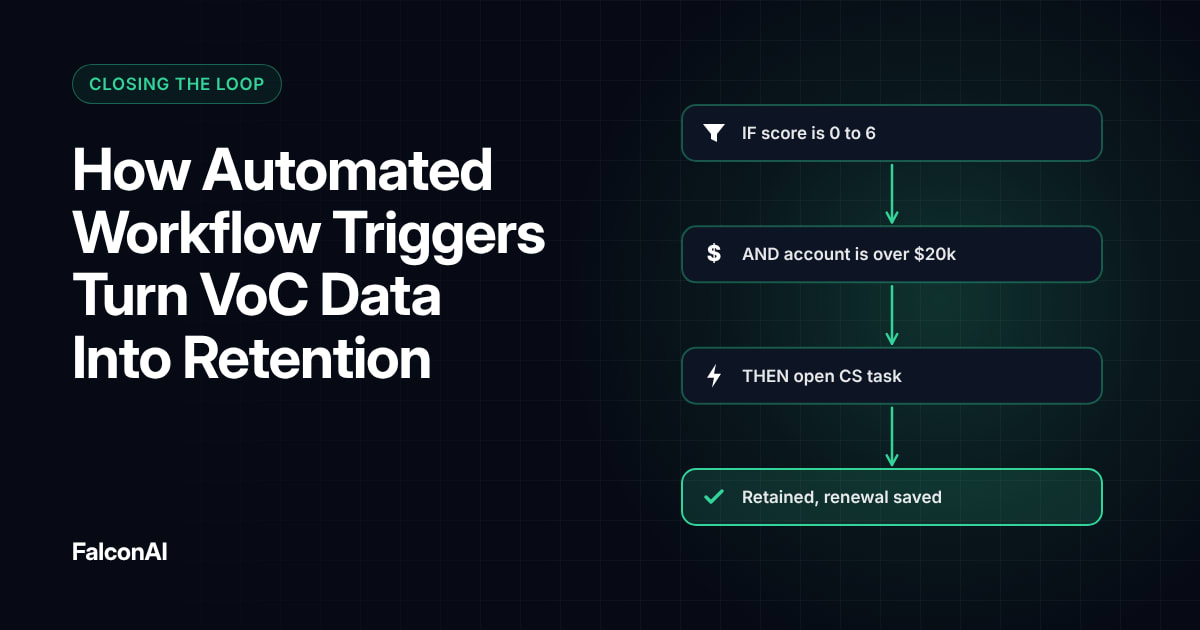
Some feedback is a formal complaint in disguise. Tag comments that mention fees or unfair treatment and route them to your complaints team. Our guide to automated workflow triggers shows how to set this up. Catching these early protects customers and gives you time to fix the cause.
Free review snapshot
See what your customers are saying, before you talk to us.
No commitment. We use your details only to send your snapshot and follow up. Privacy policy
Measure Friction and Fix It
Track drop-off at each step of account opening or loan applications. Pair it with the comments customers leave at that step. When one step causes most of the drop-off, test a clearer explanation or a simpler form.
Small changes can have a big effect. Moving a document upload to the end of an application, for example, can let customers finish the easy parts first and come back for the rest. Feedback tells you which changes to test first.
Report to risk and product together
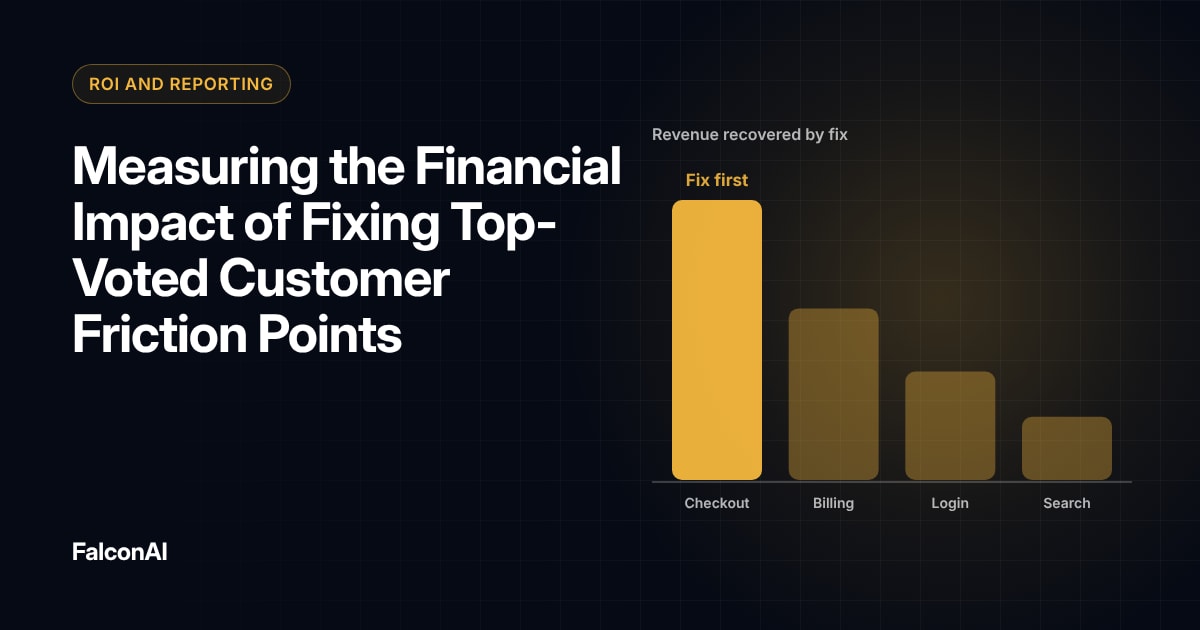
Share friction themes with both compliance and product teams. Compliance can confirm what's required, and product can simplify the rest. Our post on measuring the impact of fixing friction points shows how to prove the value of each fix. You can track complaint themes in CSAT analysis, or book a demo.
Frequently asked questions
Why is VoC important in financial services?
It helps you catch problems before they become formal complaints, and it shows where required steps confuse customers.
Can you remove compliance-related friction?
Some steps are required, but you can often explain them better or remove extra steps around them.
How do you keep financial feedback secure?
Ask customers not to share account numbers and mask sensitive data automatically. Involve compliance early.
Should feedback be treated as a complaint?
Some of it should. Route comments that mention fees or unfair treatment to your complaints team.
What should you measure?
Drop-off at each step of key journeys, paired with the feedback customers leave at those steps.
Who should see friction themes?
Product and compliance teams together, so they can agree on what to simplify.