Read ten open-text survey comments and you'll see the problem. One customer writes a long paragraph about a billing error, then thanks the agent who fixed it. Another types “app keeps crashing pls fix” with no punctuation at all. Both are telling you something you can act on. The hard part is getting a machine to see it.
What Intent Detection Means
Sentiment tells you how a customer feels. Intent tells you what they want to happen next. A customer who writes “I'm thinking about switching” has a cancellation intent, even if the tone is calm. A customer who asks “can I add more users” is showing an upsell intent.
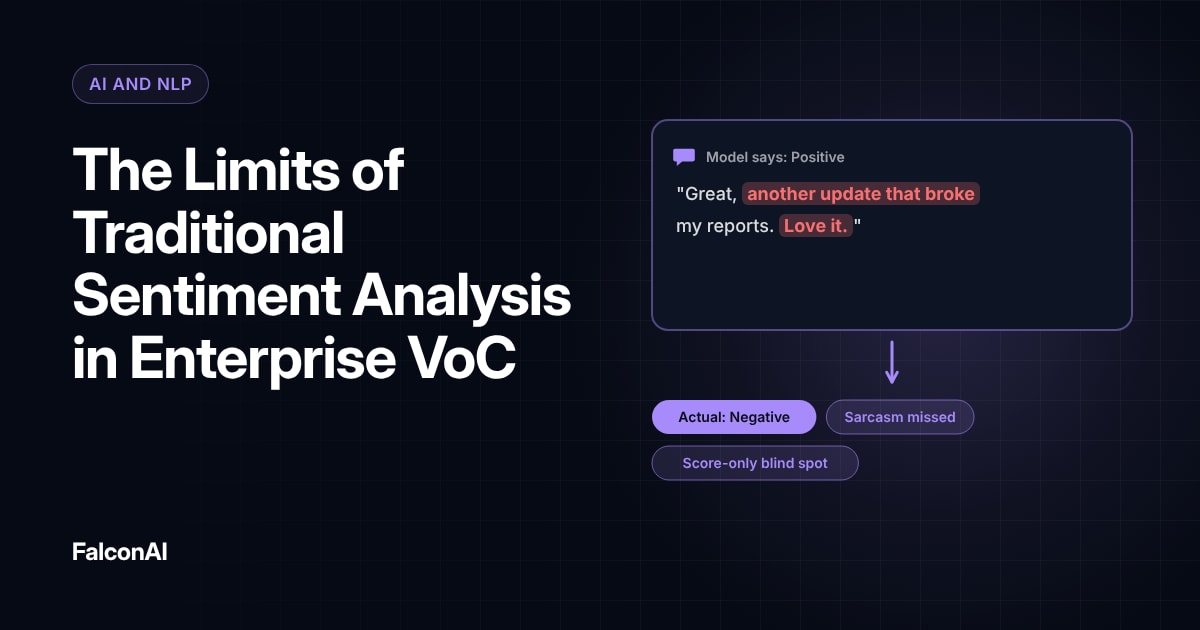
Older text tools counted keywords. Modern NLP models read the whole sentence and the words around each phrase. That's how they tell “cancel my order” apart from “I almost cancelled until your agent stepped in.”
Why surveys alone miss it
Fewer customers fill in surveys. Qualtrics' 2025 study of how consumers share feedback found that only 32% of people who had a bad experience told the company directly, down from 2021. The rest of the signal sits in support tickets and chat logs. Gartner predicted that by 2025, 60% of organizations with VoC programs would add voice and text analysis to their surveys.
- 32%of people with a bad experience told the company directlySource: Qualtrics, 2025
- 60%of VoC organizations predicted to add voice and text analysisSource: Gartner
Figures as cited in this article
How Modern NLP Handles Messy Text
Customer text is messy. People misspell product names and cover four topics in one comment. Some switch languages halfway through a sentence. Here's what a modern model does with it:
- Splits each comment into separate statements.
- Tags each statement with a topic and a sentiment.
- Labels the intent behind it, such as cancel, complain, request or praise.
- Scores how urgent it is.
One comment, several actions
Because each statement gets its own label, one long comment can send a billing issue to finance and a bug report to product. Nobody has to read it and forward it by hand.
What a modern model does with a comment
- Split into statementsEach comment becomes separate statements
- Tag topic and sentimentEvery statement gets its own labels
- Label the intentCancel, complain, request or praise
- Score urgencyHow urgent each statement is
Turning Intent Into Action
Detection only matters if someone acts on it. Gartner's Deborah Alvord put it plainly: “Turning voice and text into data is just part of the challenge.” You need rules that send each intent to an owner.
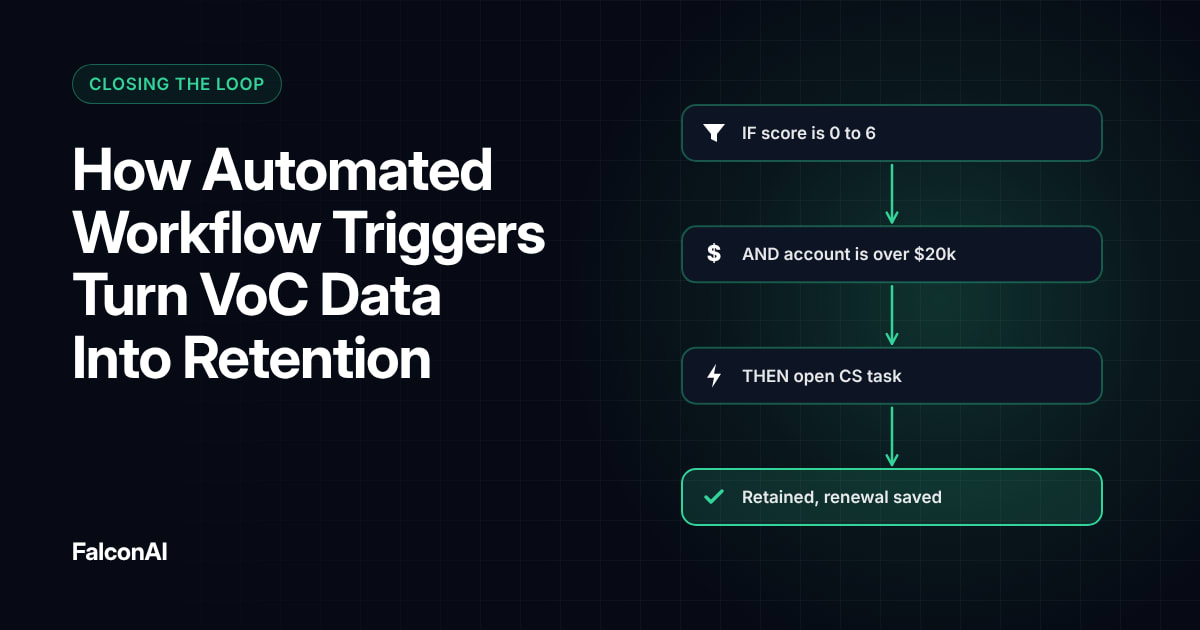
Start with the intents that cost you money. Cancellation and downgrade signals should reach the account owner the same day. Our guide to automated workflow triggers explains how to set these up. Feature requests can go to a weekly product review.
Check the model against real comments
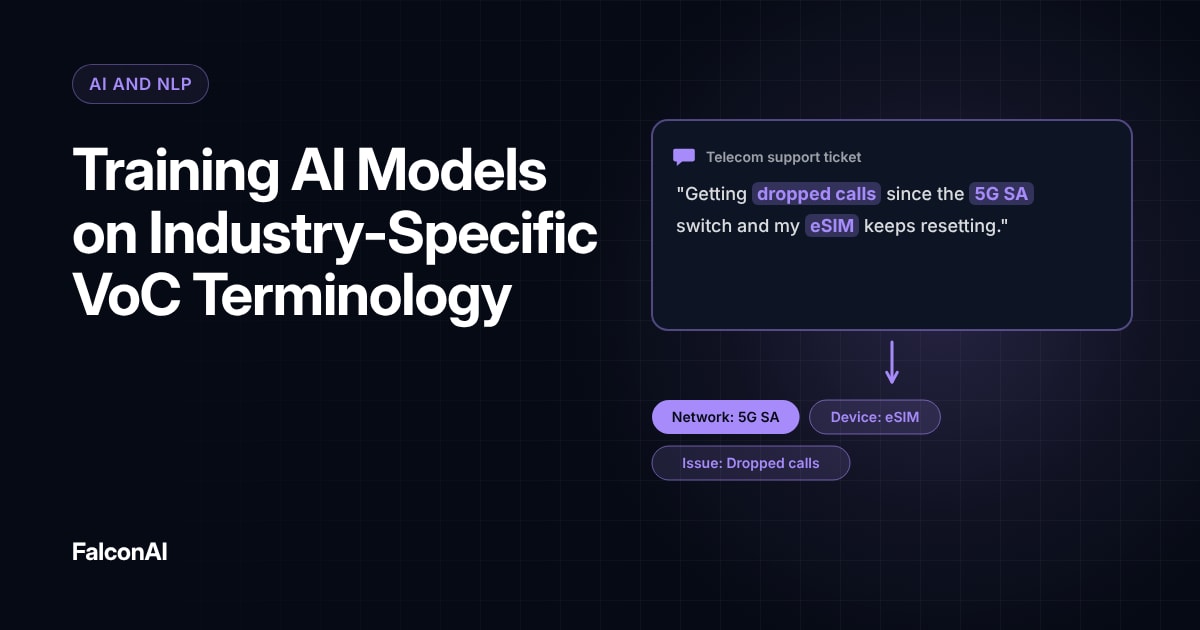
Pull 100 tagged comments each month and check them by hand. If the model keeps missing a phrase your customers use, add it to your training set. Our post on industry-specific VoC terminology covers how to do that.
Turning voice and text into data is just part of the challenge.
Deborah Alvord, Gartner
Free review snapshot
See what your customers are saying, before you talk to us.
No commitment. We use your details only to send your snapshot and follow up. Privacy policy
What to Measure
Track how many high-risk intents reach an owner within a day, and how many of those customers stay. Bain's 2024 executive survey on AI found that low-quality output was a main reason AI projects fell short of expectations, so measure accuracy too. A model your team trusts saves hours of manual reading every week.
Start with one channel
Begin with support tickets or NPS comments, whichever has more volume. Once the intents look right, add chat and reviews. You can see intent and sentiment side by side in NPS analysis, or book a demo to try it on your own data.
Frequently asked questions
What is intent detection in customer feedback?
It's the use of NLP to work out what a customer wants to happen next, such as cancelling or upgrading.
How is intent different from sentiment?
Sentiment measures how a customer feels. Intent measures what they plan to do or want you to do.
Can NLP handle typos and slang?
Yes. Modern models learn from real customer text, so they read misspellings and informal phrasing well. You should still check a sample each month.
Which channels should you analyze first?
Start with the channel that has the most open text, usually support tickets or NPS comments.
Do you still need surveys?
Yes. Surveys give you a score to track over time. Text analysis tells you why the score moved.
How accurate does an intent model need to be?
Accurate enough that your team trusts its alerts. Check a sample by hand and fix the labels it gets wrong most often.