The customer who complains is easy to save. You know there's a problem, and you can fix it. The customer who goes quiet is the one you lose. Silent churn happens when unhappy customers leave without ever telling you why.
What Silent Churn Looks Like
Most customers no longer give direct feedback. Qualtrics' 2026 Consumer Experience Trends report found that only 3 in 10 customers do. Its 2025 research showed people are 8 points less likely to speak up after a bad experience than they were in 2021.
They still act on it. Customers cut spending after 47% of bad experiences, according to Qualtrics XM Institute. Metrigy research found that 44.4% of consumers stop doing business with a company after an average of 2.4 bad experiences.
The warning signs hide in plain sight
Silent customers don't fill in surveys, but they still leave traces. Their tickets get shorter and sharper. Their product usage drops. Those signals are already in your systems.
- 3 in 10Customers who give direct feedbackSource: Qualtrics
- 47%Of bad experiences lead to spending cutsSource: Qualtrics XM Institute
- 44.4%Stop doing business after 2.4 bad experiencesSource: Metrigy
Figures as cited in this article
Passive Signals That Predict Churn
Passive VoC means listening to what customers do and say without asking them a question. Watch for these signals at the account level:
- Ticket volume rising for a single account
- Sentiment in support messages trending negative
- Product usage falling week over week
- NPS invitations going unanswered after years of replies
Combine signals per account
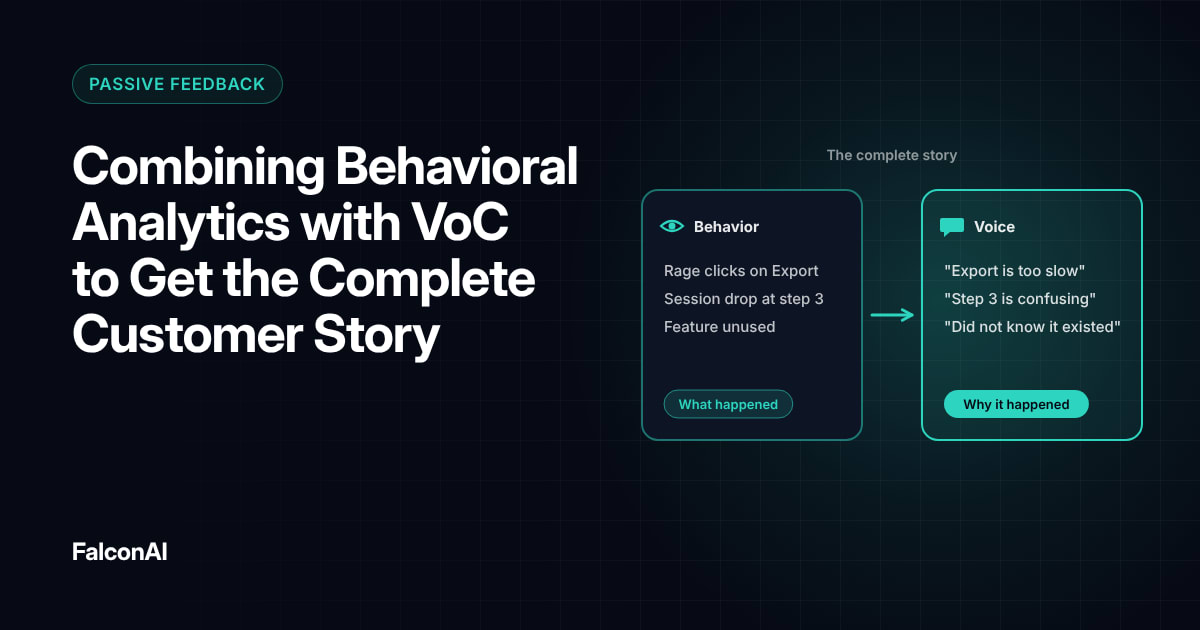
One signal alone means little. A customer might log fewer sessions during a holiday. When two or more signals line up on the same account, the risk is real. Our post on behavioral analytics and VoC explains how to pair usage data with feedback.
How to Build an Early Warning System
Give each account a simple risk score based on the signals above. When an account crosses your threshold, alert the customer success manager who owns it.
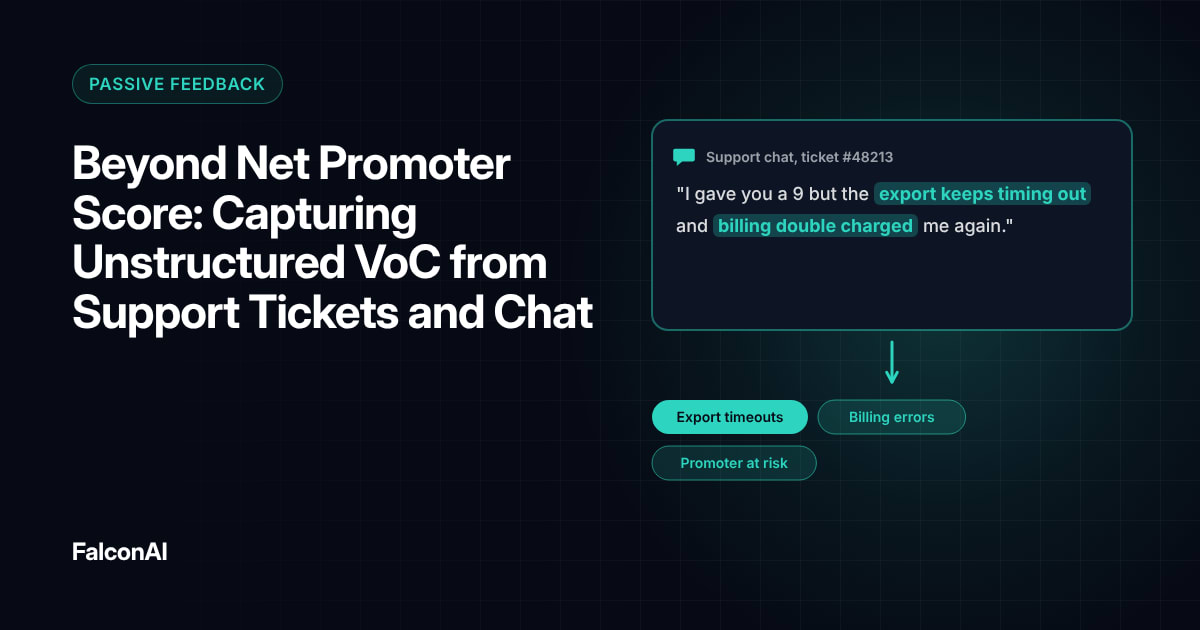
You don't need a data science team to start. Connect your helpdesk and product data through integrations, then let AI sentiment analysis read the ticket text. See how ticket analysis works in our guide to unstructured VoC.
Start with past churn
Pull the customers who left last year. Look at what their signals did in the 90 days before they went. Those patterns tell you which signals matter most for your business.
An early warning system
- Rising ticket volume
- Negative support sentiment
- Falling product usage
- Unanswered NPS invitations
- Alert the account's CSM
Free review snapshot
See what your customers are saying, before you talk to us.
No commitment. We use your details only to send your snapshot and follow up. Privacy policy
Acting Before the Customer Leaves
An alert is only useful if someone reaches out. The cost of waiting keeps growing. “The price tag on delivering a bad customer experience has surged,” said Bruce Temkin, then head of Qualtrics XM Institute, in 2024.
Reach out with a specific question about the issue the signals point to. A message about the export bug they hit four times gets a reply far more often than a generic check-in.
Measure saves
Track how many flagged accounts renew after outreach. Compare that with flagged accounts nobody contacted. That gap is the value of your passive VoC program. Add the risk view to your NPS analysis, or book a demo to see it on your own accounts.
Frequently asked questions
What is silent churn?
Silent churn is when customers leave without complaining or giving feedback first. You only notice after they cancel or stop buying.
How do you detect silent churn?
Watch passive signals per account, like rising ticket volume and falling product usage. Several signals together point to real risk.
What is passive VoC?
It's customer insight gathered without asking questions, from sources like support messages and product behavior.
Can NPS predict churn?
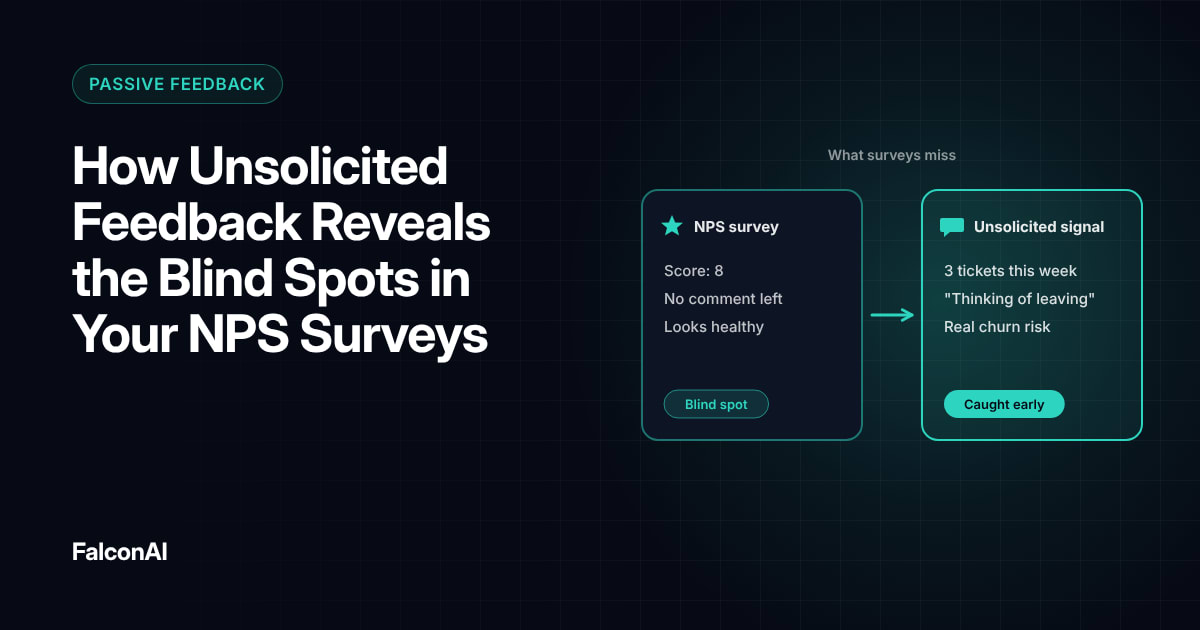
NPS helps, but many at-risk customers never answer the survey. Pair it with passive signals for a fuller view.
How early can you spot churn risk?
Warning signs often show up weeks before a customer leaves. Check your own past churn to find your window.
Who should act on churn alerts?
The customer success or account manager who owns the relationship. Route each alert to them directly.