Most feedback programs run on a calendar. Every quarter, every customer gets the same NPS email. Some just had a great week. Others haven't logged in for a month. Event-driven feedback flips that by asking right after something meaningful happens.
What Event-Driven Feedback Means
An event is any moment that shapes how a customer feels about you. When it happens, your system sends a short survey tied to that moment. The customer answers about something they just did, so the answer means more.
Good trigger events
Start with moments where opinions form fast:
- A support ticket gets closed
- A user finishes onboarding
- A customer uses a new feature for the first time
- An order gets delivered
Each event gets its own short question, so every answer ties back to a specific moment.
Why Timing Changes the Answers
Memory fades quickly. A 2024 events industry study found that feedback collected within two hours scored 40% higher on actionability than delayed surveys. The details are still fresh, so comments name specific steps and screens.
Calendar blasts also wear people out. A 2025 study of 25 million survey invitations found that Q4 volume nearly doubled while response rates fell 44%. Sending more at once didn't get more answers.
Relevance drives response
Gartner's 2024 research found that response rates drop when surveys feel irrelevant to the customer. An event-driven survey is relevant by design. It asks about the thing the customer just did.
- 40%Higher actionability within two hoursSource: A 2024 events industry study
- 44%Fall in response rates as volume nearly doubledSource: A 2025 study of 25 million invitations
Figures as cited in this article
How to Set Up Triggers
Pick two or three events to start, then connect the systems that record them, like your helpdesk and product analytics, through integrations. Write one question per event, plus an optional comment.
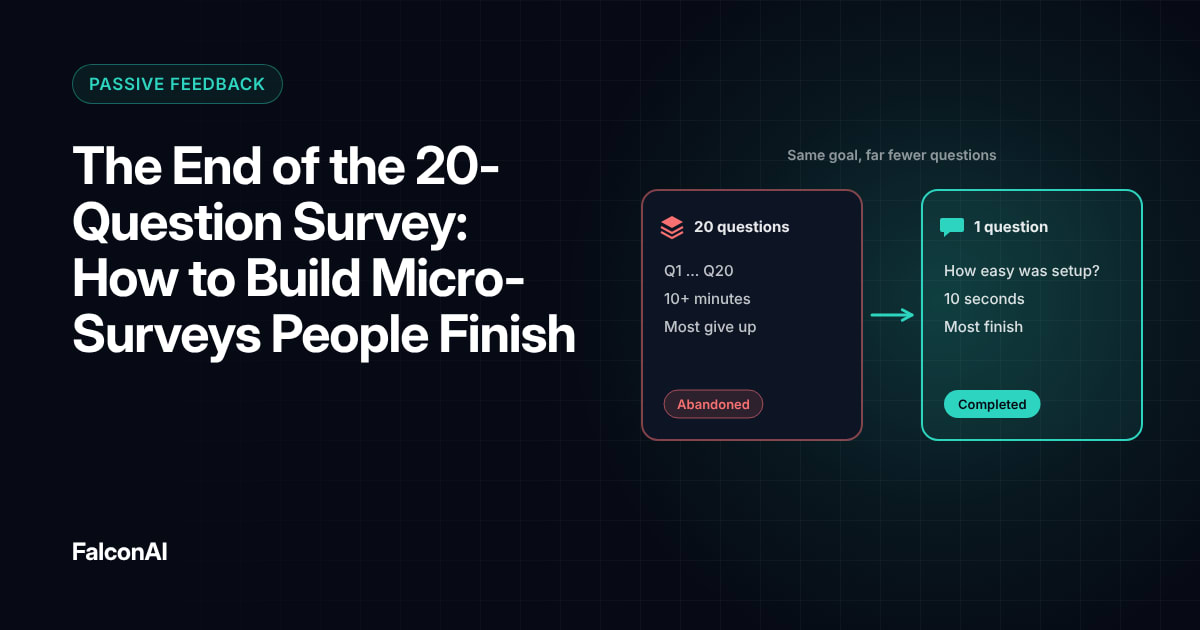
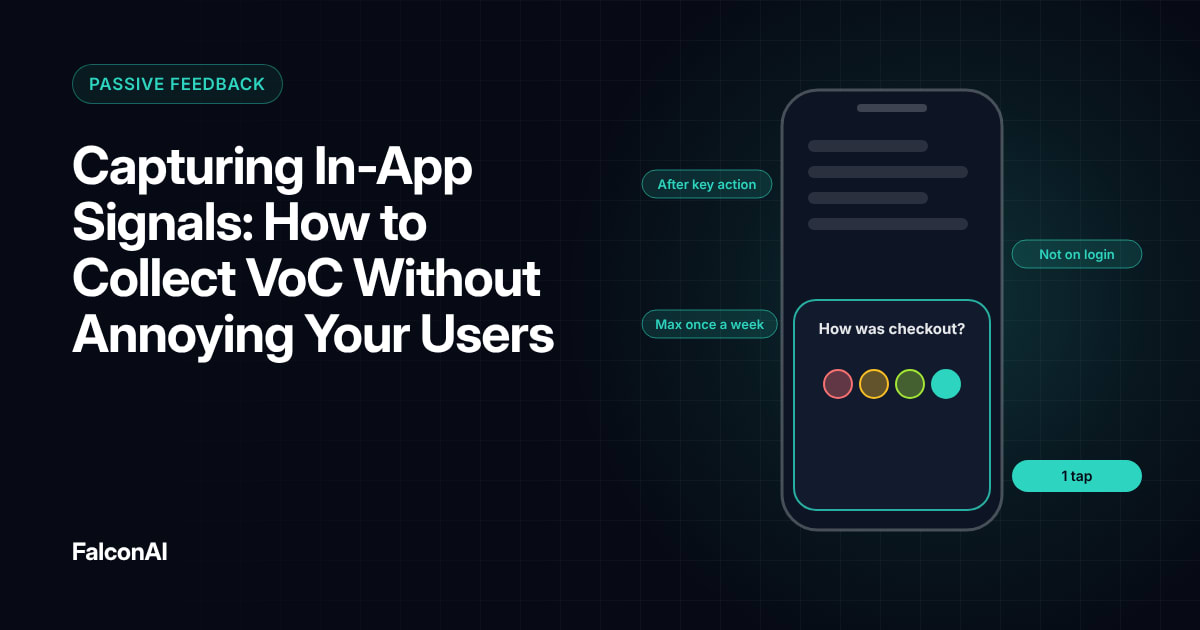
Keep every survey short. Our guide to micro-surveys covers question design. For prompts inside your product, read how to collect in-app feedback without annoying users.
Avoid trigger overload
More triggers mean more chances to over-survey one person. Set a global cap, such as one survey per customer every 30 days, no matter how many events they hit. “Survey fatigue is real,” Qualtrics president Brad Anderson told Fortune. A cap keeps your program on the right side of that line.
How to set up triggers
- Pick two or three events
- Connect the systemsHelpdesk and product analytics, through integrations
- One question per eventPlus an optional comment
- Set a global capSuch as one survey per customer every 30 days
Free review snapshot
See what your customers are saying, before you talk to us.
No commitment. We use your details only to send your snapshot and follow up. Privacy policy
Measuring Whether It Works
Compare response rates and comment rates between your old calendar surveys and your new event surveys. Event surveys should win on both. Smaller, more frequent asks tend to hold up better over time. In one 2025 study, 58% of people in a frequent small survey group were still responding by the fourth round, compared with 50% in a monthly long survey group.
Retire calendar blasts gradually
Keep your quarterly relationship NPS while event surveys ramp up. Once event data covers most of your journey, cut the blast to twice a year. Analyze both in one place with CSAT analysis, or book a demo.
Still responding by the fourth round
Source: One 2025 study. Figures as cited in this article
Frequently asked questions
What is event-driven feedback?
It's feedback collected right after a specific customer action, like closing a ticket or finishing onboarding.
What is the difference between transactional and relationship surveys?
Transactional surveys ask about one interaction. Relationship surveys ask how a customer feels about your company overall.
When is the best time to send a feedback survey?
Right after the event you're asking about. Feedback collected within two hours tends to be more detailed and actionable.
How many survey triggers should you use?
Start with two or three high-impact events. Add more once you've set a cap on how often each customer gets surveyed.
Do event-driven surveys replace NPS?
No. Keep a relationship NPS survey, but you can send it less often once event surveys cover key moments.
What tools do you need for event-driven feedback?
You need a way to detect events, like your helpdesk or product analytics, and a feedback tool that can send surveys on those triggers.