Your NPS looks stable. Churn is creeping up anyway. When those two numbers disagree, your survey has a blind spot. Unsolicited feedback is how you find it.
Who Your NPS Survey Doesn't Hear
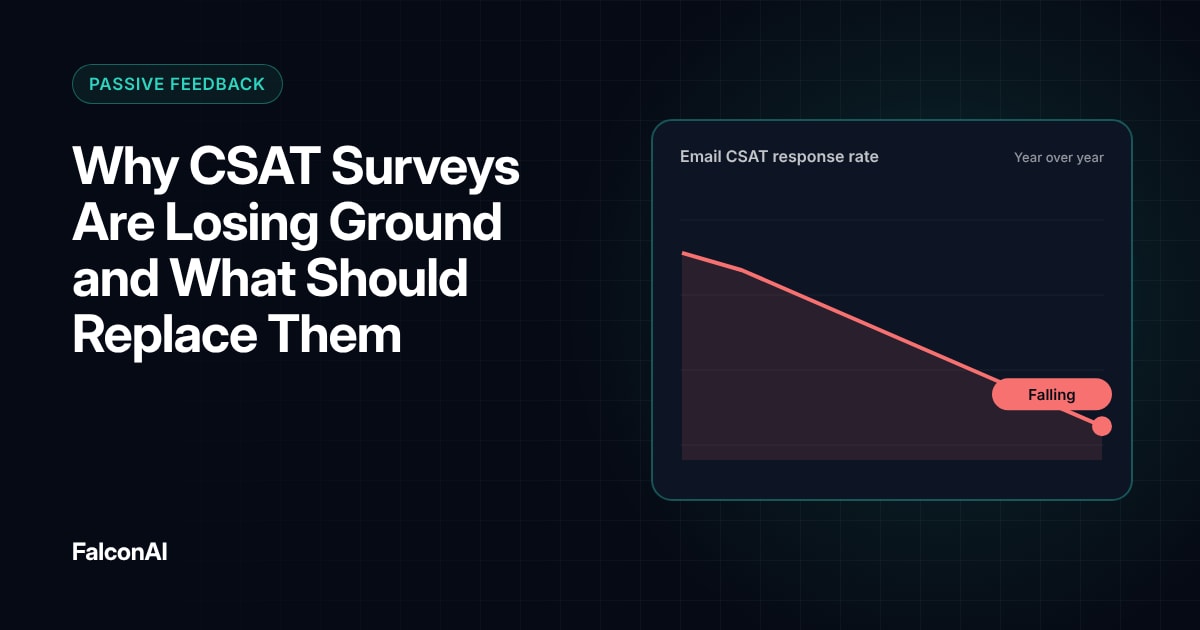
Most customers never answer your survey. Qualtrics' 2025 research found that only 32% of consumers share feedback directly with a company, while 45% tell friends and family. People are also 8 points less likely to say anything after a bad experience than they were in 2021.
“We found that they're just sharing less feedback,” Isabelle Zdatny of Qualtrics XM Institute said of the trend.
The silent detractor
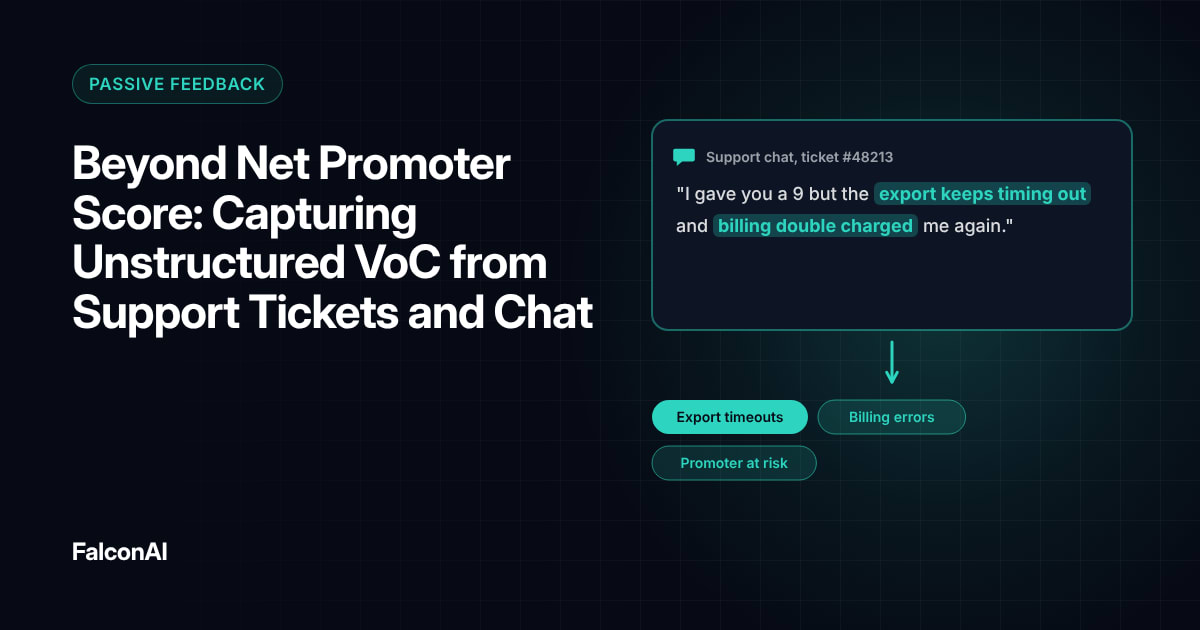
The customers who skip your survey aren't neutral. Qualtrics found that surveys skew positive, while emails and calls skew negative. So the unhappy customer often shows up in a support queue, never in your NPS dashboard.
- 32%Share feedback directly with a companySource: Qualtrics
- 45%Tell friends and family insteadSource: Qualtrics
Figures as cited in this article
Where Unsolicited Feedback Comes From
Unsolicited feedback is anything customers tell you without being asked. You already collect most of it:
- Support tickets and chat logs
- App store and review site comments
- Sales and account manager call notes
- Social media mentions
Weighing the sources
Each source has its own bias. Reviews lean toward strong opinions. Tickets lean toward problems. Read them side by side with survey data, and the biases balance out.
Feedback nobody asked for
- Support tickets and chat logs
- App store and review sites
- Sales and account call notes
- Social media mentions
What Unsolicited Feedback Reveals
Once you compare sources, gaps show up fast. Here are the two most common ones.
Problems customers never mention in surveys
NPS questions ask about the relationship. Customers rarely use the comment box to mention a confusing invoice or a slow export. They raise those in tickets. If ticket volume on a topic climbs while NPS stays flat, you've found a blind spot. Our guide to unstructured VoC shows how to analyze that text.
Gaps between segments
Your survey may reach admins while end users file the tickets. Compare who answers surveys with who contacts support. A segment that never responds to NPS but fills your queue deserves a closer look.
Free review snapshot
See what your customers are saying, before you talk to us.
No commitment. We use your details only to send your snapshot and follow up. Privacy policy
How to Close the Gaps
Blind spots cost real money. Metrigy research found that 44.4% of consumers stop doing business with a company after an average of 2.4 bad experiences. “These bad experiences that consumers have happen to every company,” said Metrigy CEO Robin Gareiss.
Pull your support and review data into the same place as your survey results through integrations. Then tag themes across all of it with your NPS analysis.
A monthly blind spot review
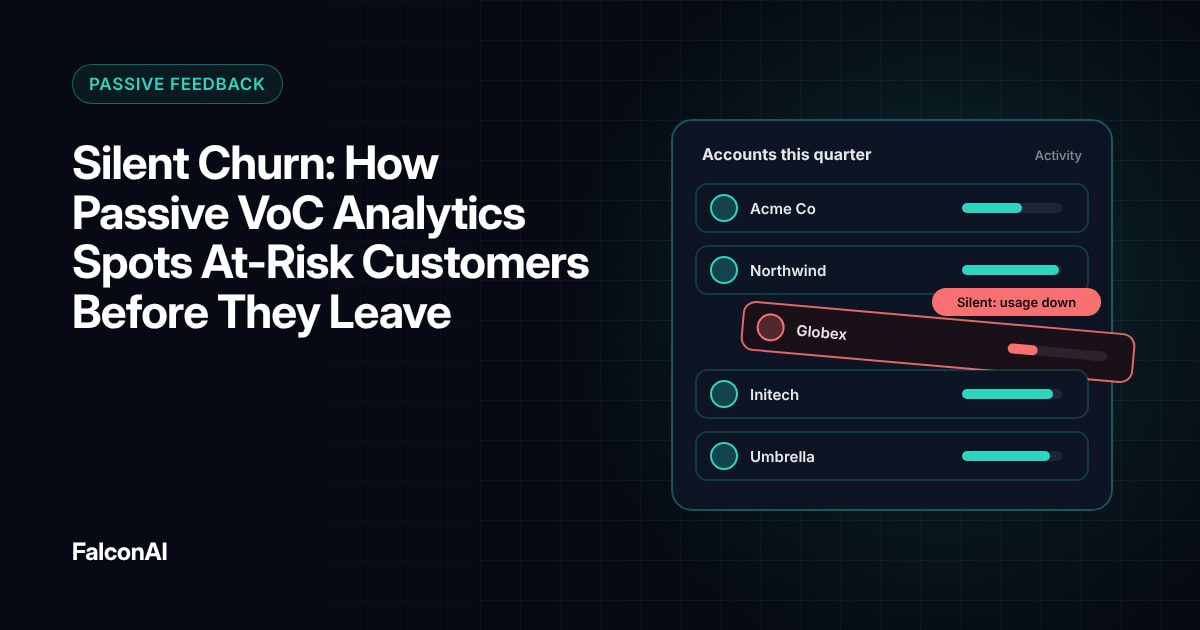
Once a month, list the top themes from unsolicited sources and mark any that barely appear in survey comments. Give each of those an owner. Our post on silent churn explains how to link those themes to churn risk. Want to try it on your data? Book a demo.
A monthly blind spot review
- List top themesFrom unsolicited sources
- Mark the gapsThemes that barely appear in survey comments
- Give each an owner
Frequently asked questions
What is unsolicited feedback?
It's feedback customers give without being asked, like support tickets and online reviews.
Why is my NPS stable while churn rises?
Your survey may only reach happy or engaged customers. Unhappy customers often skip surveys and complain through support instead.
Is unsolicited feedback more accurate than surveys?
Neither is complete on its own. Surveys skew positive and unsolicited channels skew negative, so you need both.
How do you collect unsolicited feedback?
Connect your helpdesk and review sources to a VoC platform. Most of the data already exists in tools you use.
What is non-response bias in NPS?
It's the gap between customers who answer your survey and those who don't. It can make your score look better than reality.
How often should you review unsolicited feedback?
Check alerts weekly and run a full theme review once a month.