“How much did you enjoy our fast checkout?” That question assumes the customer enjoyed it and that it was fast. Whatever they answer, your data is already skewed. AI can catch wording like this before your survey goes out.
How Wording Changes Answers
Small changes in wording can move results a long way. In a YouGov experiment, a question that leaned toward one answer drew 38% support for it. A neutral version of the same question drew 20%. That's an 18-point gap from wording alone.
Customer surveys have the same problem. A CSAT question that opens with “We hope you loved your visit” pushes scores up before anyone answers. Your team then celebrates a number the wording created.
Common types of bias
Here are the ones that show up most in customer surveys:
- Leading questions that suggest an answer.
- Agree or disagree statements that push people to agree.
- Double questions that ask about two things at once.
- Scales with more positive options than negative ones.
Acquiescence bias
People tend to agree with statements put in front of them. YouGov's Patrick English advised researchers “to avoid leading questions and always reduce potential acquiescence bias.” In the same research, a scale without agree or disagree wording gave noticeably lower results.
Support for the same answer, by wording
Source: YouGov experiment. Figures as cited in this article
Common types of bias
- Leading questions that suggest an answer
- Agree or disagree statements
- Double questions about two things
- Scales with more positive options
How AI Spots Biased Questions
Language models are good at reading wording closely. You can paste a draft survey into an approved AI tool and ask it to flag questions that suggest an answer. A good tool will explain each flag and suggest neutral wording. Here's a simple workflow:
- Draft your questions.
- Ask AI to flag leading or double questions.
- Review each flag yourself.
- Test the final version with a small group first.
Keep a person in charge
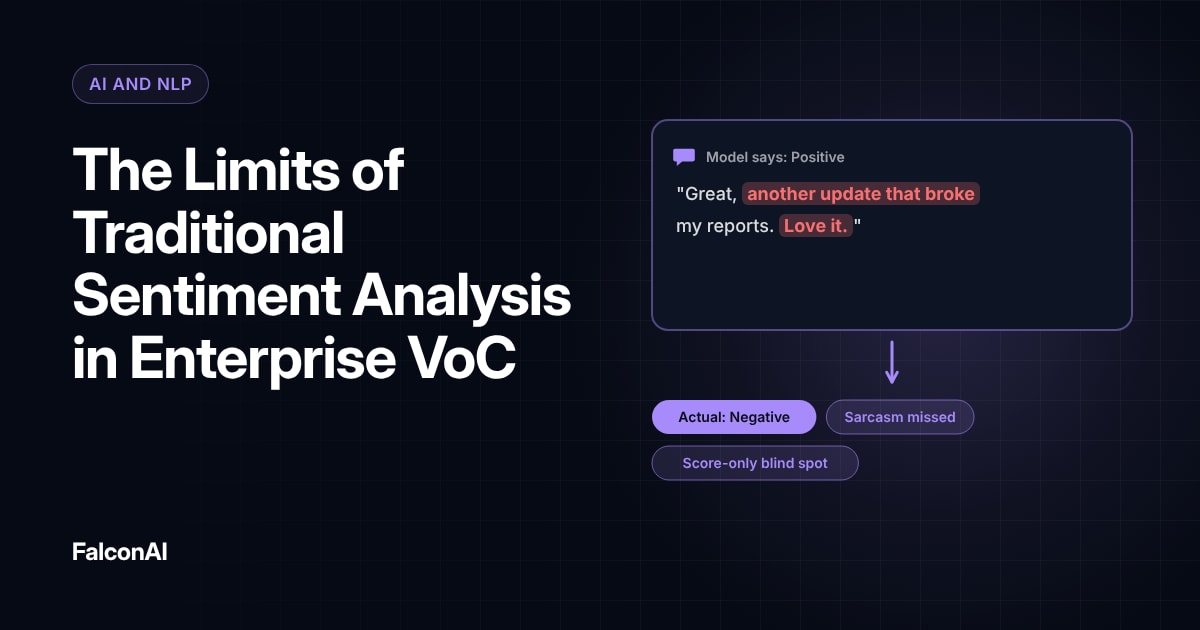
AI may flag questions that are fine or miss subtle bias. Treat its suggestions as a second opinion. Ask the tool to explain each flag in plain words. If the explanation doesn't hold up, keep your original question. Our post on the limits of traditional sentiment analysis shows why human review still matters.
An AI review workflow
- Draft your questions
- Ask AI to flagLeading or double questions
- Review each flag yourselfTreat it as a second opinion
- Test with a small groupBefore the survey goes out
Reducing Bias After the Survey
Ask more open questions
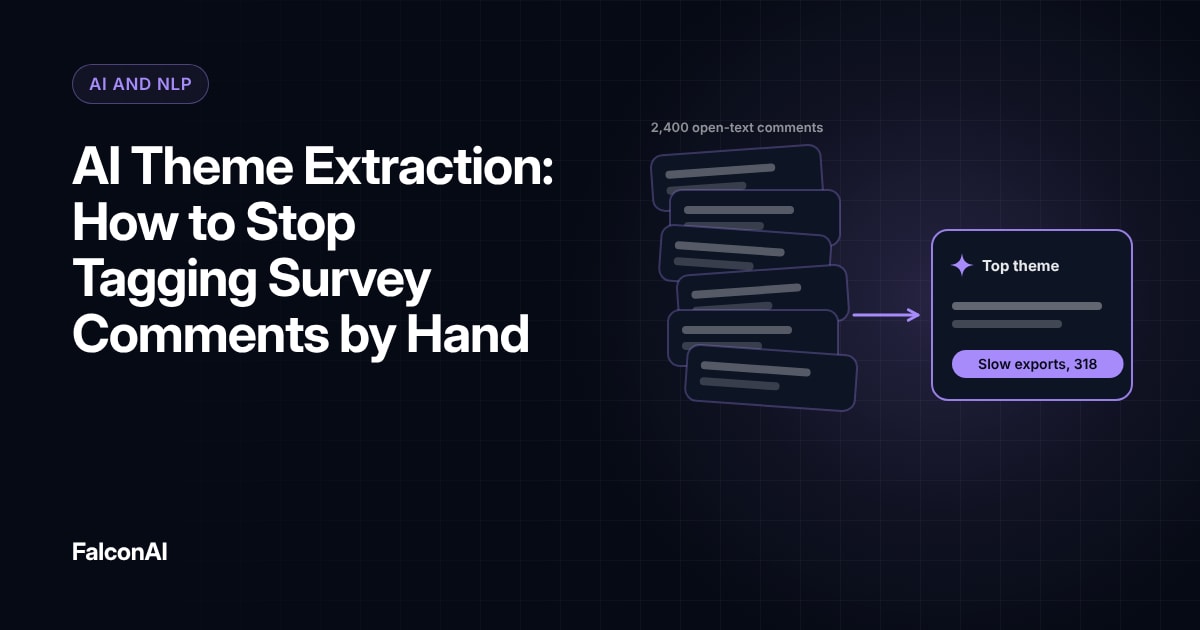
Open-ended answers are harder to bias than rating scales. AI lets you analyze thousands of them, so you can ask more open questions without drowning in comments. One well-placed open question after a score often tells you more than five extra rating questions. See our guide to AI theme extraction.
Compare surveys with unsolicited feedback
Support tickets and reviews aren't shaped by your questions. If survey results look far rosier than ticket themes, your survey may be leading people. Gartner predicted that by 2025, 60% of organizations with VoC programs would add voice and text analysis to their surveys.
Free review snapshot
See what your customers are saying, before you talk to us.
No commitment. We use your details only to send your snapshot and follow up. Privacy policy
Why It Matters
Fewer people answer surveys now. Qualtrics' 2025 feedback study found that only 32% of customers with a bad experience told the company directly. With fewer answers coming in, each biased question does more damage. Clean wording also builds trust. Customers notice when a survey seems to want a certain answer, and some stop responding.
Audit your current surveys
Run your live surveys through an AI review this month and fix the worst questions first. You can compare survey and ticket themes in NPS analysis, or book a demo to see how.
Frequently asked questions
What is a leading question in a survey?
It's a question that suggests the answer you want, such as asking how much someone enjoyed something.
Can AI remove all survey bias?
No. AI catches many wording problems, but you still need a person to review questions and test them.
What is acquiescence bias?
It's the habit people have of agreeing with statements, which inflates agree or disagree results.
How do you write neutral survey questions?
Ask about one thing at a time and use balanced answer scales.
Should you use agree or disagree scales?
Use them sparingly. Questions with specific answer options tend to give more accurate results.
How often should you review survey wording?
Review it whenever you change a survey, and audit live surveys at least once a year.