Every company collects feedback in its own way. One runs surveys inside its app. Another gathers reviews from marketplaces. A third records thousands of support calls each week, and a fourth relies on account managers' notes. A single packaged tool rarely fits all of that. An API-first approach lets you connect the pieces your way.
Why API-First Is Winning
Postman's 2024 State of the API Report found that 74% of respondents now follow an API-first approach, up from 66% the year before. Teams are also moving faster. 63% of developers said they can produce an API within a week, up from 47%.
The approach pays off
Ankit Sobti, co-founder and CTO of Postman, said that “organizations that embrace this model are setting themselves up for long-term success.” For VoC, that success shows up as feedback that reaches the right systems quickly.
- 74%follow an API-first approach, up from 66%Source: Postman 2024 State of the API Report
- 63%of developers produce an API within a week, up from 47%Source: Postman 2024 State of the API Report
Figures as cited in this article
What an API-First VoC Stack Looks Like
An API-first VoC setup usually has four layers:
- Collection APIs that pull feedback from surveys, tickets, reviews and calls.
- An analysis layer that tags themes and sentiment.
- A storage layer that keeps feedback linked to customer records.
- Output APIs that push insights into CRMs and dashboards.
Keep each layer independent
When layers talk through clear APIs, you can swap one without rebuilding the rest. If a better analysis model comes along, you plug it in. Your collection and output layers keep working.
Four independent layers
- Collection APIsSurveys, tickets, reviews and calls
- Analysis layerTags themes and sentiment
- Storage layerLinked to customer records
- Output APIsPush insights into CRMs and dashboards
Connect Feedback to Where Work Happens
The biggest benefit is reach. HubSpot's 2024 State of Service report found that only 35% of CX leaders say their data is fully integrated with the tools they use. APIs close that gap, so feedback flows straight into the tools teams use every day. Sales sees sentiment in the CRM. Product sees themes in the backlog. Support sees alerts in its queue, and finance sees revenue at risk in its reports.
Build event-driven triggers
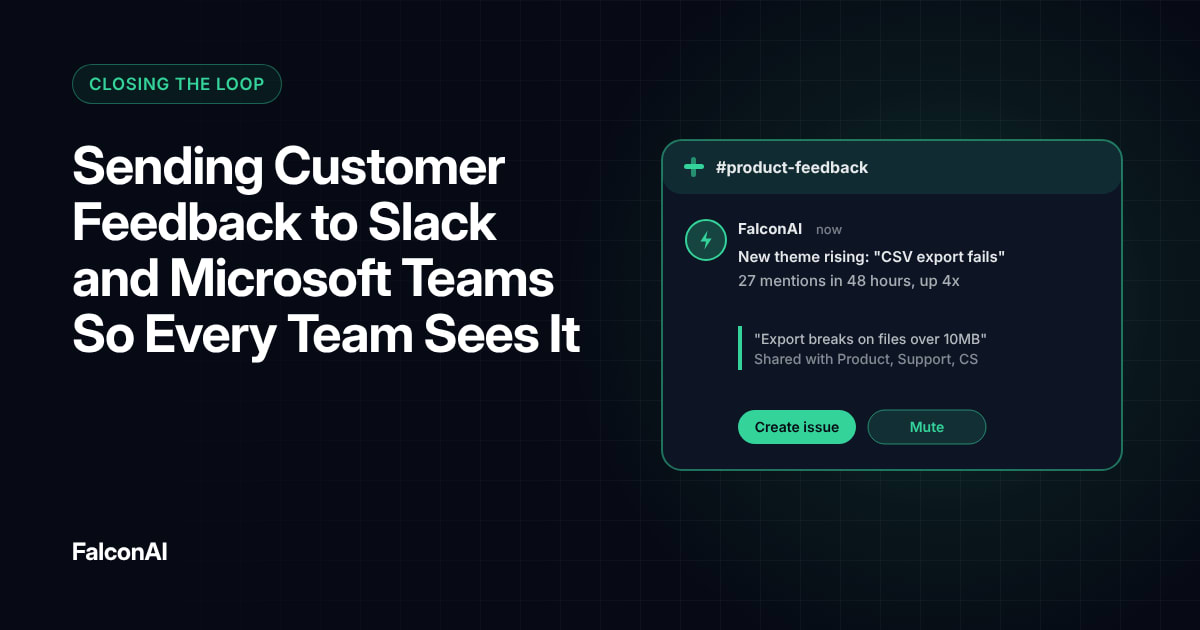
Use webhooks to act on feedback as it arrives. A negative review can open a ticket automatically. A spike in a theme can alert the owning team. Our guide to automated VoC workflows shows common patterns, and our post on VoC alerts in Slack and Teams covers chat integrations.
Feedback where work happens
- Surveys
- Tickets
- Reviews
- Calls
- Sales: sentiment in the CRM
- Product: themes in the backlog
- Support: alerts in its queue
- Finance: revenue at risk
Free review snapshot
See what your customers are saying, before you talk to us.
No commitment. We use your details only to send your snapshot and follow up. Privacy policy
Plan for Scale and Reliability
Feedback volume can jump after a launch or an outage. Design for spikes from the start. Queue incoming feedback so nothing gets lost when a downstream system slows down. Test your pipeline with a simulated spike before a major launch.
Standardize your data model
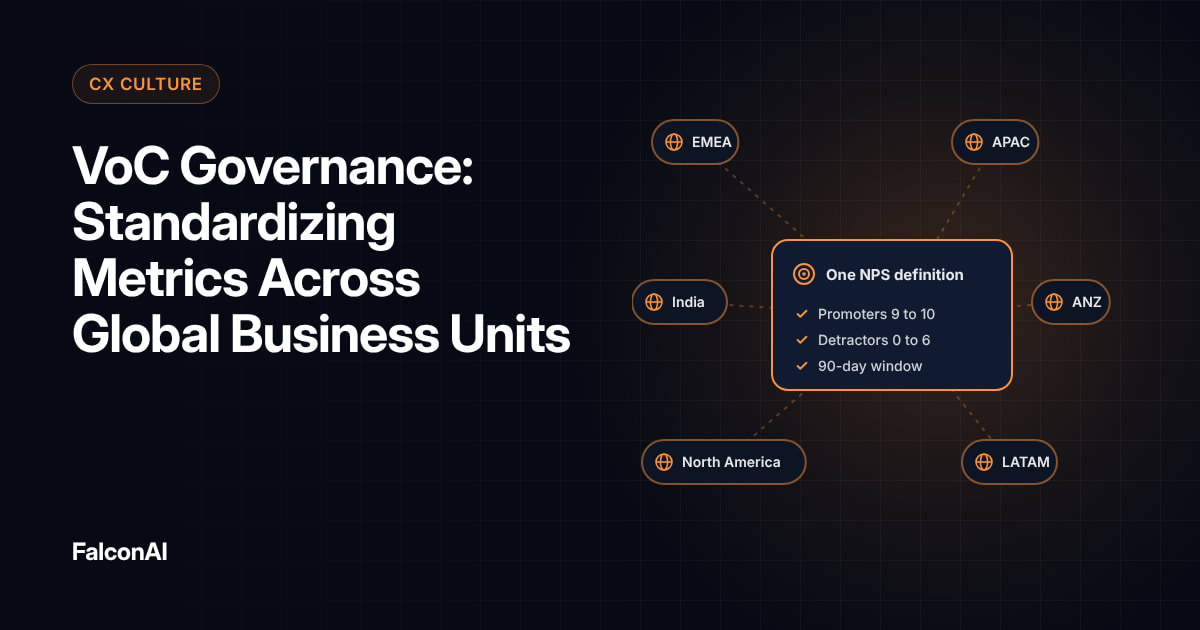
Agree on one schema for feedback records, including source, customer ID, timestamp and themes. A shared model keeps every integration consistent. Our post on VoC governance explains why consistent definitions matter.
Secure Every Connection
APIs open doors, so lock them properly. Use strong authentication for every integration. Limit each connection to the data it needs. Log access so you can audit who pulled what.
Protect personal data in transit
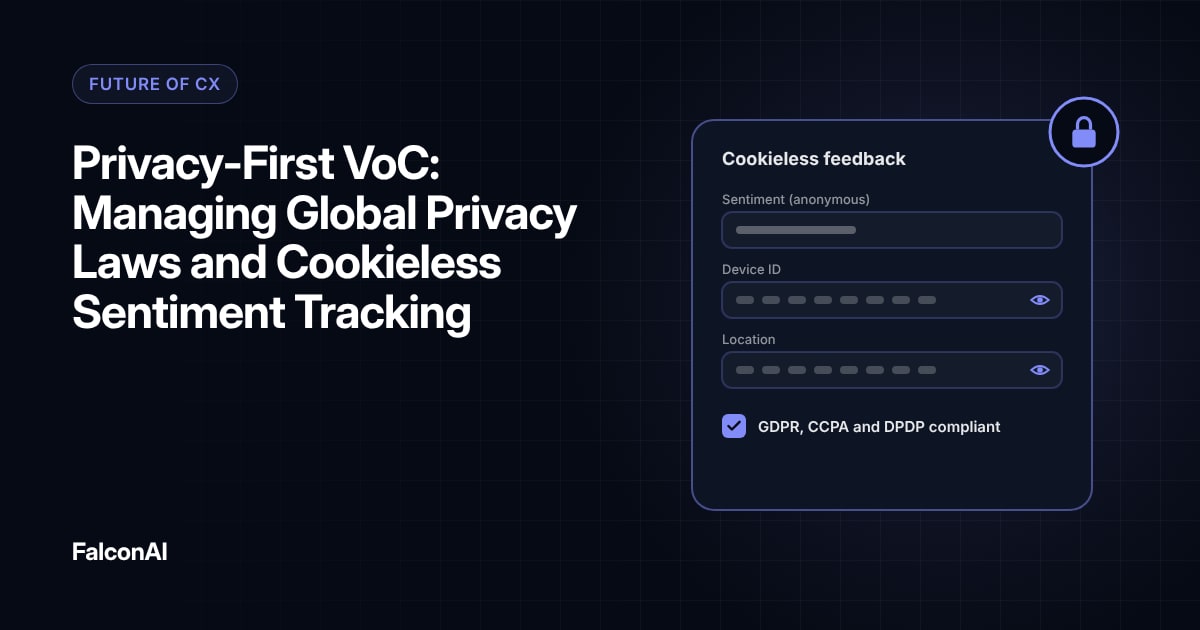
Encrypt feedback as it moves between systems. Mask personal details before sending feedback to tools that don't need them. Our guide to privacy-first VoC covers the wider rules. You can plug analyzed feedback into your own stack with NPS analysis, or book a demo.
Frequently asked questions
What is an API-first VoC architecture?
It's a feedback system built from connected components that share data through APIs.
Why choose API-first over a packaged tool?
It lets you connect feedback to your own systems and swap components without rebuilding everything.
What are the main layers of an API-first VoC stack?
Collection, analysis, storage and output, each connected through APIs.
How do webhooks help VoC programs?
They trigger actions as feedback arrives, such as opening tickets or sending alerts.
How do you keep API-first VoC secure?
Use strong authentication and encrypt feedback in transit.
Do you need a large engineering team?
Not always. Many teams start with a few integrations and add more over time.