Most customer success teams track a health score for every account. It usually blends product usage with support tickets. What it often leaves out is how customers actually feel. Real-time VoC signals fill that gap.
Why Usage Alone Falls Short
An account can log in every day and still be unhappy. Heavy usage might mean a team depends on your product, or it might mean they're fighting a clunky workflow. Usage data can't tell the difference. Feedback can.
The stakes are high
Zendesk's 2025 CX Trends Report found that 63% of consumers would switch to a competitor after one bad experience. In B2B, a single frustrated champion can sink a renewal. Waiting for usage to drop means you hear about problems too late. HubSpot's 2024 State of Service report notes that winning a new customer can cost up to 25 times more than keeping one.
- 63%would switch after one bad experienceSource: Zendesk 2025 CX Trends Report
- Up to 25 timesmore to win a new customer than keep oneSource: HubSpot 2024 State of Service
Figures as cited in this article
Which VoC Signals to Add
Useful signals include:
- Recent survey scores, such as NPS or CSAT.
- Sentiment in support tickets and chat conversations.
- Mentions of competitors or switching.
- Changes in tone from key contacts over time.
- Feedback from executives versus everyday users.
Weight signals by role
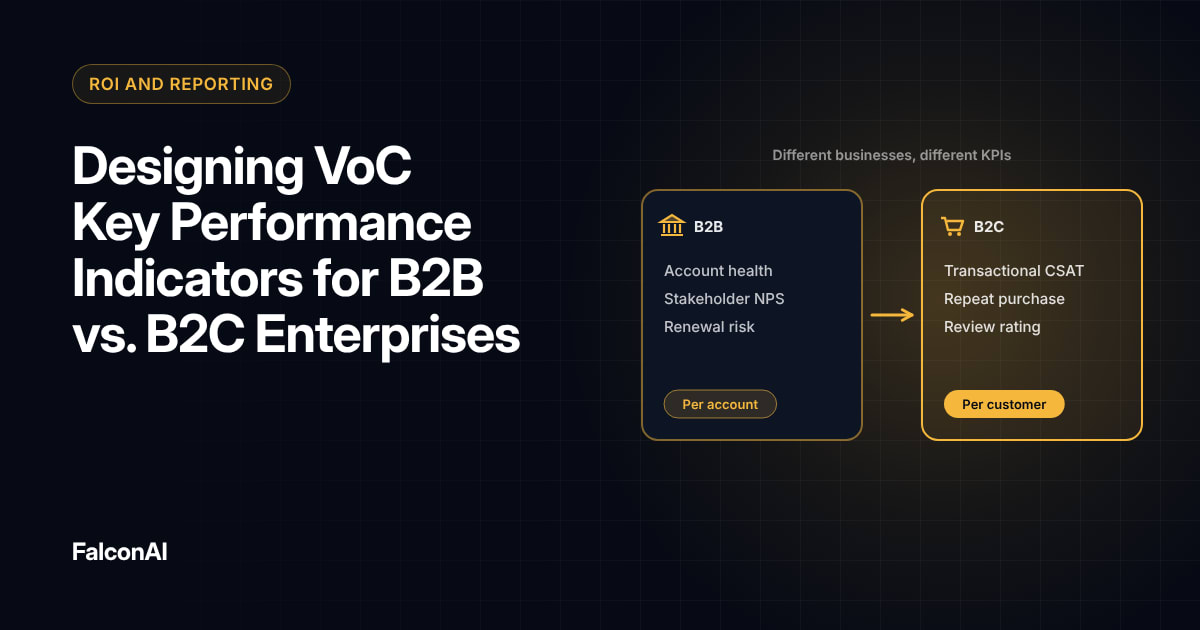
A complaint from the person who signs the contract matters more for renewal than one from an occasional user. Give feedback from decision-makers more weight in the score. Track changes in who responds, too. A champion who stops answering surveys is a warning sign. Our post on B2B and B2C VoC KPIs covers how to account for different roles.
VoC signals in the health score
- Product usage
- Support tickets
- Survey scores like NPS or CSAT
- Ticket and chat sentiment
- Competitor or switching mentions
- Tone changes from key contacts
- Alert the account owner
Make It Real Time
Health scores that update monthly miss fast-moving problems. Stream VoC signals into the score as they arrive. A sudden wave of negative tickets from one account should change its health right away.
Trigger action automatically
Set thresholds that alert the account owner when sentiment drops. Include the feedback that caused the change so they can act quickly. Make sure the alert reaches someone who can act the same day. Our guide to detractor escalation explains how to respond.
Free review snapshot
See what your customers are saying, before you talk to us.
No commitment. We use your details only to send your snapshot and follow up. Privacy policy
Test the Score Against Outcomes
A health score is only useful if it predicts something. Compare past scores with actual renewals and churn. Check whether adding VoC signals made predictions more accurate. Adjust the weights based on what you learn, and review them every quarter as customer behavior shifts.
Keep it explainable
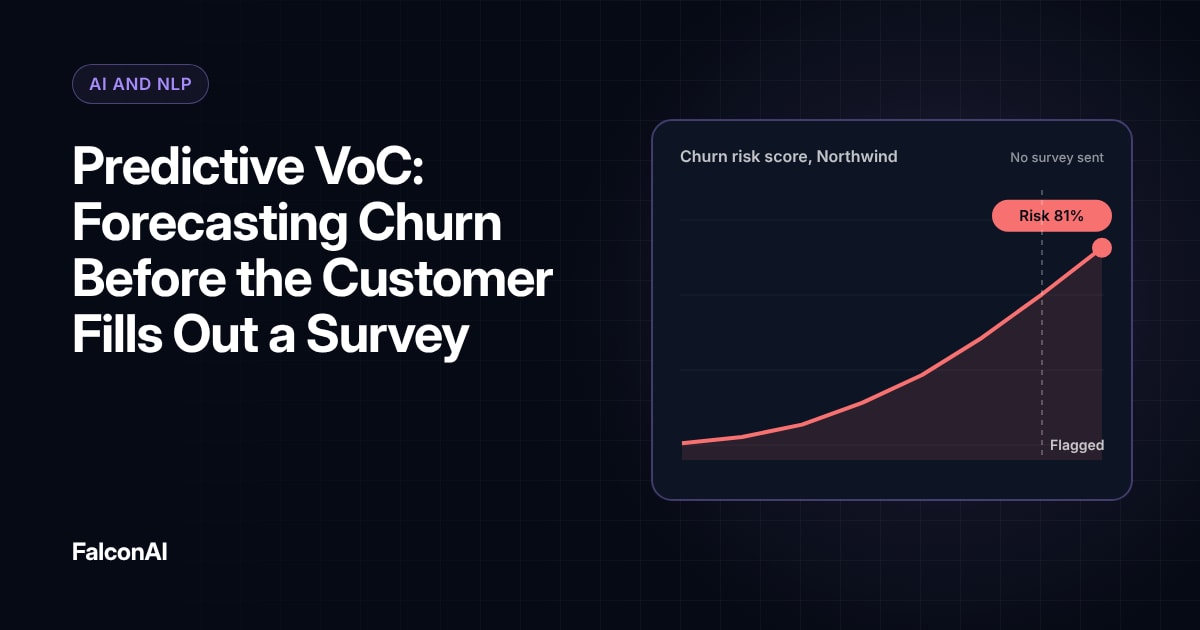
Account managers need to understand why a score changed. Show the top factors behind each score in plain language. A number without a reason gets ignored. Our post on predictive VoC and churn shows how to build models people trust.
Keep the score honest
- Compare past scores with renewals and churn
- Check if VoC signals improved accuracy
- Adjust the weights
- Review every quarter
Back to Compare past scores with renewals and churn, and round again
Bring Teams Together
Health scores work best when every customer-facing team uses the same view. Share the score in your CRM so everyone sees the same picture before they talk to a customer. Support should see it too, so agents know when a ticket comes from an account at risk.
Review accounts regularly
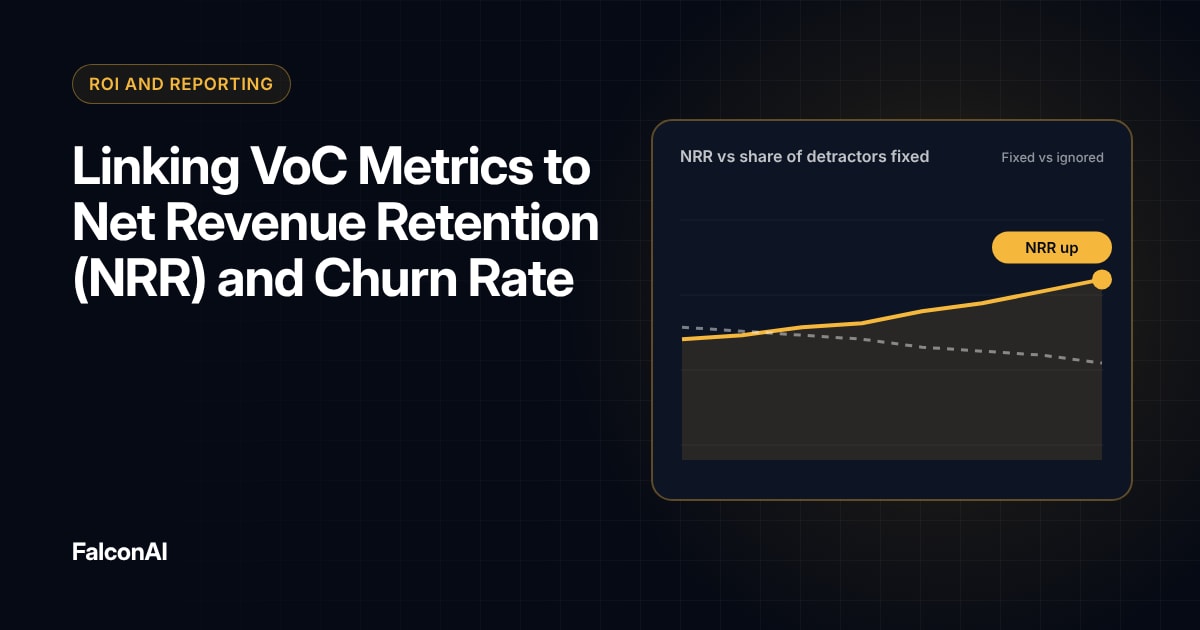
Hold a short weekly review of accounts with falling health. Assign an owner and a next step for each one. Our guide to VoC and net revenue retention explains the revenue side. You can feed live customer sentiment into account health with NPS analysis, or book a demo.
Frequently asked questions
What is a customer health score?
It's a single score that estimates how likely an account is to renew or churn.
Why add VoC signals to health scores?
Usage data shows what customers do, while feedback shows how they feel about it.
Which VoC signals matter most?
Survey scores, ticket sentiment, competitor mentions and feedback from decision-makers.
How often should health scores update?
As close to real time as possible, so sudden problems show up quickly.
How do you know if a health score works?
Compare past scores with actual renewals and churn, then adjust the weights.
Who should use the health score?
Every customer-facing team should work from the same view.