A customer gives you a 3 out of 10. Nobody replies. A week later, they get another survey asking the same question. That's how feedback programs lose trust, and it's why closing the loop matters more than collecting more scores.
What Closing the Loop Means
There are two loops. The inner loop is your reply to one customer about their feedback. The outer loop is the fix that stops the same problem from reaching everyone else.
Bain, which developed the Net Promoter System, describes the inner loop as feedback going straight to the employees who shaped the experience, followed by a quick call back to the customer. Both loops need an owner, or neither happens.
Why speed matters for the inner loop
“Immediacy is crucial because it supports the way people learn,” wrote Bain's Rob Markey. An employee who hears about a problem the same day remembers the conversation. Three weeks later, the details are gone, and so is the chance to learn from them.
There are two loops
Inner loop
- Your reply to one customer
- Feedback goes to the employees involved
- Saves one customer
Outer loop
- The fix that stops the problem
- Weekly review of tagged root causes
- Fixes the cause
What a Fast Response Is Worth
Qualtrics XM Institute's 2025 contact center study shows how much resolution matters. When an issue was fixed on first contact, 66% of customers were likely to recommend the company, compared with 32% when it wasn't. Satisfaction with wait time had an even bigger effect, at 73% versus 24%.
Customers expect speed. HubSpot's 2024 State of Service report found that 82% of customers want their issues solved immediately.
The cost of silence
Fewer people give feedback at all. Qualtrics research shows only 3 in 10 customers now give companies direct feedback. The ones who still do deserve an answer. When they don't get one, they learn that your survey is a form that goes nowhere, and they stop filling it in.
Customers likely to recommend
Source: Qualtrics XM Institute. Figures as cited in this article
How to Close the Loop in Real Time
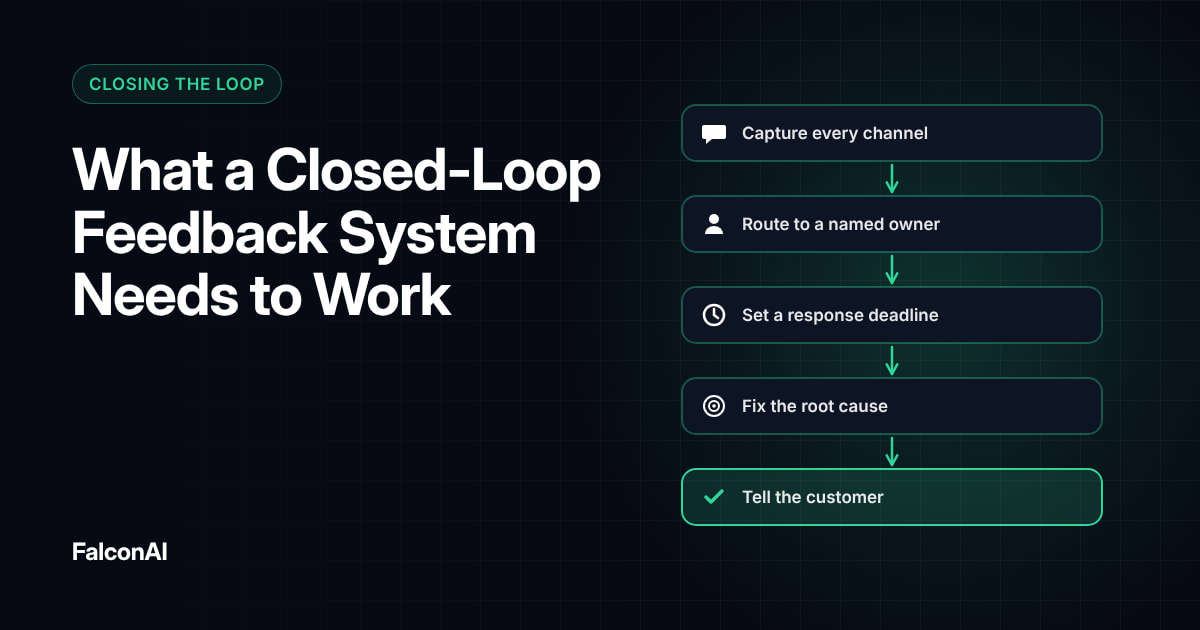
Real time doesn't mean seconds. It means feedback reaches an owner while the issue is still fresh. Here's a simple setup:
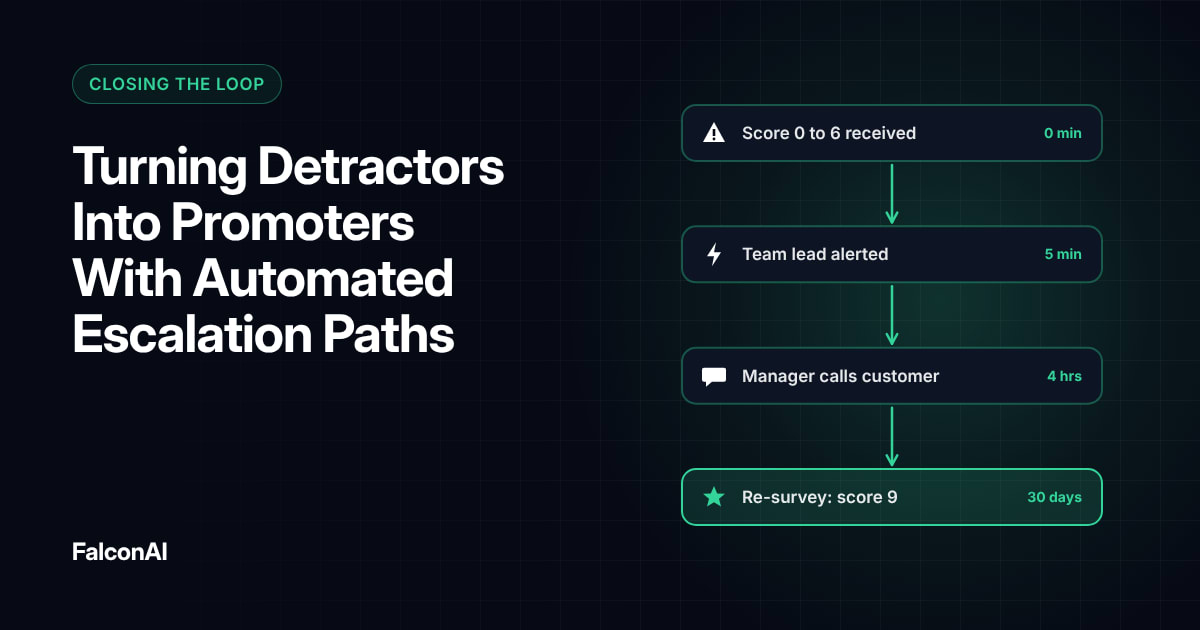
- Send every detractor score and low CSAT rating to an owner as soon as it arrives.
- Set a reply target, such as one business day.
- Log what the customer said and what you did about it.
- Tag the root cause so it feeds the outer loop.
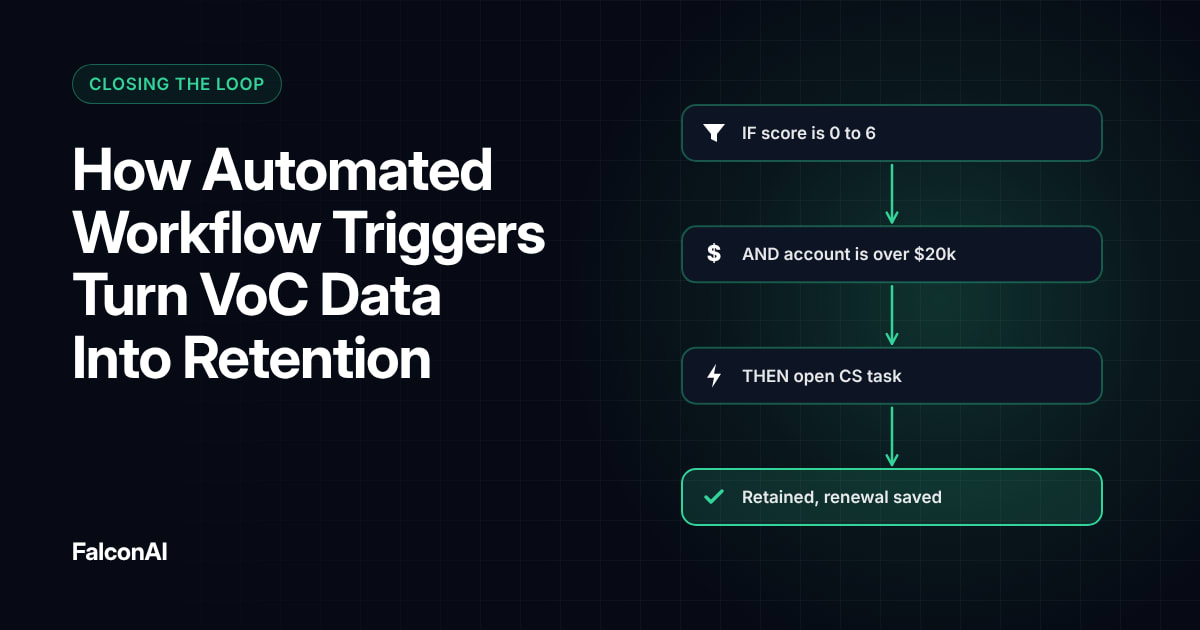
Our guide to automated workflow triggers shows how to route feedback without manual sorting.
Keep the reply personal
A short note from a real person works better than a template. Mention the specific issue and say what you'll do about it by a set date. If you can't fix it, say so and explain why. Customers respect a straight answer far more than silence.
Free review snapshot
See what your customers are saying, before you talk to us.
No commitment. We use your details only to send your snapshot and follow up. Privacy policy
Closing the Outer Loop
The inner loop saves one customer. The outer loop fixes the cause. Forrester's 2025 State of Feedback Management research found that many programs struggle to get stakeholders to act on CX insights. A weekly review of tagged root causes, with a named owner for each, keeps fixes moving. Our post on what a closed-loop system needs to work covers the full setup.
Tell customers what changed
When you fix a common problem, tell the customers who reported it. A short email that says “you asked, we fixed it” shows people their feedback matters, and it makes them more likely to answer your next survey. Track root causes in NPS analysis. When you're ready, book a demo.
Closing the loop in real time
Feedback that goes somewhere
- Send low scores to an owner
- Reply within a target
- Log what was said and done
- Tag the root cause
- Fix it in a weekly review
- Tell customers what changed
Back to Send low scores to an owner, and round again
Frequently asked questions
What does closing the feedback loop mean?
It means replying to customers about their feedback and fixing the problems they raise. The reply is the inner loop. The fix is the outer loop.
How fast should you respond to a detractor?
Aim for one business day. The sooner you reply, the more likely the customer is to stay.
What is the inner loop in NPS?
The inner loop is the follow-up with an individual customer, usually by the employee or manager closest to their experience.
What is the outer loop in NPS?
The outer loop is the process of finding root causes across many responses and fixing them for everyone.
Should you reply to promoters too?
Yes. A short thank-you takes little time, and promoters are a good source of referrals and reviews.
How do you measure closed-loop performance?
Track the share of detractors who get a reply within your target time, and how many of them score higher on the next survey.