Plenty of teams say they close the loop. Fewer have a system that does it every time. When follow-up depends on one busy person remembering, detractors slip through. A working closed-loop system has a few parts that fit together.
The parts that fit together
- Capture and routingFeedback in one place, rules pick an owner
- ResponseTargets by severity, every reply logged
- Root cause analysisTag each case, review top causes weekly
- Reporting and ownershipOne named person per rule, case and cause
Capture and Routing
Everything starts with getting feedback into one place. That includes surveys, and it also includes support tickets and reviews. Gartner found that 93% of customer service organizations run surveys, yet service leaders see them as less valuable than other ways of hearing from customers. Gartner also predicted that 60% of organizations with VoC programs would add voice and text analysis to their surveys by 2025. If your system can only read survey answers, it misses most of what customers say.
Rules decide who acts
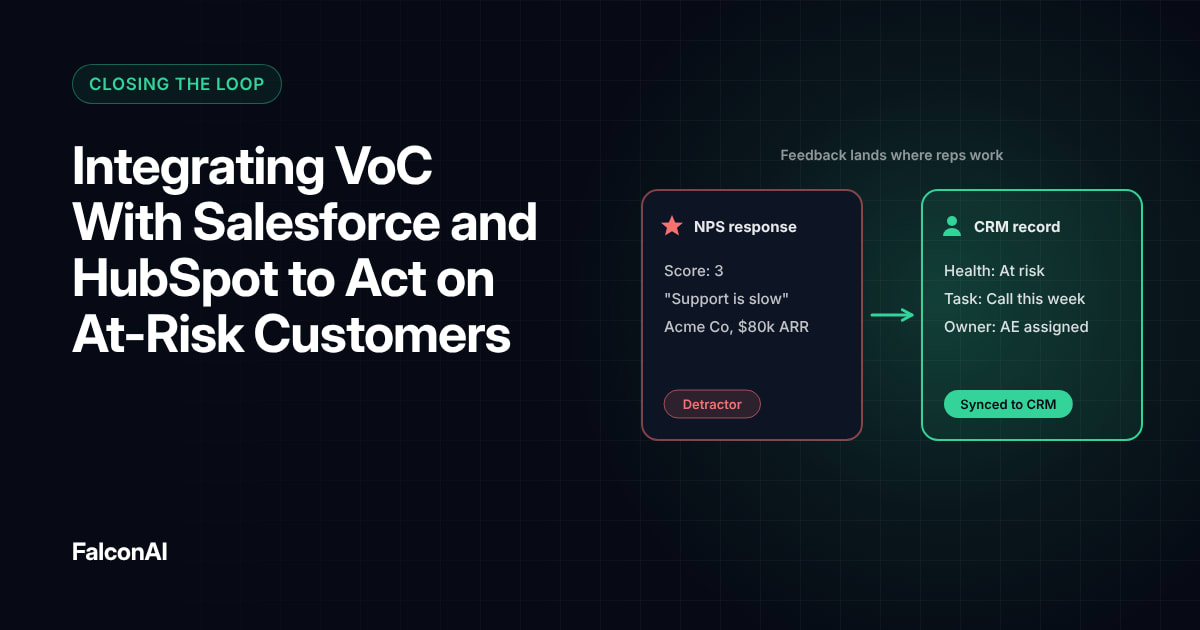
Once feedback is in, routing rules send it to an owner. Rules should use the score and account data, so a detractor from a large account reaches someone senior. In HubSpot's 2024 research, only 35% of CX leaders said their data is fully integrated with their tools, so connecting your CRM is often the first job. See integrating VoC with Salesforce and HubSpot.
- 93%Service organizations that run surveysSource: Gartner
- 60%VoC programs adding voice and text analysisSource: Gartner
- 35%CX leaders with fully integrated dataSource: HubSpot
Figures as cited in this article
Response
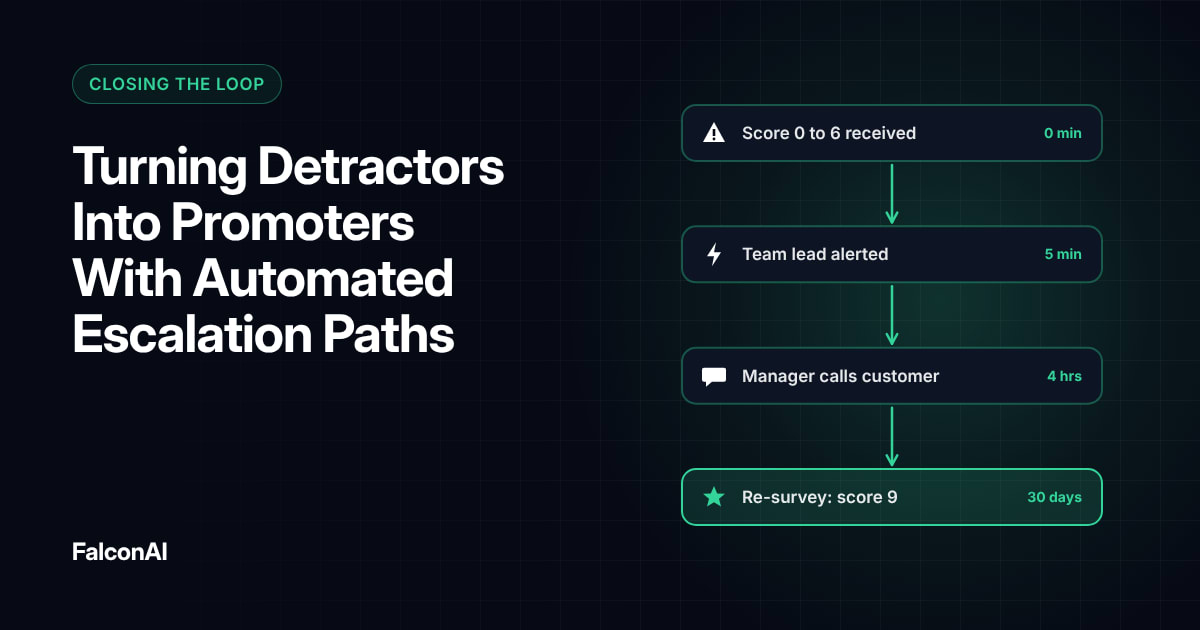
Every routed case needs a response target and a place to record what happened. Set targets by severity. A detractor from a large account might need a reply the same day, while a minor complaint can wait two days.
Recording the response matters as much as sending it. Without a log, you can't tell which customers heard back or what you promised them. Make the log easy to fill in, or people will skip it.
Start from a template, then make it personal
Give owners a short template to start from, then ask them to mention the customer's specific issue. Our guide to turning detractors into promoters covers what to say.
Root Cause Analysis
Replies fix one case. Root cause analysis fixes the pattern. Tag every closed case with its cause, then review the top causes each week with the teams that own them.
“Turning voice and text into data is just part of the challenge,” said Gartner's Deborah Alvord. The rest is getting each cause in front of someone who can fix it.
Use AI to group causes
Reading every comment by hand doesn't scale. AI theme detection groups similar comments so you can see that 40 customers raised the same login problem this month. That number is what gets a fix onto a product roadmap.
Free review snapshot
See what your customers are saying, before you talk to us.
No commitment. We use your details only to send your snapshot and follow up. Privacy policy
Reporting and Ownership
Forrester's 2025 State of Feedback Management research found that many programs struggle to get stakeholders to act on insights, often because core practices around collecting and analyzing feedback are weak. Clear ownership fixes much of this. Every rule, case and root cause needs one named person.
Track a few numbers
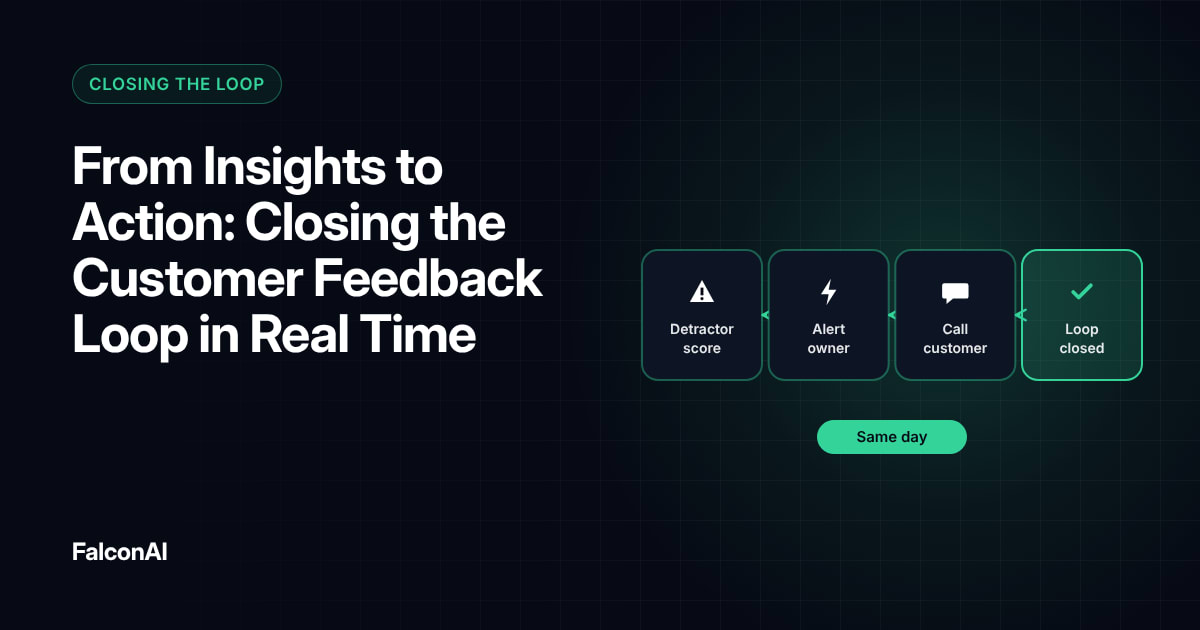
Report the share of cases closed on time and the change in scores for customers who got a follow-up. Next to those, list the top open root causes with their owners. Track them in NPS analysis, and read our guide to closing the feedback loop in real time. When you're ready, book a demo.
Track a few numbers
- Share of cases closed on time
- Score change after a follow-up
- Top open root causes, with owners
Frequently asked questions
What is a closed-loop feedback system?
It's a process and set of tools that capture feedback, route it to an owner, record the response and fix the root causes.
What are the parts of a closed-loop system?
Capture, routing, response, root cause analysis and reporting.
Do you need special software to close the loop?
You can start with a spreadsheet, but a VoC platform with routing and theme detection scales much better.
How do you assign owners for feedback?
Use rules based on score and account data, and give every rule one named owner.
How often should you review root causes?
Weekly for active issues and monthly for a broader trend review.
What's the most common reason closed-loop programs fail?
Unclear ownership. When nobody owns a case or a cause, it doesn't get fixed.