Net Promoter Score has been the go-to CX metric for two decades. It's simple and easy to benchmark. It also has limits. A score collected once a quarter can't tell you what changed last week, or why.
The Limits of Static NPS
Gartner predicted back in 2021 that more than 75% of organizations would abandon NPS as a measure of success for customer service by 2025. Gartner's Deborah Alvord said NPS “consistently fails to provide actionable insight for customer service and support leaders.”
Yet it's still everywhere
Forrester's research on VoC measurement found that nearly three-quarters of CX professionals say top executives use NPS to judge CX success. The metric isn't going away soon. The goal is to add context around it.
- More than 75%of organizations expected to abandon NPS for service by 2025Source: Gartner, 2021 prediction
- Nearly three-quartersof CX pros say executives judge CX success by NPSSource: Forrester
Figures as cited in this article
What a Dynamic Health Index Is
A dynamic health index blends several signals into one score that updates continuously. It might combine:
- Survey scores like NPS and CSAT.
- Sentiment from support tickets and reviews.
- Customer effort signals, such as repeat contacts.
- Behavioral data, such as usage and renewals.
Why it works better
Each signal covers a blind spot in the others. Surveys capture opinions from people who respond, while ticket sentiment covers people who never fill out surveys. Behavior shows what customers actually do.
Static NPS versus a dynamic health index
Static NPS
- Collected once a quarter
- Can't tell what changed last week, or why
- Only people who respond
Dynamic health index (the approach the article favours)
- Blends several signals into one score
- Updates continuously
- Covers people who never fill out surveys
- Keeps NPS as one input
Building Your Index
Start with the signals you already have. Weight each one based on how well it predicts outcomes you care about, such as retention or expansion. Test the index against past results before you rely on it. Revisit the weights once a year as your business changes.
Keep NPS in the mix
You don't have to drop NPS. Keep it as one input and track it over time. Leaders who know NPS will trust a new index more if they can still see the familiar number inside it. Show NPS trends next to the index so the link stays clear.
Free review snapshot
See what your customers are saying, before you talk to us.
No commitment. We use your details only to send your snapshot and follow up. Privacy policy
Make It Actionable
A good index tells you what changed and where. Break it down by segment and lifecycle stage. Set alert thresholds so teams hear about sharp drops right away. When the score drops, teams should be able to drill into the themes behind it.
Connect it to owners
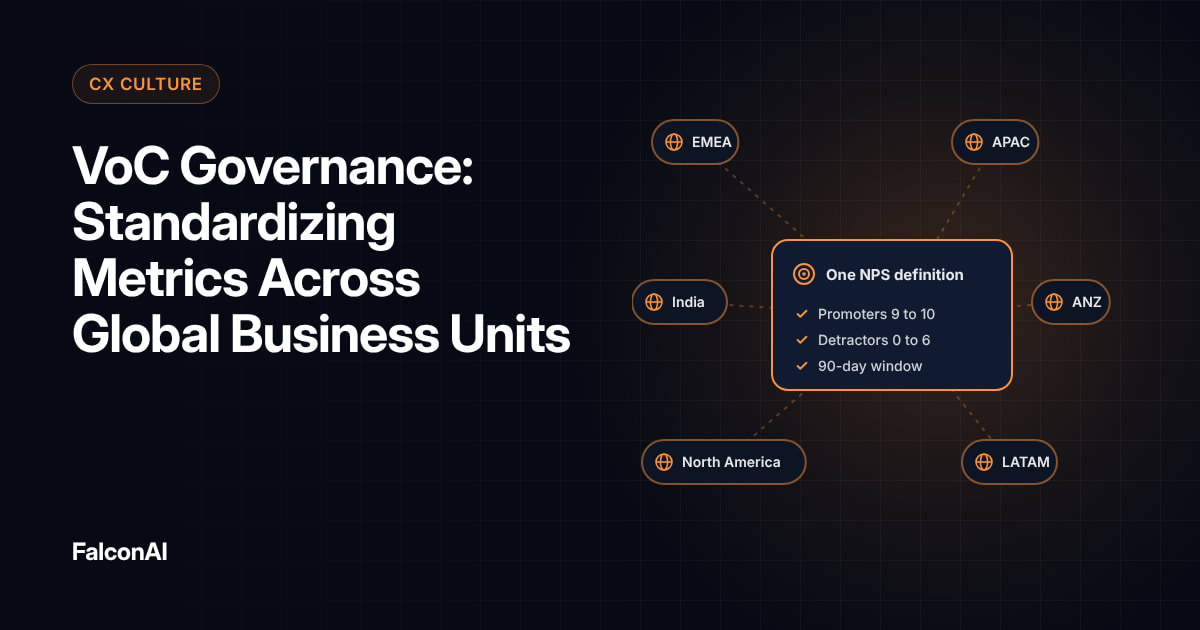
Assign each part of the index to a team. Product owns usage signals. Support owns ticket sentiment. CX owns survey scores, and finance owns renewal data. Our guide to VoC governance explains how to keep definitions consistent.
Each part of the index has an owner
- Survey scores: CX
- Ticket sentiment: Support
- Usage signals: Product
- Renewal data: Finance
Manage the Transition
Switching metrics can confuse people. Run the new index alongside NPS for a few quarters. Show where they agree and where the index caught something NPS missed. Explain the change in a short note to every team that reports on CX.
Tell the story with examples
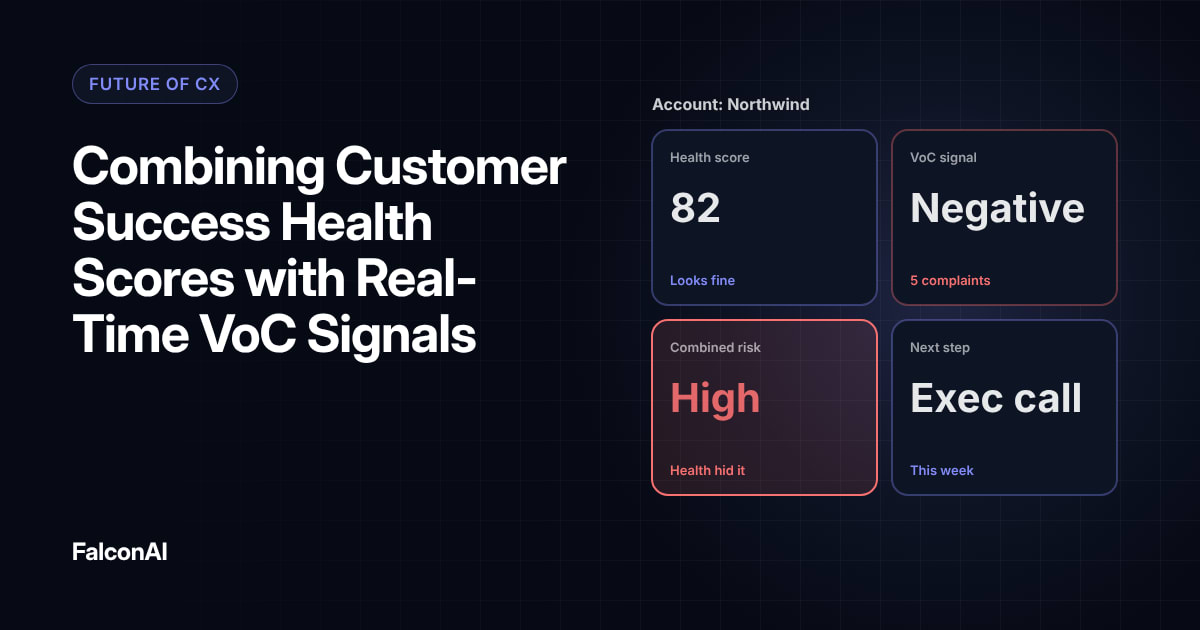
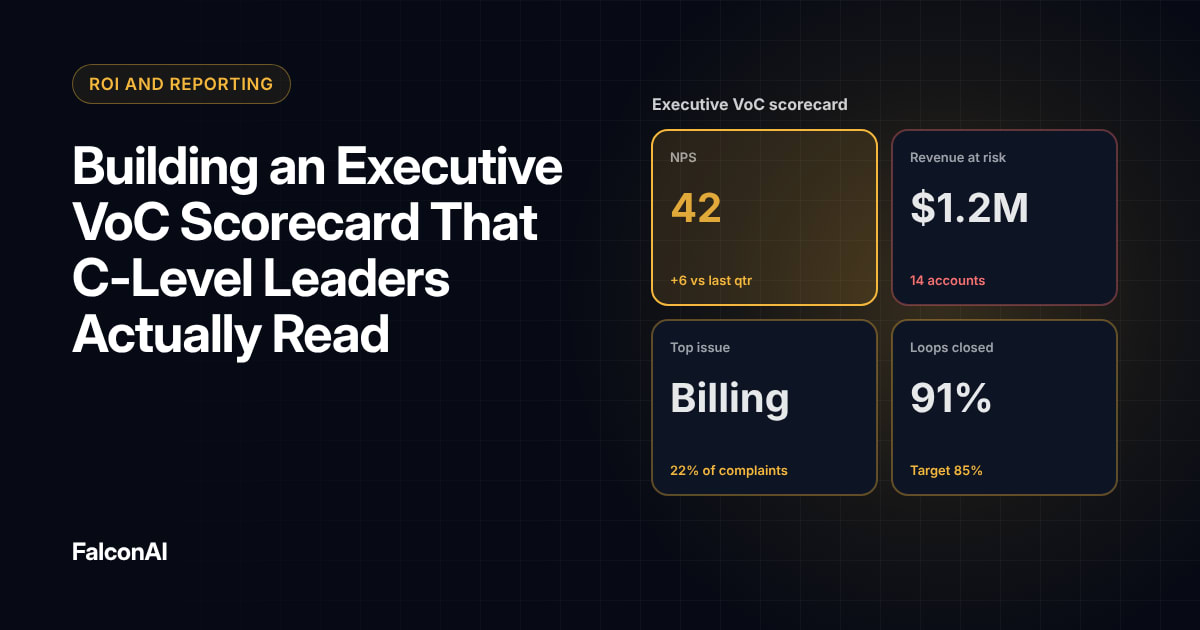
Share cases where the index spotted a problem early. Concrete wins make the change easier to accept. Our post on executive VoC scorecards shows how to present it, and our guide to combining health scores with VoC covers the account-level view. You can build a continuous view of customer health with NPS analysis, or book a demo.
Frequently asked questions
Is NPS still useful?
Yes, as one input. On its own, it's too slow and too narrow to guide daily decisions.
What is a dynamic health index?
It's a score that blends many customer signals and updates continuously.
Which signals should a health index include?
Survey scores, ticket sentiment, effort signals and behavioral data are a good start.
How do you weight the signals?
Base the weights on how well each signal predicts outcomes like retention.
Should you replace NPS right away?
No. Run both side by side for a few quarters before relying on the new index.
How do you get leaders on board?
Show concrete examples where the index caught problems that NPS missed.