Many companies already keep most of their business data in a central warehouse. Sales and billing data live there. Customer feedback often doesn't. It sits in separate tools, and teams export it by hand when they need it.
The Problem With Copying Data
Every export creates a copy that goes stale. Teams end up comparing numbers from different days. dbt Labs' 2025 State of Analytics Engineering report found that 56% of data practitioners name data quality as a problem. Scattered copies of feedback add to that problem.
Trust suffers
Research from Precisely and Drexel University in 2024 found that 67% of data professionals don't completely trust the data they use for decisions. When feedback numbers don't match across reports, people stop using them.
- 56%of data practitioners name data quality as a problemSource: dbt Labs 2025 State of Analytics Engineering
- 67%don't completely trust the data they use for decisionsSource: Precisely and Drexel University, 2024
Figures as cited in this article
What Federated VoC Means
Federated VoC keeps feedback and its analysis available inside your existing data platform. Analysts can query sentiment and themes with the same tools they use for everything else. There's no export step and no second copy to manage.
Join feedback to everything else
The real value comes from joining. Link sentiment to revenue and usage in one query. You can find which themes show up most among churned accounts or which features unhappy customers use most. These joins often reveal patterns no single tool could show.
How to Set It Up
Here's a common approach:
- Land raw feedback in the warehouse from every source.
- Run theme and sentiment analysis, then write the results back as tables.
- Link feedback records to customer IDs used elsewhere.
- Build shared models that analysts can query directly.
Keep the models clean
Document every table and field. Jenna Jordan, a senior data management consultant, has recommended “bringing your analytics systems closer to your operational systems and organizing by domain.” Treat feedback as one of those domains, with a clear owner. Test models automatically so broken pipelines get caught early.
How to set it up
- Land raw feedbackIn the warehouse, from every source
- Analyze and write backThemes and sentiment as tables
- Link to customer IDsUsed elsewhere
- Build shared modelsAnalysts can query directly
Free review snapshot
See what your customers are saying, before you talk to us.
No commitment. We use your details only to send your snapshot and follow up. Privacy policy
Govern Access Carefully
Feedback often contains personal details. Mask them in shared tables and keep raw text in a restricted area. Grant access by role so analysts see what they need and nothing more. Review access lists each quarter.
Use one set of definitions
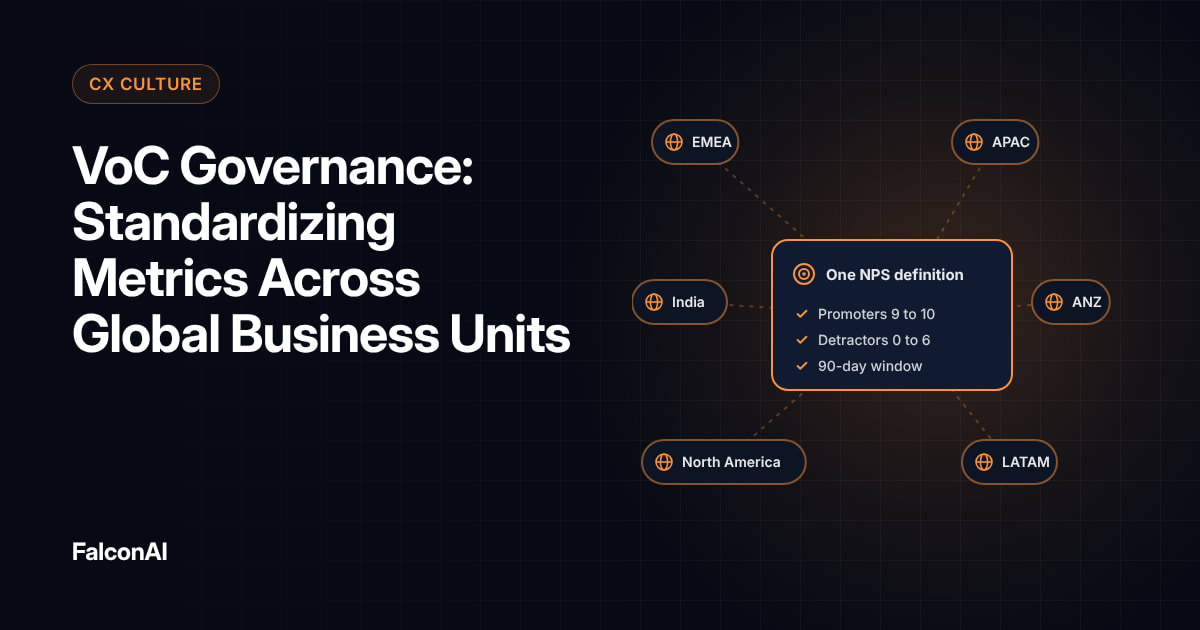
Agree on how sentiment scores and themes are calculated. Store those definitions alongside the data. Our guide to VoC governance covers how to keep them consistent across teams.
What Teams Can Do With It
Finance can model how sentiment affects renewal revenue. Product can see which features drive complaints. Marketing can compare sentiment across campaigns. Support can see which issues drive repeat contacts. Everyone works from the same source.
Start with one question
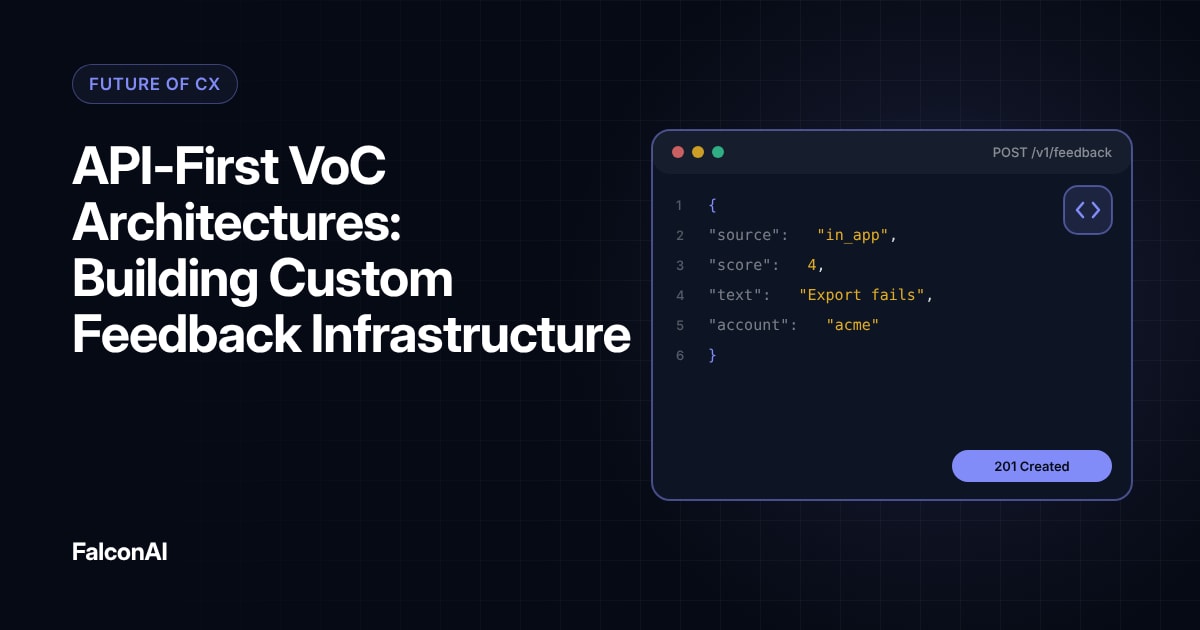
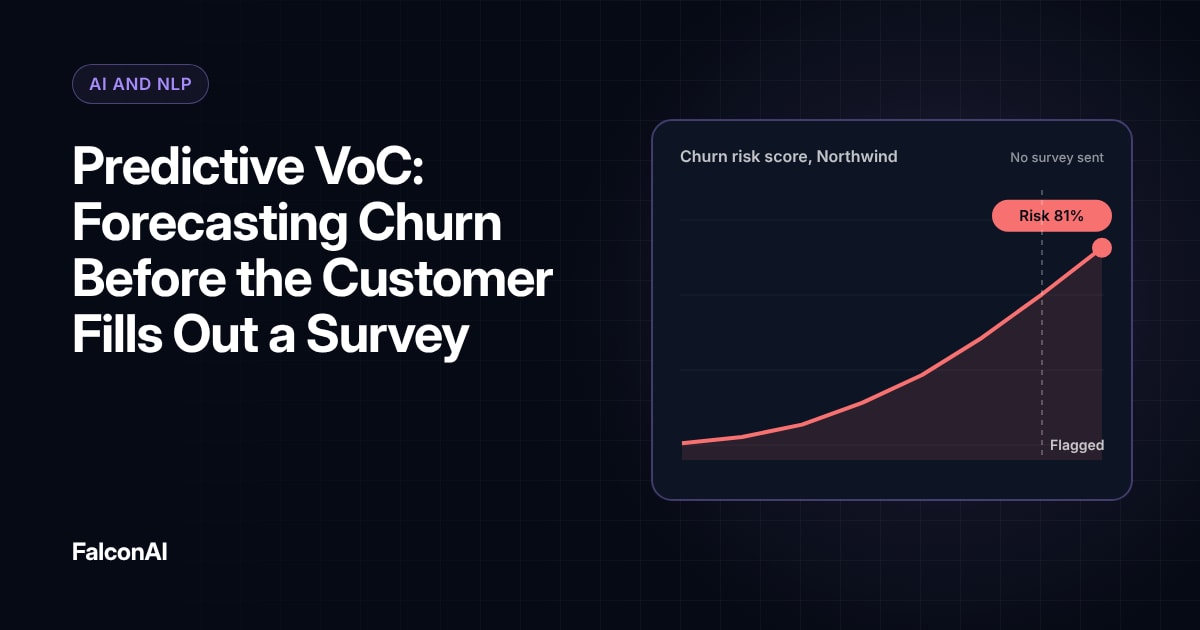
Pick a business question that needs feedback and other data together, such as which themes predict churn. Build just enough to answer it, then expand. Share the first results widely so other teams see what's possible. Our post on API-first VoC architectures explains how to connect sources, and our guide to predictive VoC and churn shows a common first use case. You can send analyzed feedback into your warehouse with CSAT analysis, or book a demo.
One source, joined to everything else
- Feedback sentiment and themes
- Revenue
- Usage
- Sales and billing data
- Finance: sentiment and renewals
- Product: features driving complaints
- Marketing: sentiment by campaign
- Support: repeat-contact drivers
Frequently asked questions
What is federated VoC data?
It means keeping customer feedback and its analysis inside your existing data platform so teams can query it directly.
Why not just export feedback when needed?
Exports go stale quickly and create conflicting numbers across reports.
What can you learn by joining feedback with other data?
You can see how sentiment relates to revenue and churn.
How do you protect personal data in the warehouse?
Mask personal details in shared tables and restrict access to raw text.
Do you need a data team to do this?
It helps, but many teams start with a few shared models and grow from there.
What's a good first project?
Find which feedback themes appear most often among churned accounts.