A customer who had a rough experience last month shouldn't get the same cheerful template as everyone else. AI can now read a customer's feedback history and shape each response to fit. It can make service feel personal, though careless use can feel intrusive.
Personalization Pays
Twilio's 2025 State of Customer Engagement Report found that 75% of businesses see higher customer spending from personalization. The same report found that 71% of consumers abandon purchases when experiences feel irrelevant or flat. Relevance clearly affects revenue.
There's a trust gap
Only 45% of consumers in the Twilio study said they feel understood by the brands they use. Yet 83% of business leaders believe they deeply understand their customers. Twilio CMO Chris Koehler noted that “technology alone isn't the answer.”
The understanding gap
Source: Twilio 2025 State of Customer Engagement. Figures as cited in this article
What Historical Sentiment Adds
Sentiment history tells you how a customer has felt across past interactions. AI can use that history to adjust tone and priority. A long-time customer with recent complaints might get a more careful, apologetic response and faster routing to a senior agent.
Practical examples
- An agent sees a summary of the customer's last few interactions before replying.
- AI drafts a reply that acknowledges a recent problem.
- Customers with falling sentiment get priority in the queue.
- Offers and follow-ups match what the customer has said they care about.
Start with the agent summary, since it helps right away and carries little risk.
Practical uses of sentiment history
- Agent sees a summary of recent interactions
- AI drafts a reply that acknowledges a recent problem
- Falling sentiment gets queue priority
- Offers match what the customer cares about
Respect Privacy Limits
Personalization can cross a line quickly. Qualtrics' 2025 Consumer Trends report found that only 27% of consumers are comfortable with companies using unsolicited data for personalization. Twilio found that 84% want control over their personalization settings.
Use what customers gave you
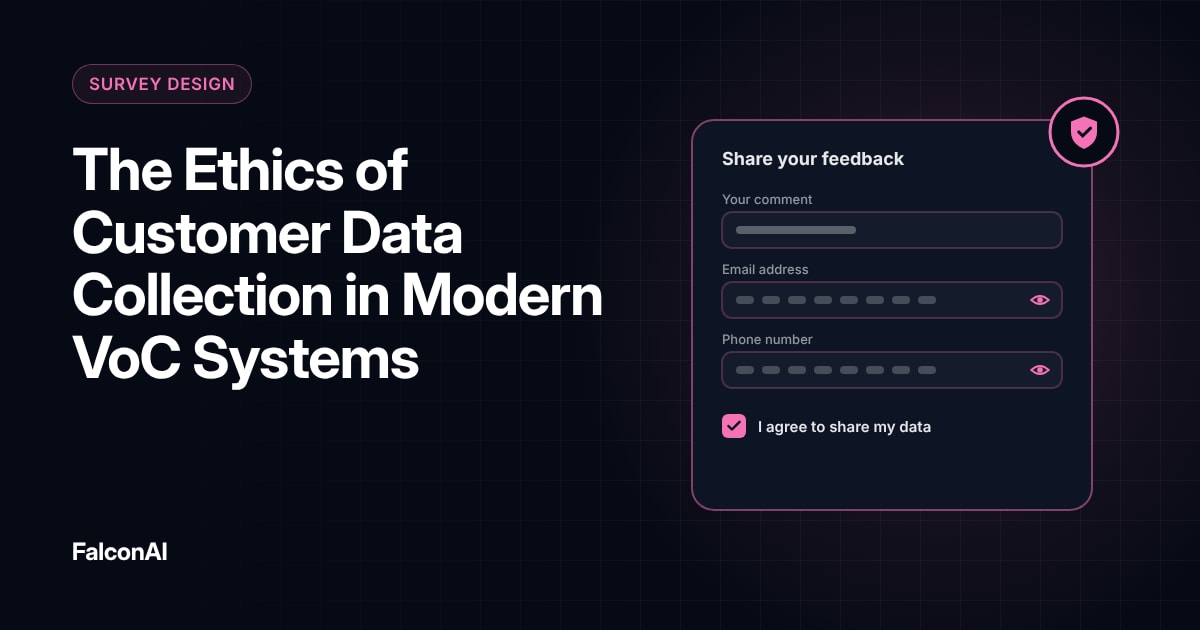
Base personalization on feedback customers shared directly, such as surveys and support conversations. Avoid inferring sensitive traits. Let customers see and adjust what you store. Explain in plain words how you use feedback history. Our guide to VoC data ethics covers the principles.
- 27%comfortable with unsolicited data used for personalizationSource: Qualtrics 2025 Consumer Trends
- 84%want control over their personalization settingsSource: Twilio 2025 State of Customer Engagement
Figures as cited in this article
Free review snapshot
See what your customers are saying, before you talk to us.
No commitment. We use your details only to send your snapshot and follow up. Privacy policy
Keep People in Control
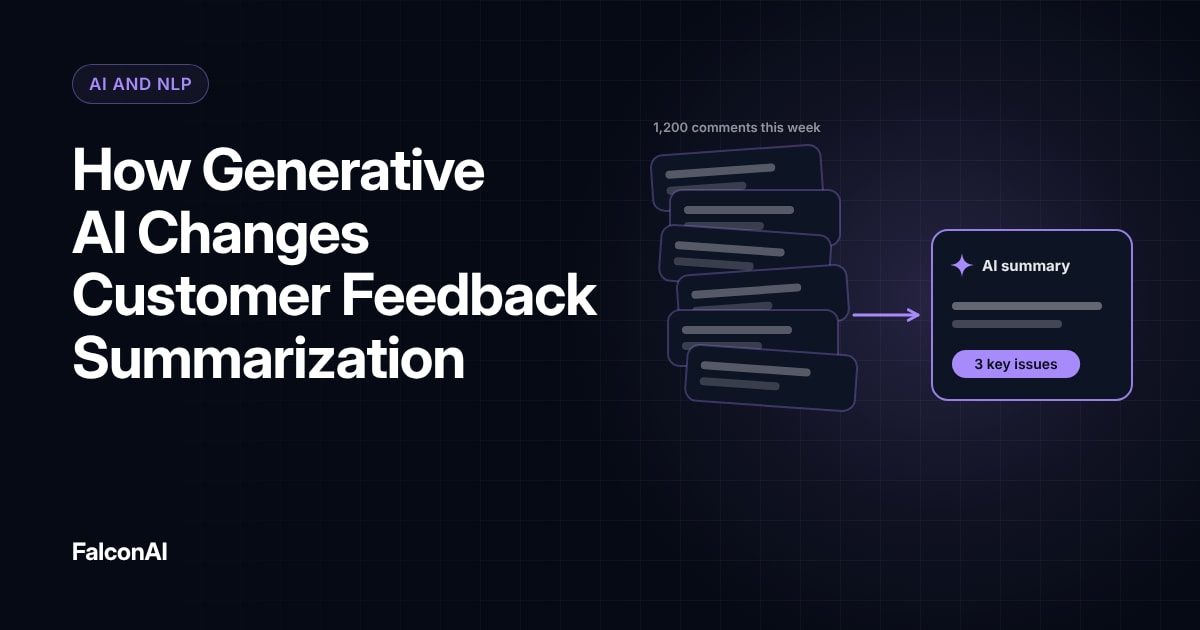
AI should draft and suggest. People should decide, especially in sensitive cases. Review AI-drafted responses regularly to make sure the tone fits. Give agents an easy way to flag drafts that miss the mark. Our post on generative AI feedback summaries explains how to keep summaries accurate.
Be open about AI
Twilio found that 54% of consumers want to know when they're talking to AI. Label AI-assisted messages where it makes sense, and make it easy to reach a person.
Measure the Impact
Track whether personalized responses improve satisfaction and resolution times. Compare results for customers with negative sentiment history before and after you introduce personalization. Ask agents whether the history summaries help them solve cases faster.
Watch for unintended effects
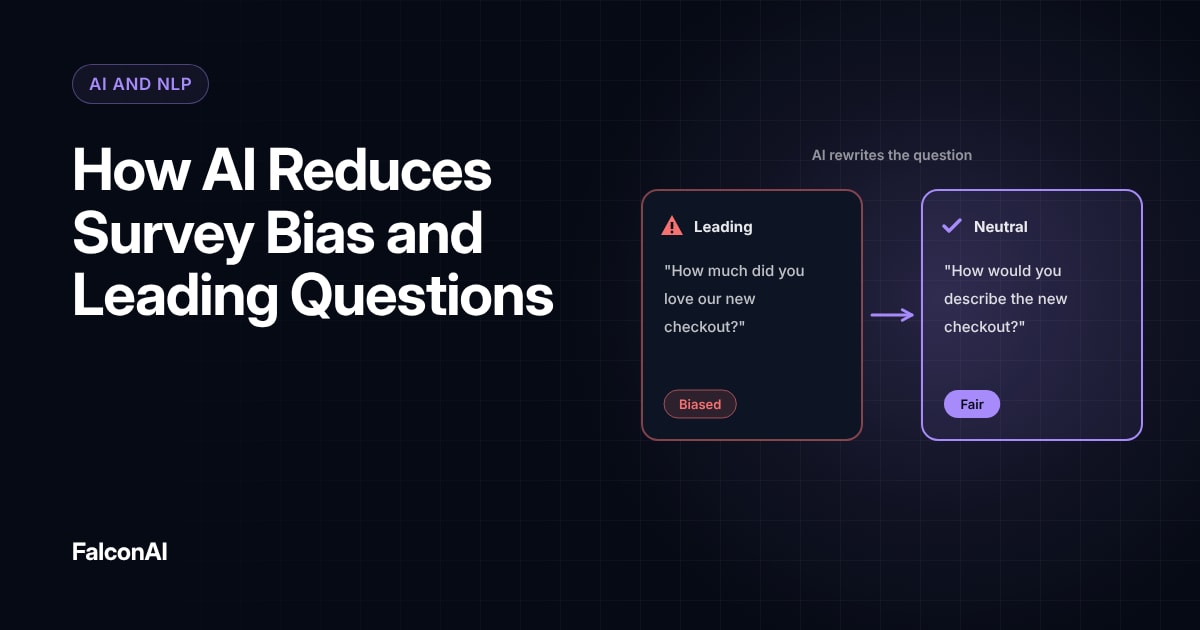
Check whether some groups get worse service because of how the model reads their history. Fix any gaps you find, and adjust the model when you spot a problem. Our guide to AI and survey bias covers what to test. You can track sentiment history across every customer with CSAT analysis, or book a demo.
Frequently asked questions
What is AI-generated personalization in CX?
It's using AI to tailor responses based on what you know about a customer, including past sentiment.
How does historical sentiment help?
It shows how a customer has felt over time, so responses can match their situation.
Do customers want personalized service?
Many do, but most want control over how their data is used.
What data should personalization use?
Feedback customers shared directly, such as surveys and support conversations.
Should AI send responses on its own?
For sensitive cases, AI should draft and a person should review before sending.
How do you avoid bias in personalization?
Test how the model treats different customer groups and fix any gaps.