Your support agents and account managers talk to customers every day. They're the people best placed to fix a bad experience. Most of the time, though, the feedback about their work reaches them weeks later in a quarterly report, if it reaches them at all.
Why the Frontline Matters
Most customer problems get solved, or not, in a single conversation. Qualtrics XM Institute's 2025 contact center study found that only 62% of issues were resolved on first contact. When they were, 69% of customers said they'd purchase more, compared with 36% when they weren't.
Service leaders are investing in their people as well. In a Gartner survey from October 2025, nearly 80% of service leaders said they plan to move some agents into more complex or emotionally sensitive roles. Those roles need fast, honest feedback to work.
Feedback is how frontline staff improve
Bain's Net Promoter System calls this the inner loop. Employees hear directly from the customers they served and learn from it. That only works when the feedback arrives quickly and unedited. Weekly or monthly reports arrive too late to link a comment to a specific call.
Customers who said they'd purchase more
Source: Qualtrics XM Institute. Figures as cited in this article
Get Feedback to the Right Person Fast
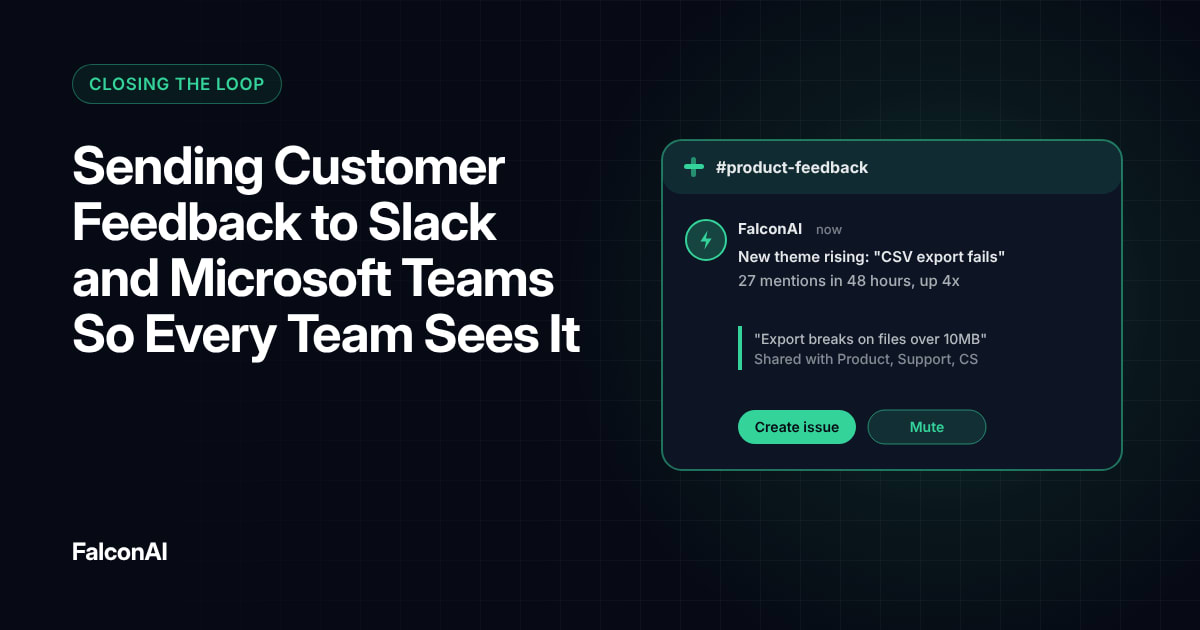
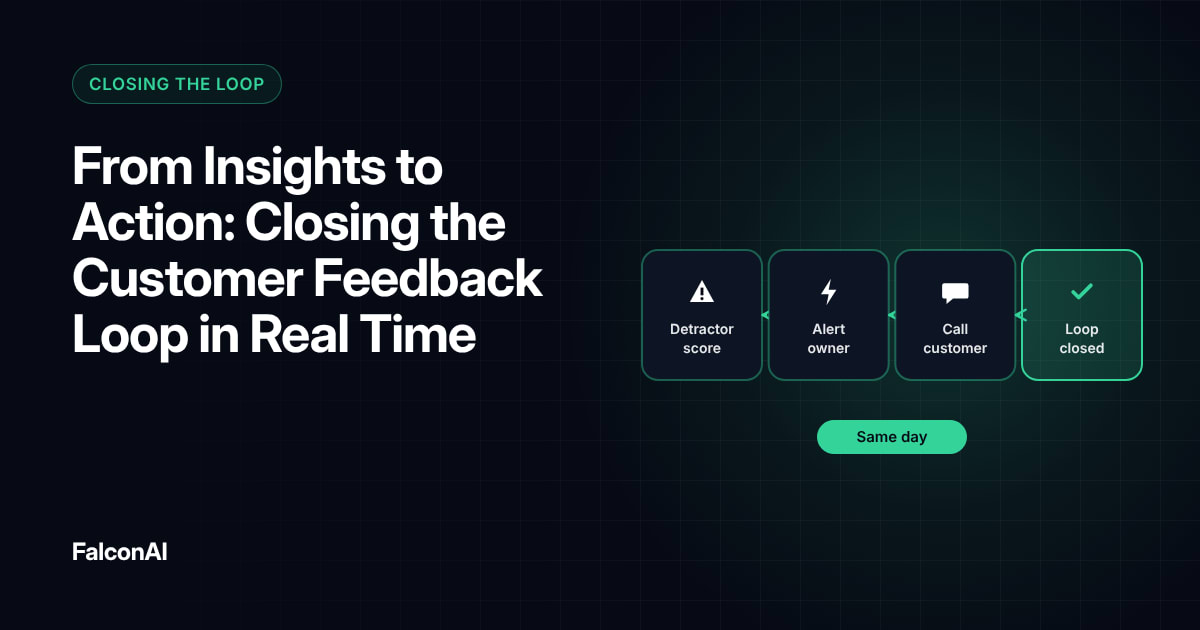
Route every survey response and comment to the employee or team who handled the interaction. Do it the same day, in a tool they already use. A daily digest in their team channel works well, and it takes a minute to read. Pass comments on in the customer's own words. Edited summaries lose the detail that helps people improve. Our guide to sending feedback to Slack and Microsoft Teams shows how.
Share the comments along with the scores
A score of 4 tells an agent little. The comment “I explained my problem three times” tells them exactly what to change. Comments also carry praise, and frontline staff hear far too little of it.
Get feedback to the right person fast
- Route to whoever handled itThe employee or team in the interaction
- Do it the same dayA daily digest in their team channel
- Keep the customer's wordsComments along with the scores
Give Frontline Teams Authority to Act
Feedback is only useful if people can do something with it. Give frontline staff clear permission to call a customer back or offer a set credit without waiting for approval. Let them escalate anything bigger straight to a named manager.
Set simple limits, like a maximum credit per case, so people act with confidence. When staff have to ask permission for every small fix, the customer waits and the problem grows.
Coach with feedback
Use feedback in regular coaching sessions. Review a few comments together and agree on one change to try before the next session. “VoC is an essential component of a successful CX program,” said Gartner's Deb Alvord, and frontline coaching is where it shows up day to day.
Authority to act
- Call a customer back
- Offer a set credit without approval
- Escalate anything bigger to a named manager
- A maximum credit per case
Free review snapshot
See what your customers are saying, before you talk to us.
No commitment. We use your details only to send your snapshot and follow up. Privacy policy
Measuring Frontline Impact
Track how many negative responses get a same-day follow-up and how often those customers score higher next time. Compare teams to spot coaching needs. Celebrate the teams that improve, and share the comments that show it. Recognition keeps people reading their feedback when the numbers dip. Read more about closing the feedback loop. Then review team results in CSAT analysis, or book a demo.
Frequently asked questions
Should frontline employees see customer feedback?
Yes. Seeing feedback about their own interactions is one of the fastest ways for staff to improve.
How fast should frontline teams get feedback?
The same day is ideal. Feedback that arrives weeks later is hard to connect to a specific conversation.
What authority should frontline staff have?
Clear limits on callbacks and credits, so they can resolve common issues without waiting for approval.
How do you use feedback in coaching?
Review a few comments in each session and agree on one change to try.
Should feedback be shared by individual or by team?
Both can work. Individual feedback helps coaching, while team views help spot shared problems.
How do you measure frontline follow-up?
Track the share of negative responses that get a same-day follow-up and the change in scores after it.