A generic language model knows what “late” means. It doesn't know that “the EOB came late” is a health insurance complaint about a benefits statement. It may also miss that “the SIM swap failed” is a telecom account issue. If your feedback tool doesn't know your terms, it mislabels the comments that matter most.
Why Generic Models Miss Industry Terms
General models learn from public text. Your customers use product names and acronyms that rarely appear online. They also give everyday words a special meaning, such as “claim” in insurance or “seat” in software licensing.
The cost of wrong labels
When a model misreads a term, the comment lands in the wrong theme or gets no theme at all. A billing complaint tagged as general feedback never reaches finance, and the customer waits longer for a fix. Bain's 2024 executive survey on AI found that low-quality output was a main reason AI use cases fell short. Missing domain terms are an easy way to end up there.
Build Your Vocabulary List
Start with the words your customers actually use. Pull a few hundred comments and list:
- Product and feature names, including nicknames.
- Acronyms and abbreviations.
- Industry terms with a special meaning.
- Competitor names your customers mention.
Ask your frontline teams
Support agents hear these terms every day. A 30-minute session with a few of them will surface words you'd never find in a spreadsheet. Sales and account teams help too. They hear how buyers describe problems before they become customers, and those words often show up later in feedback.
Build your vocabulary list
- Product and feature names, including nicknames
- Acronyms and abbreviations
- Industry terms with a special meaning
- Competitor names customers mention
How to Teach the Model
Map terms to themes
Link each term to the theme it belongs to. “EOB” maps to billing statements. “Dropped call” maps to network quality. Most modern feedback tools let you add these mappings without code. Include common misspellings and old product names. Customers keep using a feature's old name for months after you rename it.
Label real examples
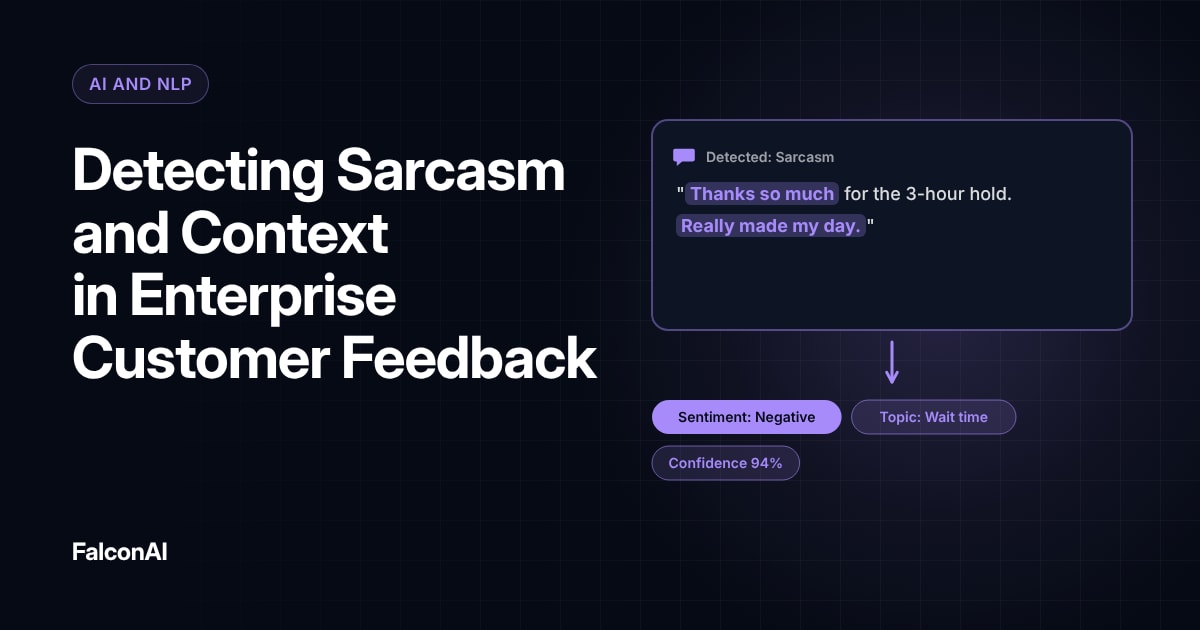
Give the model labeled comments from your own data. A few hundred good examples per theme usually do more for accuracy than a long list of rules. Review the hardest cases, such as comments where one term has two meanings. Our post on detecting sarcasm and context covers similar problems.
Teaching the model
- Map terms to themes“EOB” maps to billing statements
- Add misspellings and old namesCustomers keep using old feature names
- Label real examplesA few hundred good examples per theme
- Review the hardest casesOne term with two meanings
Free review snapshot
See what your customers are saying, before you talk to us.
No commitment. We use your details only to send your snapshot and follow up. Privacy policy
Keep the Model Current
Your vocabulary changes every time you launch a product or rename a feature. Gartner predicted that by 2025, 60% of organizations with VoC programs would analyze voice and text alongside surveys. More text means more new terms showing up each month.
Gartner's Augie Ray noted that “clients will still demand more than just great natural language processing (NLP).” Your teams want answers in their own language, and that takes upkeep. Give one person ownership of the vocabulary list. When everyone can edit it, duplicates pile up and nobody notices the gaps.
Set a review rhythm
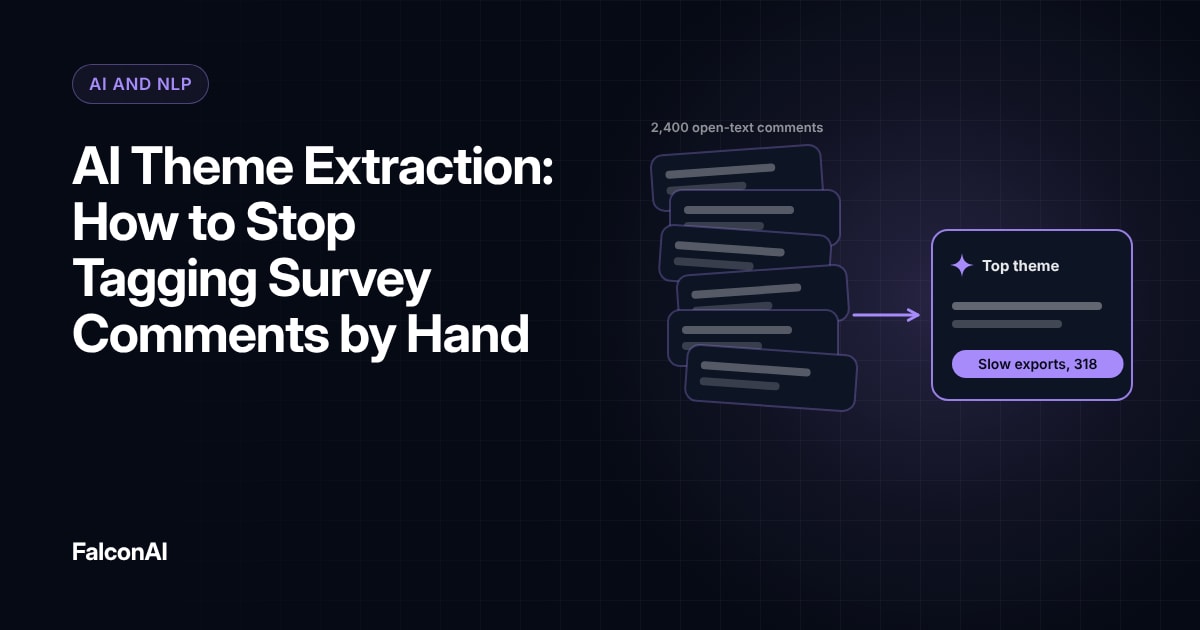
Check for new terms each month. Add new product names before each launch so the first wave of comments lands in the right theme. Track how terms perform in AI theme extraction and NPS analysis, or book a demo to test it on your data.
Frequently asked questions
Why do AI models need industry-specific training?
General models don't know your product names or industry terms, so they mislabel comments that use them.
How many examples do you need to train a model?
A few hundred labeled comments per theme is a good start for most programs.
Do you need data scientists to add terminology?
Usually not. Most feedback tools let you add terms and mappings through settings.
How often should you update your vocabulary?
Review it monthly and before every product launch or rename.
Where do you find industry terms?
Read real customer comments and ask your support and sales teams which words customers use.
Can one term belong to more than one theme?
Yes. Use context rules or labeled examples so the model can tell the meanings apart.