In an enterprise account, the person who uses your product every day rarely signs the renewal. The person who signs it may never log in. If your feedback program only hears from users, you can miss the signal that matters most.
Why Enterprise Feedback Is Different
Large purchases involve many people. Gartner describes a typical B2B buying group as five to 16 people across as many as four functions. Each of them has their own view of your product, and each can influence the renewal.
Users and buyers want different things
Users care about ease of use and their daily workflow. Buyers care about value and risk, and about whether the product supports company goals. An account can have happy users and an unhappy buyer at the same time. When that happens, the buyer usually wins the argument at renewal.
Users and buyers want different things
Users
- Ease of use
- Their daily workflow
Buyers
- Value and risk
- Support for company goals
- Usually win at renewal
Map the Stakeholders in Each Account
Start by listing who matters in each key account. Common roles include:
- Daily users who work in the product.
- Team leads or admins who manage it.
- The economic buyer who owns the budget.
- An executive sponsor who champions the relationship.
Ask each role the right questions
Ask users about ease and daily value. Ask admins about setup and support. Ask buyers and sponsors whether the product is meeting the goals they bought it for. A single survey for everyone misses these differences and frustrates senior people with questions that don't apply to them.
Roll Up an Account-Level View
Weight by role
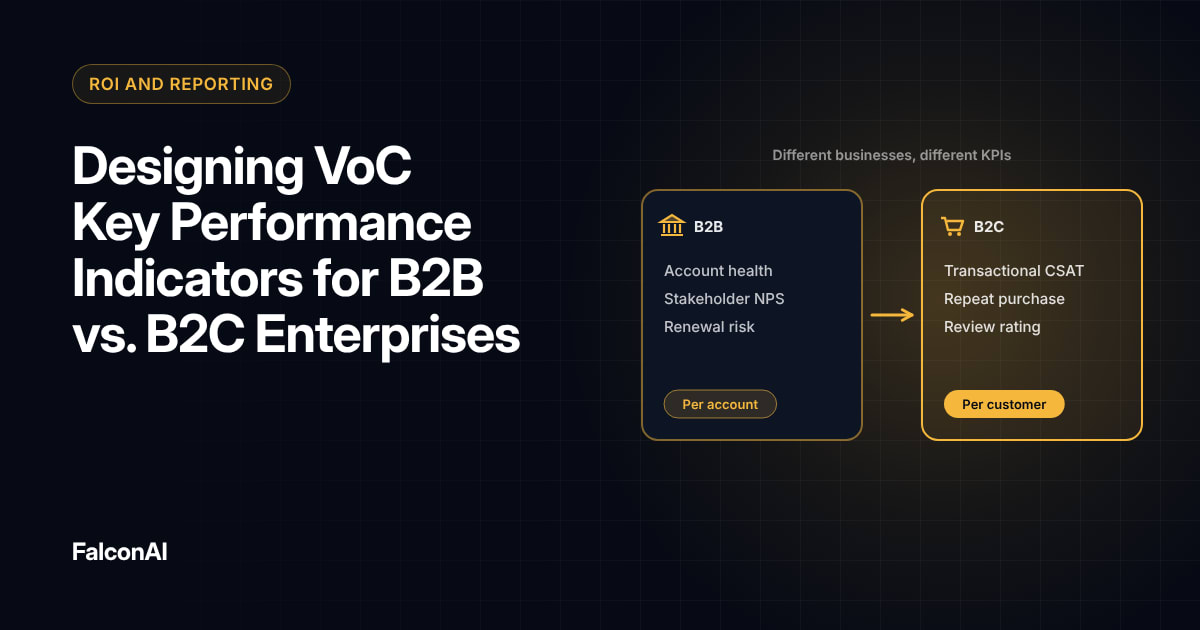
Give more weight to buyers and sponsors when you combine scores into an account view. A detractor sponsor is a bigger renewal risk than several passive users. Our guide to VoC KPIs for B2B and B2C explains how to set this up.
Watch for silent decision makers
Track which accounts have no recent feedback from a buyer or sponsor. Silence from the person who signs the contract is a warning sign, even when user scores look healthy. Schedule a direct conversation before the renewal window opens. A 20-minute call often tells you more than a year of survey data.
Rolling up an account view
- Daily users
- Team leads or admins
- Economic buyer
- Executive sponsor
- Account manager, before every business review
Free review snapshot
See what your customers are saying, before you talk to us.
No commitment. We use your details only to send your snapshot and follow up. Privacy policy
Turn Feedback Into Account Plans
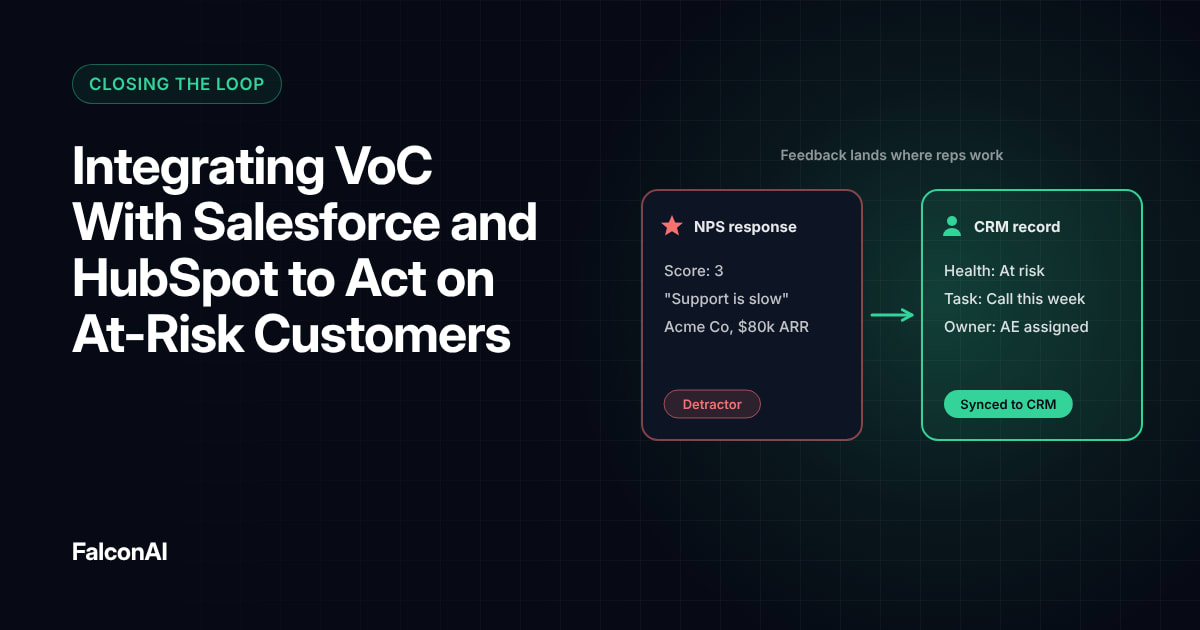
Share the account view with the account manager before every business review. Highlight the top issues for each stakeholder group and the progress made since last quarter. Our post on integrating VoC with your CRM shows how to put this where account teams already work.
Bain's research on loyalty economics found that promoter attrition averaged about one-third of detractor attrition. In enterprise accounts, moving a single sponsor from detractor to promoter can protect a large share of revenue. That makes sponsor feedback one of the most valuable signals you collect.
Close the loop at every level
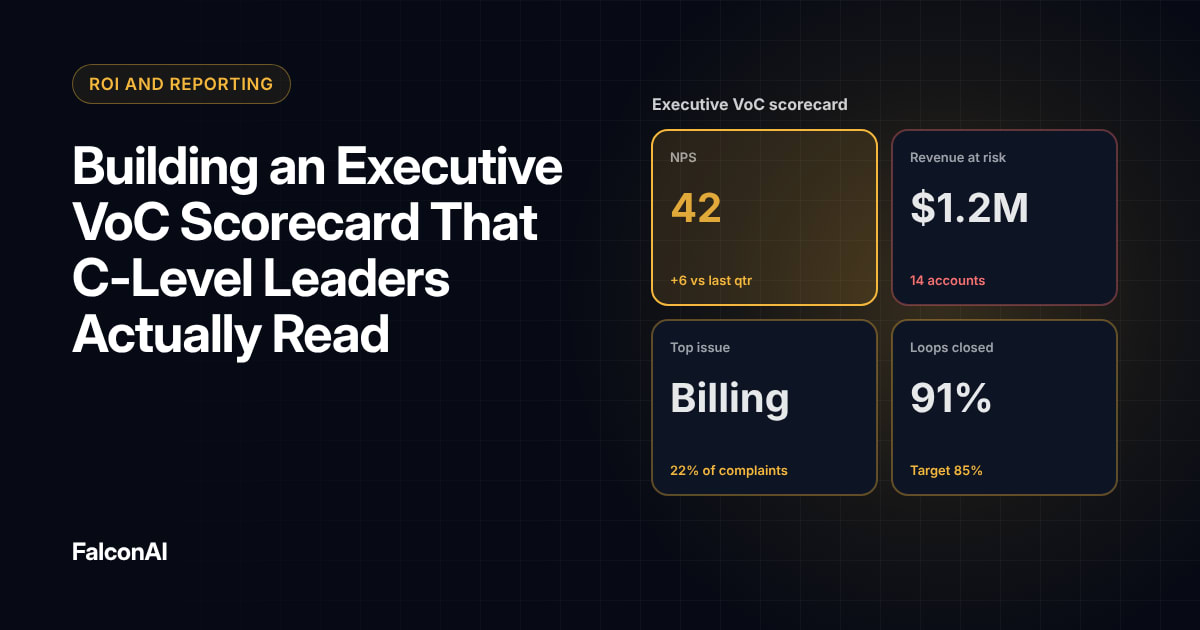
Tell users when you fix the problems they raised. Tell buyers how those fixes support their goals. Each group needs to hear the follow-up in its own terms. Our guide to the executive VoC scorecard shows how to present account health to your own leaders. You can track account-level scores in NPS analysis, or book a demo.
Frequently asked questions
Why is B2B enterprise feedback harder to manage?
Each account has many stakeholders with different needs, and the person who uses the product often isn't the one who renews it.
Who should you survey in an enterprise account?
Daily users, admins, the economic buyer and the executive sponsor, each with questions suited to their role.
How do you combine feedback from different roles?
Weight scores by role, giving more weight to buyers and sponsors who decide renewals.
What if the buyer never responds to surveys?
Schedule a direct conversation. Silence from a decision maker is a risk on its own.
How often should you collect enterprise feedback?
Quarterly for most stakeholders, plus a check before each renewal and business review.
Who should own enterprise account feedback?
The account manager or customer success manager, supported by the CX team.