Engineering teams track mean time to resolution for outages. CX teams rarely track it for unhappy customers, even though the stakes are similar. Every hour a negative comment sits unanswered, the customer's patience shrinks.
What MTTR Means for Feedback
For customer feedback, MTTR is the average time from a negative response arriving to the issue being resolved and the customer being told. Split it into two parts so you can see where time goes:
- Time to acknowledge, from feedback received to first reply
- Time to resolve, from first reply to fix confirmed
Why both parts matter
A fast acknowledgment buys you patience. A fast resolution keeps the customer. Teams that only track one usually find the delay hiding in the other. A same-day reply followed by three weeks of silence still feels slow to the customer. Tracking both also shows whether a slow case is waiting on your team or on the customer.
Split MTTR into two parts
- Feedback received
- First replyTime to acknowledge
- Fix confirmedTime to resolve
Why Speed Pays Off
Customers expect fast answers. HubSpot's 2024 State of Service report found that 82% of customers want their issues solved immediately.
Speed changes loyalty, too. In Qualtrics XM Institute's 2025 contact center study, 73% of customers who were satisfied with their wait time were likely to recommend the company, compared with 24% of those who weren't.
What slow resolution costs
Metrigy research found that 44.4% of consumers stop doing business with a company after an average of 2.4 bad experiences. An unresolved complaint can count as a second bad experience, and that puts the customer one step from leaving.
Customers likely to recommend
Source: Qualtrics XM Institute. Figures as cited in this article
How to Bring MTTR Down
Start by measuring your current MTTR for the last three months. Then work on the biggest delay first.
- Route negative feedback to an owner automatically.
- Give owners templates for common issues.
- Escalate cases that miss their target.
- Close the case only when the customer has heard back.
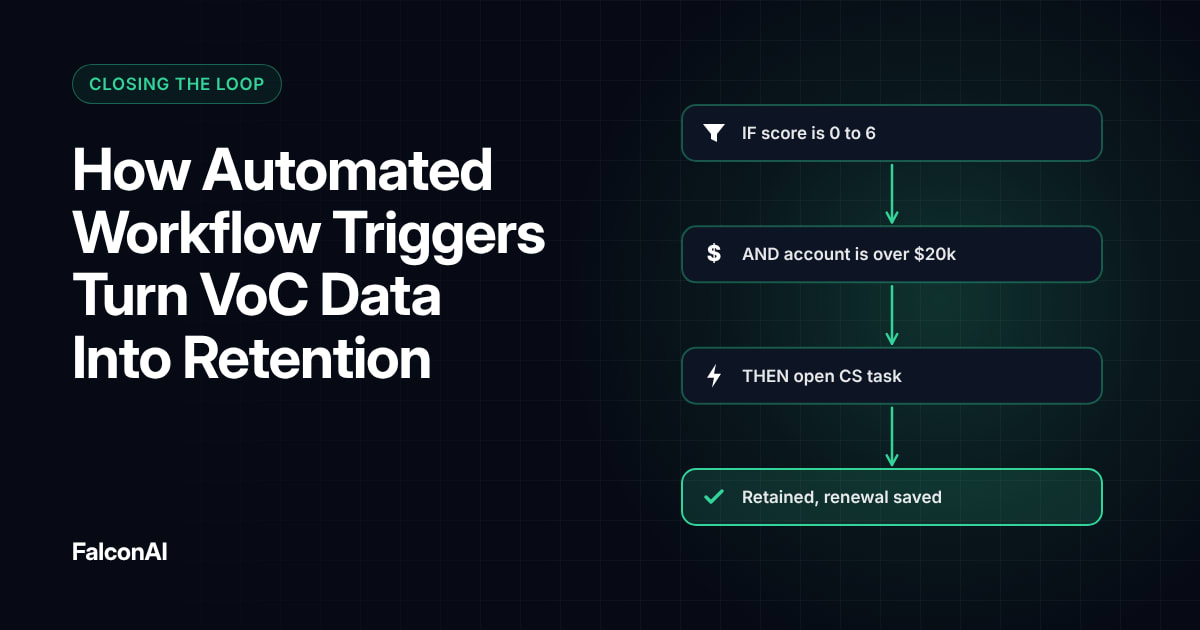
Look at a sample of slow cases from last quarter. You'll usually find the same few delays, such as waiting for another team or a missing owner. Our guide to automated workflow triggers covers routing in detail.
Learn from teams that cut it
Automation can cut resolution time sharply. In HubSpot's report, Kaplan's Jennifer Cummings said her team had “reduced resolution times by over 60%” after automating part of its ticket handling. Your results will vary, but routing alone often removes days of waiting.
reduced resolution times by over 60%
Kaplan's Jennifer Cummings
Free review snapshot
See what your customers are saying, before you talk to us.
No commitment. We use your details only to send your snapshot and follow up. Privacy policy
Tracking MTTR Over Time
Report MTTR weekly, split by theme and team. A theme with a long MTTR often needs a product fix, while a team with a long MTTR may need more people or clearer authority. Watch for outliers as well. One case that took six weeks can hide inside a healthy average, so report the slowest cases alongside the mean. Read about frontline teams acting on feedback.
Set a target and review it
Pick a realistic target, such as two business days for resolution, and tighten it as you improve. Share the trend with leadership every month, so a rising MTTR gets attention before it shows up in churn. Track it in CSAT analysis, or book a demo.
Frequently asked questions
What is MTTR in customer service?
MTTR, or mean time to resolution, is the average time it takes to resolve a customer issue from first contact to fix.
How do you calculate MTTR for feedback?
Add up the time from feedback received to resolution for every case, then divide by the number of cases.
What is a good MTTR for negative feedback?
It depends on your business. Many teams aim to acknowledge within one business day and resolve within a few days.
What's the difference between response time and resolution time?
Response time measures the first reply. Resolution time measures how long it takes to fix the issue.
How can you reduce resolution time?
Automate routing and escalate cases that miss their target.
Should MTTR be tracked by team?
Yes. Splitting MTTR by team and theme shows where delays come from.