SaaS customers can cancel in a few clicks. There's no store to walk out of and often no conversation first. If you want to keep them, you need to spot the warning signs in their feedback while there's still time to act.
Why SaaS Churn Moves Fast
Keeping customers costs far less than finding new ones. HubSpot's 2024 State of Service report cites research that acquiring a new customer can cost up to 25 times more than keeping one. Monthly plans make this sharper. A customer on a monthly contract can leave at the end of any billing cycle, so a problem left for a few weeks can cost you the account.
Most unhappy SaaS users won't tell you before they leave. Qualtrics research shows only 3 in 10 customers now give companies direct feedback. “We found that they're just sharing less feedback,” said Isabelle Zdatny of Qualtrics XM Institute.
The signals are still there
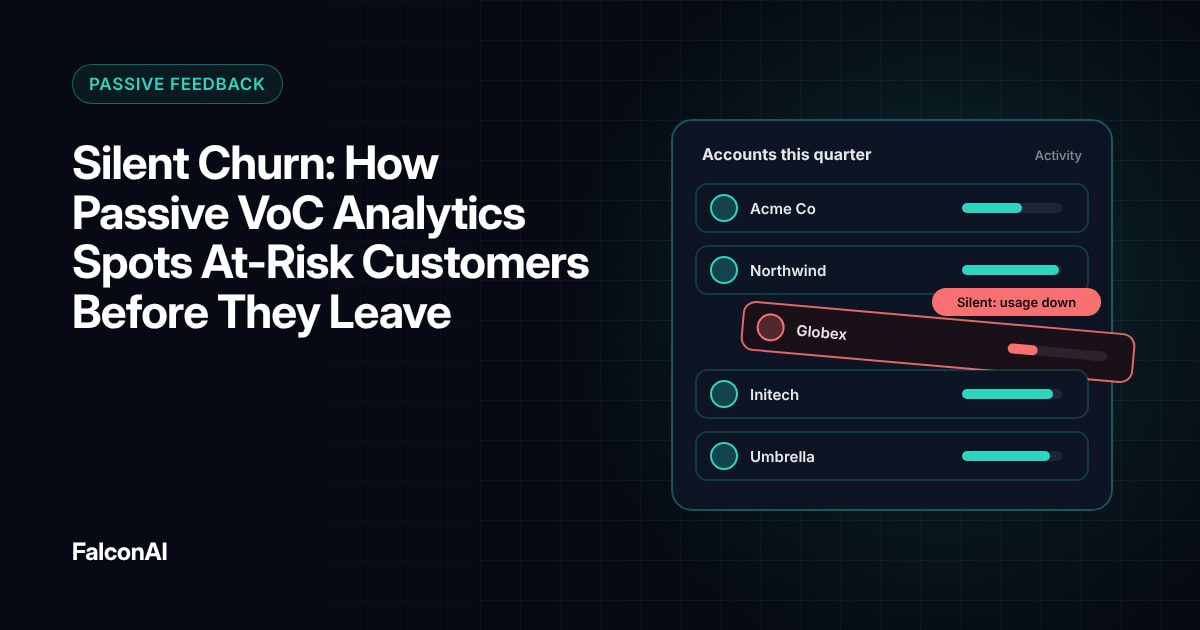
Users who stay quiet in surveys still leave traces. They file tickets and use the product less. In-app ratings dip before renewal conversations start. Those are all real-time signals you can act on.
- Up to 25 timesMore to acquire a customer than keep oneSource: HubSpot
- 3 in 10Customers who give direct feedbackSource: Qualtrics
Figures as cited in this article
Real-Time Signals to Watch
Focus on signals you can collect without waiting for a quarterly survey:
- In-app NPS or CSAT responses after key actions
- Support tickets with negative sentiment
- Comments that mention competitors or canceling
- A drop in logins or feature use
Some signals matter more than others for your product. Check which ones showed up before past cancellations and weight those higher. Our post on silent churn explains how to combine them.
Weight signals by account value
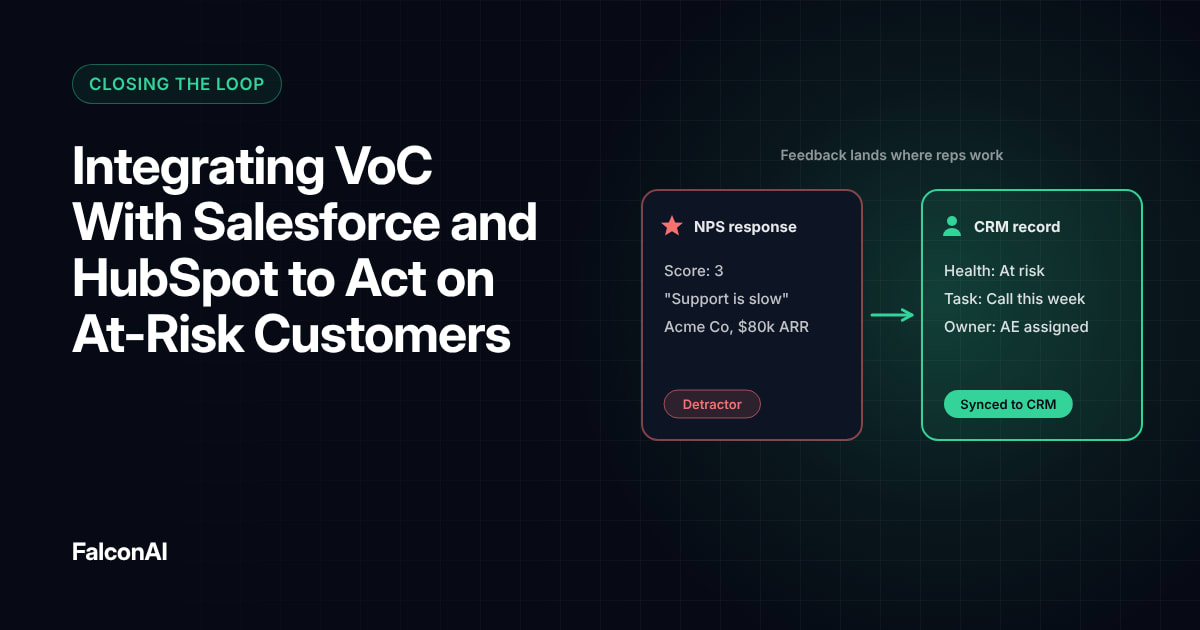
A detractor on a large annual contract deserves faster action than a trial user. Pull plan and renewal data from your CRM so alerts reflect revenue at risk. Our guide to CRM integration shows how.
Responding Within Hours
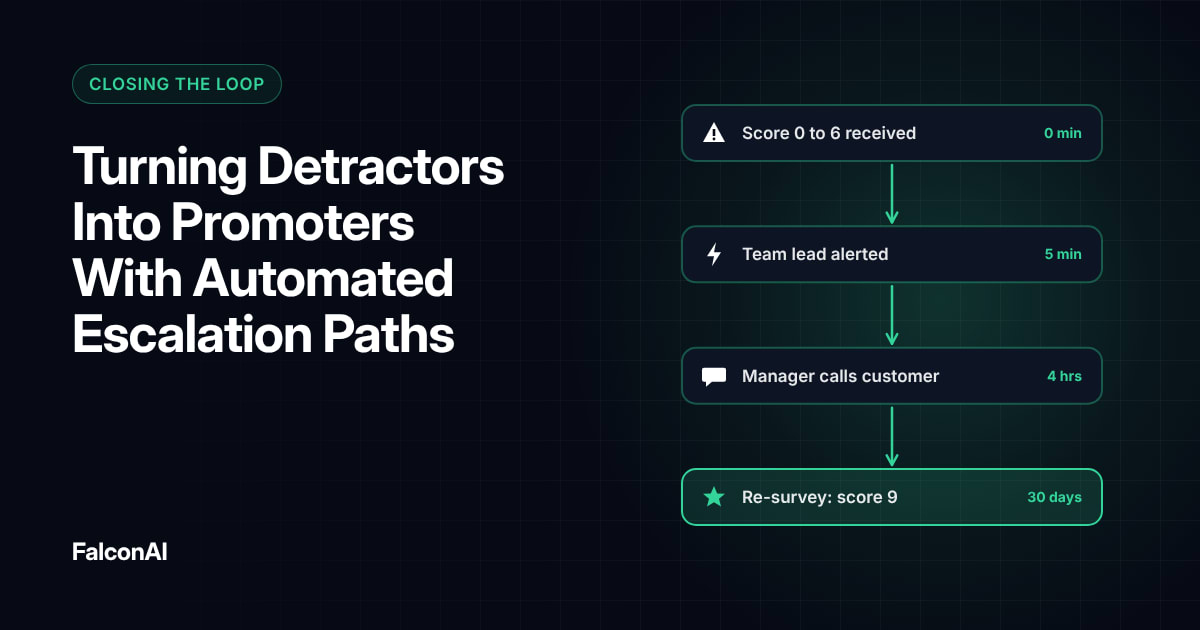
Route each high-risk signal to the customer success manager who owns the account. Set a target, such as a reply within four business hours for top accounts. Smaller accounts can follow the same process with a one-day target. Give CSMs the full context in the alert: the comment, the account's plan, recent tickets and the usage trend. They shouldn't have to open four tools before they can reply.
Use a short playbook
Give CSMs a simple playbook. Acknowledge the issue and offer a fix or workaround. For large accounts, book a call. Keep the playbook to one page so CSMs use it. Good service pays off. Salesforce research found that 88% of customers say good service makes them more likely to buy again.
From signal to response
- In-app NPS or CSAT
- Negative-sentiment tickets
- Competitor or cancel mentions
- Drop in logins or feature use
- Acknowledge the issue
- Offer a fix or workaround
- Book a call for large accounts
Free review snapshot
See what your customers are saying, before you talk to us.
No commitment. We use your details only to send your snapshot and follow up. Privacy policy
Measuring the Results
Track how many at-risk accounts got a response within your target and how many renewed. Compare them with accounts that got no response. Over a few quarters, that comparison tells you which signals predict churn best and which playbook steps make a difference. Share wins with the product team too. When a CSM saves an account by working around a bug, the product team should hear about the bug. Review signals in NPS analysis, or book a demo.
Frequently asked questions
What is real-time VoC?
It's customer feedback that reaches the right team within minutes or hours of being given, so they can act on it quickly.
How do SaaS companies predict churn?
They combine feedback signals, like low NPS and negative tickets, with usage data and account details.
What are the early signs of SaaS churn?
Falling usage, negative support tickets, low in-app scores and comments about pricing or competitors.
How fast should a CSM respond to churn risk?
For high-value accounts, within a few business hours. For smaller accounts, within one business day.
Is in-app NPS useful for SaaS?
Yes. It captures feedback right after users act, when their experience is fresh.
What should a churn response playbook include?
An acknowledgment and a fix or workaround with a follow-up date. Add a call for large accounts.