A survey can look healthy and still mislead you. If the people answering don't represent your customers, or the questions nudge them toward certain answers, your scores tell the wrong story. Enterprise programs face this risk at scale, since one flawed survey can reach thousands of accounts.
What Response Bias Is
Response bias is any pattern that pulls answers away from what customers really think. It can come from who responds or from how you ask.
Bias can be extreme
Pew Research Center showed how extreme this can get. In a 2024 analysis of opt-in online samples, 12% of adults under 30 claimed to be licensed to operate a nuclear submarine. The real share rounds to zero. Pew's Dorene Asare-Marfo has noted that some survey participants are “providing insincere or sloppy responses to questions.”
- 12%of adults under 30 claimed to operate a nuclear submarineSource: Pew Research Center, 2024
Figures as cited in this article
Common Types to Watch For
- Nonresponse bias, when the customers who skip your survey differ from those who answer.
- Acquiescence bias, when people agree with statements to be polite.
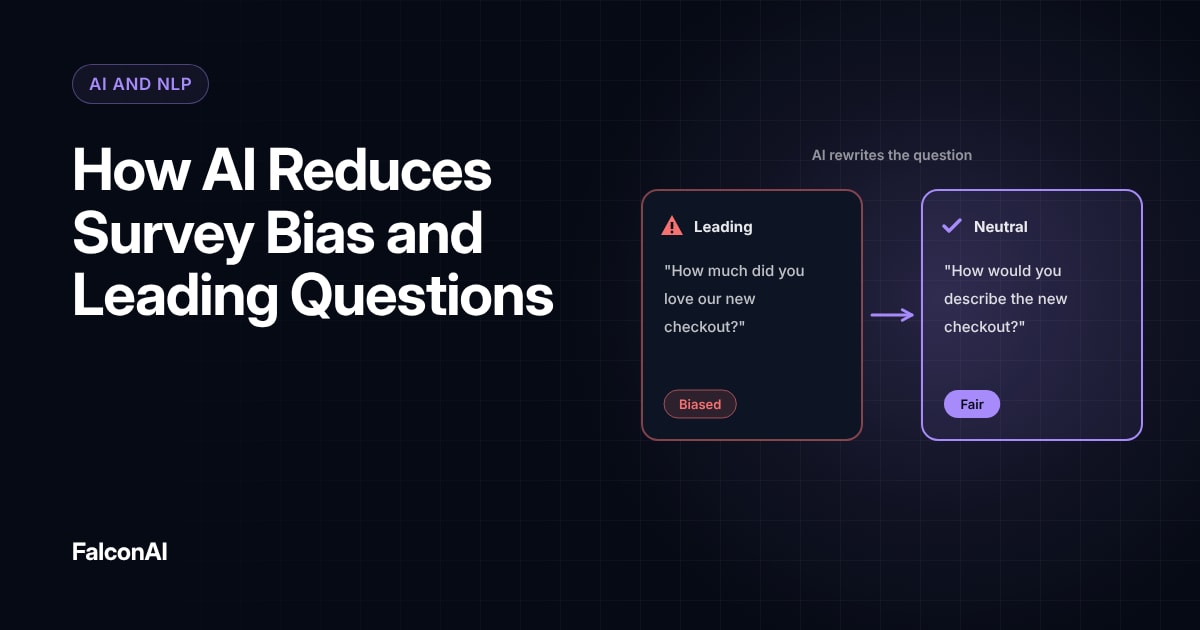
- Leading question bias, when wording hints at the expected answer.
- Recency bias, when one recent event colors the whole rating.
Enterprise programs add their own layer
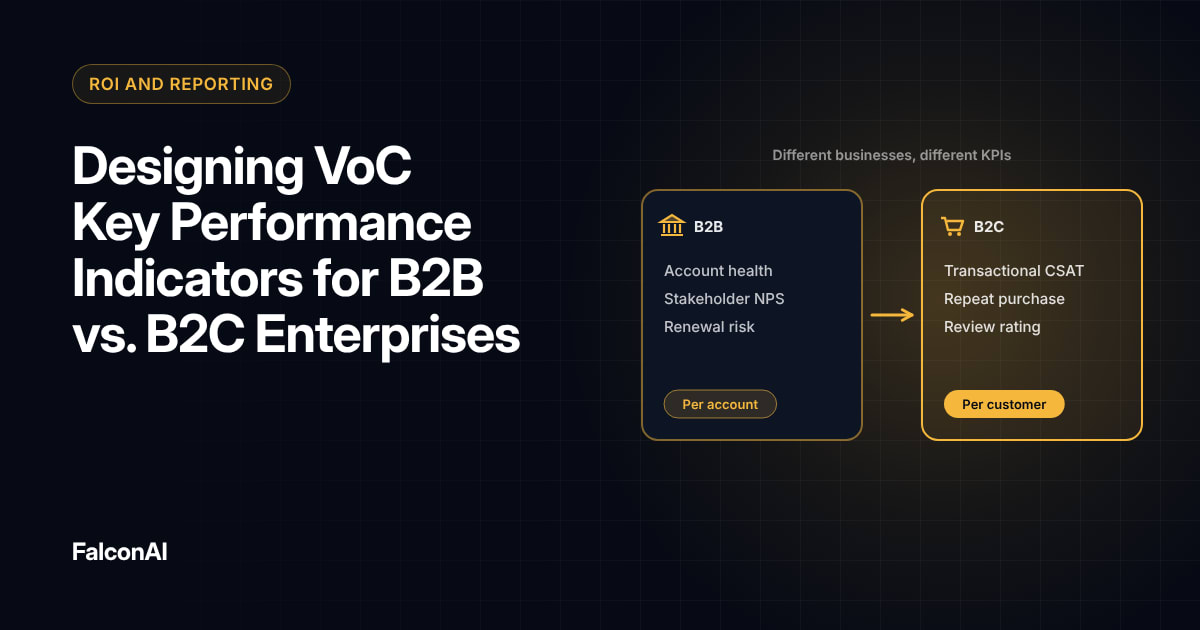
In B2B, the person who answers is often your main champion. Their view may differ from the executive who signs the renewal. Our post on B2B and B2C VoC KPIs explains how to account for multiple roles.
Fix the Questions
Use neutral wording. Ask “How would you rate your onboarding?” instead of “How great was your onboarding?” Balance scales so positive and negative options carry equal weight. Avoid double questions that ask about two things at once. Watch the order of questions too. Asking about a frustrating bug right before an overall rating can drag the rating down. Put broad questions first, then move to specific topics.
Test before you launch
Run new surveys past a small group first. Ask them what they thought each question meant. Confusing items show up quickly, and you can fix them before thousands of customers see them.
Fix the questions
Leading
- “How great was your onboarding?”
- Double questions
- A frustrating bug right before the overall rating
Neutral (the approach the article favours)
- “How would you rate your onboarding?”
- Balanced scales
- Broad questions first, then specific
Free review snapshot
See what your customers are saying, before you talk to us.
No commitment. We use your details only to send your snapshot and follow up. Privacy policy
Fix Who Responds
Check whether your respondents match your customer base. Compare them by plan size and region. If one group is underrepresented, send targeted reminders or weight the results. In enterprise accounts, survey more than one contact per customer so a single voice doesn't stand in for the whole company.
Look beyond surveys
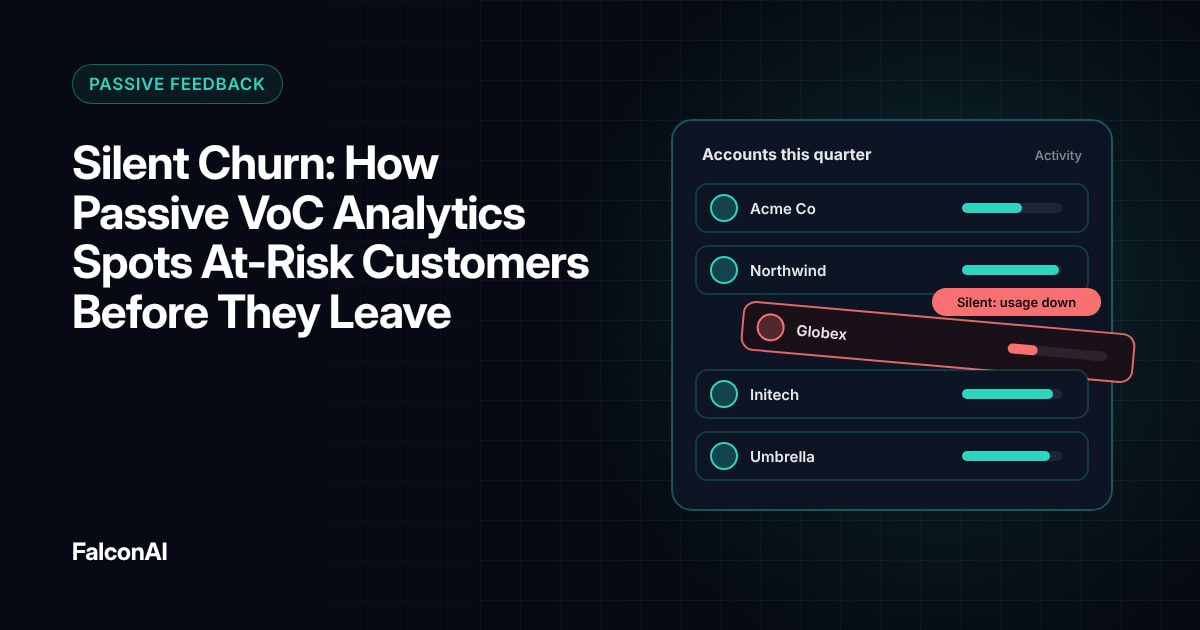
Qualtrics' 2025 Consumer Trends research found that fewer than a third of consumers give feedback directly to companies. Pair survey scores with support tickets and reviews so the silent majority still counts. Our guide to silent churn and passive VoC shows how.
Watch for Bias in Analysis
Bias can creep in after collection too. Teams sometimes highlight comments that support a plan they already favor. Agree on your themes and metrics before you read the results.
Keep a bias checklist
Review each new survey against a short checklist covering wording and scales. Our post on AI and survey bias covers what to watch for when models do the tagging. You can compare themes across segments in NPS analysis, or book a demo.
A short bias checklist
- Neutral wording
- Balanced scales
- No double questions
- Respondents match plan size and region
- More than one contact per enterprise account
- Themes and metrics agreed before reading results
Frequently asked questions
What is response bias in surveys?
It's any pattern that pulls survey answers away from what respondents really think.
What causes nonresponse bias?
It happens when the customers who skip your survey differ in important ways from those who answer.
How do you write unbiased survey questions?
Use neutral wording and keep each question to one topic.
Why is response bias a bigger risk in enterprise surveys?
One flawed survey can reach thousands of accounts, and the person answering may not represent every role at the customer.
How can you check for bias after a survey closes?
Compare respondents with your customer base by segment and weight the results if one group is missing.
Can AI introduce bias into survey analysis?
Yes. Models can misread certain groups, so test their outputs across segments.